
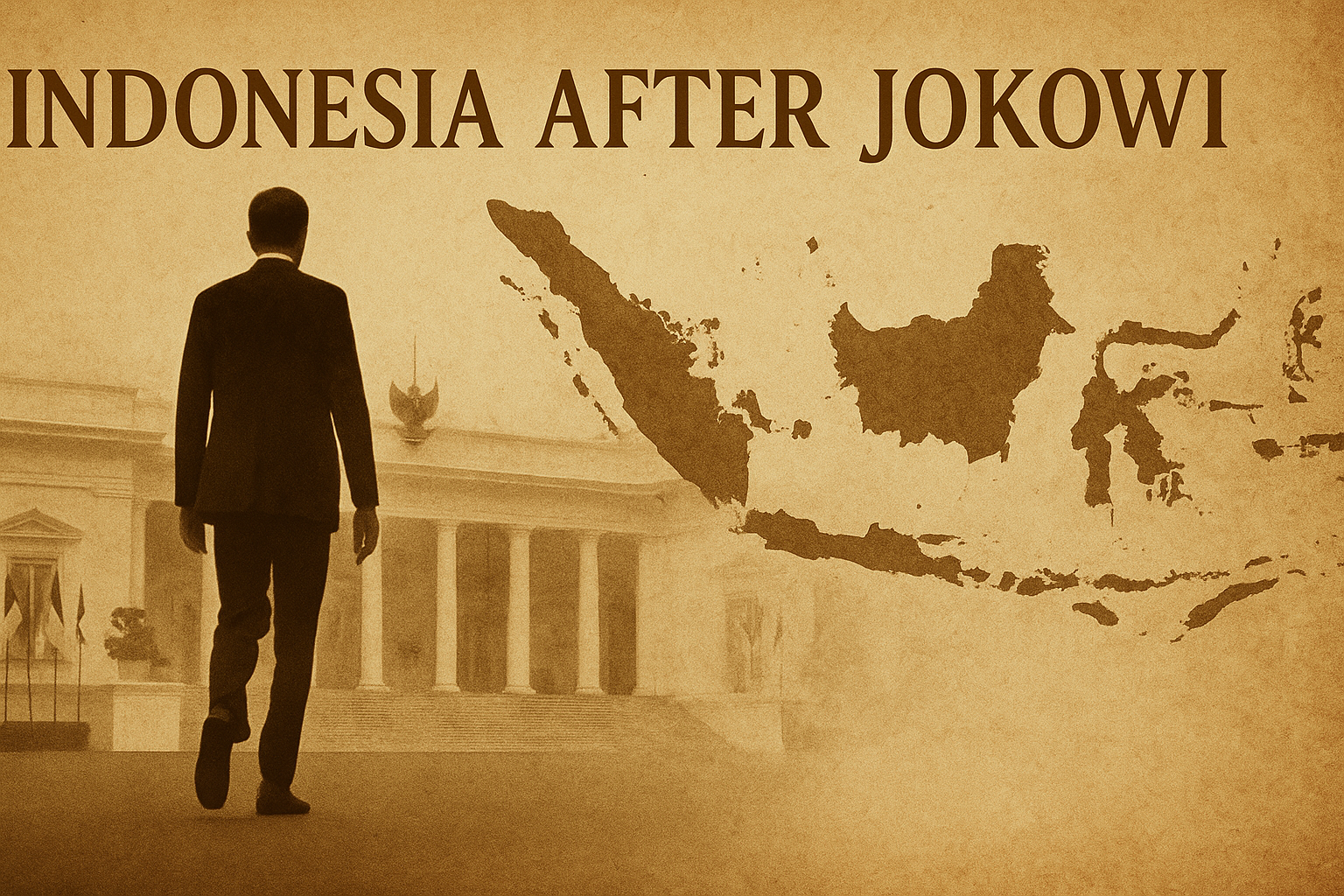
Jokowi’s Legacy as a Unique Indonesian Leader
Joko Widodo, or Jokowi, has marked his presidency with a distinctive style that separates him from previous Indonesian leaders. Rising from the mayoralty of Solo to the governorship of Jakarta, and ultimately to the presidency, he became the first leader of Indonesia who did not originate from the elite political or military background. His two-term presidency has defined an era that combined pragmatism, populism, and infrastructural acceleration across the archipelago.
One of the striking features of Jokowi’s leadership is his ability to strengthen his family’s political base. His son and son-in-law becoming mayors in Solo and Medan reflect both a political dynasty in the making and Jokowi’s influence in shaping regional leadership. This marks a significant departure from previous presidencies, where family political continuity was rarely this explicit.
During Jokowi’s administration, the Indonesian people witnessed rapid development projects, especially in infrastructure. Roads, airports, and seaports were expanded into areas previously marginalized, particularly in Eastern Indonesia. In Papua, for instance, the symbolic achievement was when fuel prices were standardized with those in Banda Aceh, signaling equitable national economic policies.
However, Jokowi’s leadership was not free from turbulence. The country faced economic volatility, political contestations, and constant debates around socio-religious issues. Yet, Jokowi’s political instincts led him to embrace Nahdlatul Ulama (NU), making this Islamic organization a strategic partner in governance. This alliance granted his government a religious shield, softening the impact of controversies linked to faith and politics.
Another defining characteristic of Jokowi’s era is his ability to manage parliament and secure majority support. With pragmatic coalition-building, Jokowi consolidated power within Senayan, leaving little room for strong opposition. This political dominance gave him leverage to push through significant policies, including foreign investment strategies.
Now, as Indonesia transitions beyond Jokowi, the question arises: how will his legacy shape the nation’s future direction? This uncertainty fuels debates about the sustainability of his political model and the challenges awaiting the next administration.
Global Balance and Indonesia’s Strategic Vulnerability
One of the central issues after Jokowi is the question of global balance. Indonesia stands at the crossroads of international interests, with major powers competing to tap into its abundant natural resources. Whoever governs after Jokowi must navigate this pressure while preserving national sovereignty and ensuring that foreign engagement benefits the people.
China’s growing dominance in ASEAN creates additional complexity. As the world increasingly depends on Beijing’s economic power, Indonesia is pushed to balance its loyalty between China and Western powers. Jokowi’s cordial relationship with China set the tone for this alignment, but future leaders will be tested in maintaining independence without jeopardizing investments.
Foreign investors rarely prioritize Indonesian welfare. Instead, they seek to secure access to natural wealth, such as minerals, forests, and fisheries. The presidency after Jokowi will be challenged by the necessity of safeguarding resources while preventing foreign overreach. This makes the concept of “global balance” not merely a diplomatic issue but a survival strategy for the republic.
The relocation of Indonesia’s capital to Borneo reflects a strategic response to global pressures. By placing the center of governance in a geographically central and resource-rich location, Indonesia symbolically shifts its axis of power, demonstrating resilience against external manipulation.
Yet, the risks remain. If the next president fails to assert sovereignty in international negotiations, Indonesia may fall into the trap of dependency. The pressure from foreign interests, particularly in energy and infrastructure, will test the credibility of post-Jokowi leadership.
Thus, global balance becomes the first and perhaps most crucial test for Indonesia after Jokowi. It will determine whether the nation continues as a player with agency or merely as an object of international competition.
Political Conflicts and the Struggle for Power
The second challenge awaiting Indonesia is the escalation of political conflicts. Jokowi’s strategic move of appointing Prabowo Subianto as Minister of Defense was a symbolic act that neutralized a major rival. However, this maneuver also left deep scars within political and religious groups, particularly those who once rallied under Prabowo against Jokowi.
In 2024 and beyond, unresolved tensions among Islamic groups and political factions may reemerge. Without clear role models, these groups remain vulnerable to manipulation, potentially reigniting street protests or populist mobilizations. Political polarization, amplified by social media, risks destabilizing the democratic process.
The post-Jokowi government will likely continue the pattern of suppressing dissent. Voices considered too “noisy” or capable of mobilizing masses will face imprisonment under the pretext of protecting national stability. This continuity reflects not only Jokowi’s strategy but also the entrenched culture of controlling opposition through legal mechanisms.
As political competition intensifies, the role of civil society becomes increasingly fragile. Instead of serving as a counterbalance, civil organizations may be co-opted or silenced, leaving limited space for grassroots democracy. The judicial system, too, risks being weaponized to suppress critical groups rather than uphold justice.
This scenario indicates that after Jokowi, Indonesia may face democratic stagnation. Elections could become formalistic, serving global balance and elite interests rather than genuinely addressing public welfare. Political pluralism may exist on paper but weakened in practice.
Therefore, the post-Jokowi era risks becoming an arena of power struggles rather than democratic consolidation, with political elites prioritizing survival over reform.
Military, Police, and the Politics of Security
Another critical issue is the distribution of power within Indonesia’s military (TNI) and police (Polri). Jokowi successfully secured loyalty by placing trusted figures in strategic security posts, ensuring both institutional stability and personal political protection. This method safeguarded his leadership but also created a new pattern of dependence on security elites.
Future presidents will inherit this system. While TNI and Polri maintain loyalty to the state, their inner dynamics remain complex. Informal groups within these institutions, often linked to palace networks, could become decisive power brokers. Their influence will determine how stable or turbulent Indonesia’s political climate becomes after Jokowi.
The military and police have always played central roles in Indonesian politics. Jokowi’s balancing act reinforced their authority while limiting opportunities for dissent. However, this empowerment may backfire in the post-Jokowi era, as competing factions within the security apparatus could destabilize governance.
Moreover, the reliance on security forces for political consolidation undermines civilian oversight. Indonesia risks sliding back into a security-dominated state where democratic accountability is weakened. This challenge will be one of the most delicate for any leader after Jokowi.
The future leader must manage TNI and Polri carefully, ensuring they remain professional while preventing the emergence of factional rivalries. Any failure in this regard could trigger institutional crises, weakening national stability.
Thus, Indonesia, after Jokowi, must confront the deep entanglement of politics and security—a legacy that can both protect and endanger the republic.
Diplomacy, Global Role, and Economic Dependence
Indonesia’s global role is another challenge in the post-Jokowi period. While Jokowi elevated Indonesia’s infrastructure and foreign investment profile, the country’s diplomatic standing remains modest. Indonesia is seen as a vital market but not yet as a decisive regional or global power.
The consumptive nature of Indonesian society amplifies this position. Almost anything imported into Indonesia finds buyers, making the country a lucrative market for global corporations. This consumption-driven identity often overshadows Indonesia’s ability to negotiate stronger terms in trade and diplomacy.
After Jokowi, the next president must redefine Indonesia’s diplomacy. The objective should be shifting from being merely a marketplace to being a strategic actor capable of shaping regional policies, especially within ASEAN. Without such transformation, Indonesia risks being trapped as a passive recipient of global agendas.
Indonesia’s role in the South China Sea dispute, climate negotiations, and global economic forums requires sharper leadership. The ability to maneuver between competing powers will determine whether Indonesia is respected internationally or simply exploited.
To achieve this, the next leader must balance national interests with global commitments. Failing to do so could result in Indonesia losing both credibility and influence in international diplomacy.
Therefore, diplomacy becomes both a challenge and an opportunity for Indonesia after Jokowi—a chance to rise as a strategic actor rather than remain an economic playground.
Conclusion: Indonesia’s Post-Jokowi Path
Indonesia, after Jokowi, stands at a crossroads defined by global balance, political conflicts, security dynamics, and international diplomacy. The legacy of Jokowi offers both opportunities and constraints. His infrastructural development and political pragmatism created stability, but they also entrenched new challenges.
The four major issues—global balance, internal political conflicts, the security apparatus, and diplomatic strategies—will shape the trajectory of Indonesia’s future. Each requires careful leadership and strategic vision. Without it, the nation risks falling into stagnation, dependency, or even instability.
Jokowi’s presidency symbolized a leader of the people, rising from local governance to the national stage. But his departure leaves behind unresolved tensions, from resource exploitation to political suppression. How these issues are addressed will determine Indonesia’s resilience.
The relocation of the capital, the role of NU, the influence of Prabowo, and the entrenchment of security elites are all factors that cannot be ignored. Each reflects Jokowi’s political DNA and its impact on Indonesia’s system of governance.
Thus, the post-Jokowi era is not just about a change in leadership—it is about a nation redefining itself in the face of global and domestic pressures. The challenge is immense, but so is the potential.
In conclusion, the future of Indonesia after Jokowi depends on whether its leaders can turn inherited complexities into opportunities for genuine reform and global relevance.
About The Author

Rekomendasi Bacaan KBA13 INSIGHT
Jika tulisan ini bermanfaat, dukung jurnal ini dengan mencari bukunya melalui tautan berikut:
- Buku-buku Kamaruzzaman Bustamam Ahmad di Periplus
- Koleksi Islamic Studies di Periplus
- Koleksi Geopolitics & Politik Internasional di Periplus
- Cari buku & perangkat baca di Shopee
- Cari di Blibli
Daftar lengkap: Rekomendasi Buku, Alat Tulis & Layanan. Tautan di atas adalah tautan afiliasi — KBA13 INSIGHT dapat memperoleh komisi kecil tanpa biaya tambahan bagi Anda.
Artikel Terkait
 Javanese Supremacy and the Politics of Culture in Indonesia: From Wayang to Pancasila
 Can Aceh become a model for the development of a multicultural society in Indonesia?
 How Artificial Intelligence and Virtual Reality Will Transform the Future of Education
 Virtual Ethnography on YouTubers’ Social Experiments: A Step-by-Step Guide
 What is Virtual Ethnography? Definition, Methods, and Research Applications
Leave a Reply