
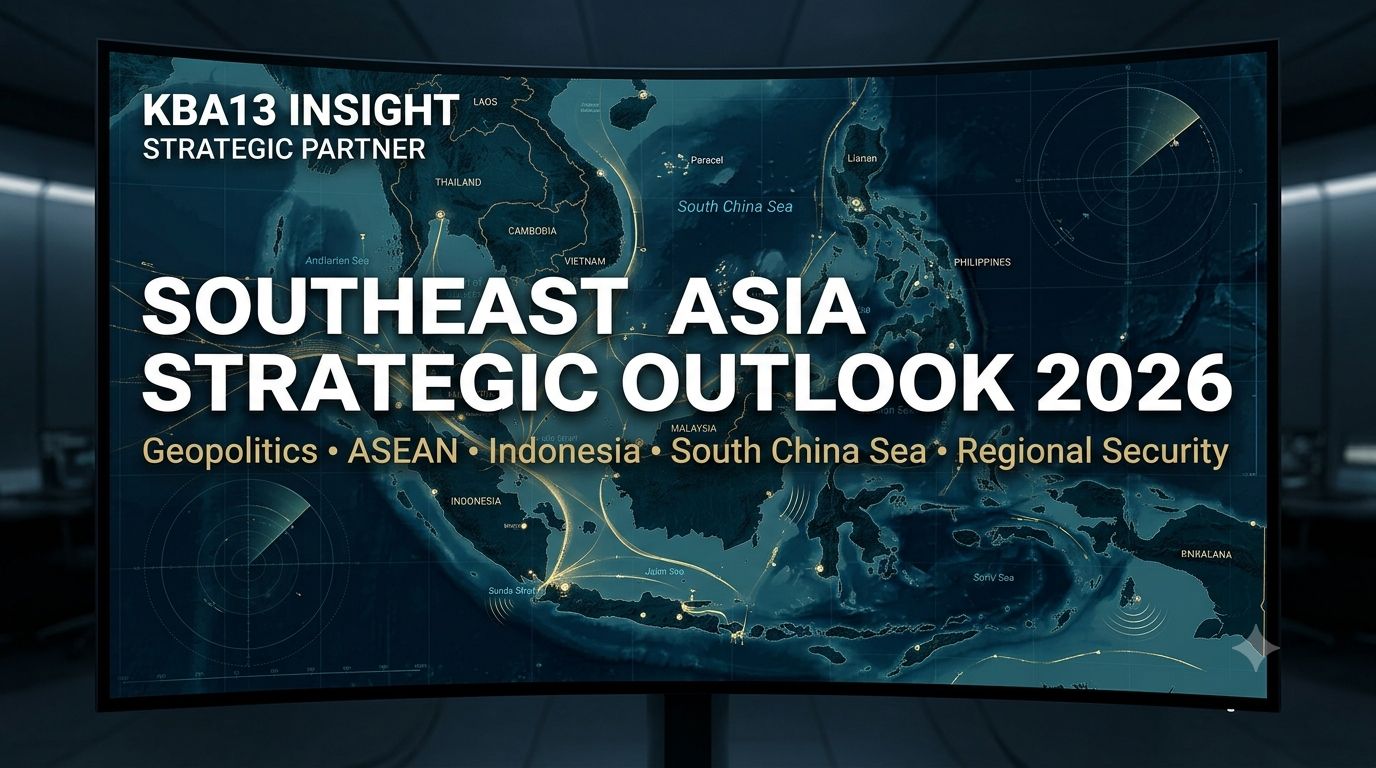
EXECUTIVE SUMMARY
Southeast Asia enters the second week of July 2026 at a pivotal juncture: multiple simultaneous stress tests are reshaping the region’s political landscape, economic calculus, and strategic alignments. The Philippines continues to navigate a demanding ASEAN chairmanship under the theme ‘Navigating Our Future, Together,’ facing unresolved tensions in the South China Sea, the Myanmar governance impasse, and the residual trauma of the Thailand-Cambodia border crisis inherited from Malaysia’s 2025 tenure. The weight of these dossiers is straining Manila’s capacity to convert its ambitious chairmanship agenda into deliverable outcomes before the November 2026 summit.
Indonesia is in the grip of a deepening tension between Prabowo Subianto’s statist economic doctrine and the signals from international capital markets. The rupiah continues to depreciate against the dollar, domestic equities have registered sustained losses, and bond yields have spiked—a trifecta of market disquiet that the Prabowo administration initially dismissed but is now being forced to address. The arrest of senior officials from the flagship Makan Bergizi Gratis (MBG) nutrition program on corruption charges in late June 2026 adds another layer of domestic political turbulence to an already complex governance picture.
In Malaysia, the Johor state election on 11 July dominates the near-term political horizon. All 56 state seats are being contested in what has become a three-way proxy battle between Barisan Nasional, Pakatan Harapan, and Perikatan Nasional. The result will send a direct signal to Putrajaya about the stability of the federal coalition and the likely timing of the 16th general election. Analysts broadly anticipate BN’s retention of Johor, but the margin of victory — and its implications for the ongoing rift within PN — is the signal that political operatives in Kuala Lumpur are watching most closely.
Singapore, under Prime Minister Lawrence Wong, is executing what may be the region’s most coherent AI-led economic strategy. The S$154.7 billion Budget 2026 embedded a National AI Council chaired by the Prime Minister himself, a 400% tax deduction on AI business spending, and the world’s first regulatory framework for agentic AI—positioning the city-state as a regulatory and innovation front-runner as Southeast Asia’s broader digital economy race intensifies. TikTok’s simultaneous layoffs in Singapore, Malaysia, and Indonesia on 1 July signal a rationalization of regional tech employment even as infrastructure investment continues to surge.
Myanmar’s post-election governance fiction deepens. The junta’s three-phase election process concluded on 25 January 2026, delivering a predictable sweep for the military-backed USDP. The international community has largely rejected the results as a procedural legitimation exercise. ASEAN, under the Philippine chair, has officially declined to recognize the elections while navigating internal divisions—with Thailand, Cambodia, and Vietnam applying pressure toward pragmatic engagement with the new junta-installed government.
The South China Sea remains a theater of managed tension rather than resolved conflict. The Code of Conduct negotiations between ASEAN and China have stalled under the Philippine chairmanship, with leading Chinese scholars on the South China Sea and the Chatham House think tank both publicly stating that a binding CoC is unlikely to be concluded in 2026. Meanwhile, tactical confrontations at Scarborough Shoal, Second Thomas Shoal, and Sandy Cay continue at a pace that normalizes friction rather than escalating it toward crisis.
Vietnam’s Communist Party completed its 14th National Congress, confirming Party General Secretary To Lam for a second five-year term and setting the policy course for the remainder of the decade. Thailand’s February 2026 general election returned Prime Minister Anutin Charnvirakul’s Bhumjaithai party with a comfortable plurality, and it formed a coalition with Pheu Thai. Nationalistic sentiment stoked by the Cambodia-Thailand border dispute was a significant driver of Bhumjaithai’s result.
On the energy and economic side, the 2026 Strait of Hormuz closure — a consequence of the Iran-U.S. escalation — has had direct knock-on effects in Southeast Asia, particularly for the Philippines, which declared a national energy emergency in late March. The disruption has accelerated regional conversations about energy diversification, LNG supply security, and the political economy of ASEAN’s collective dependency on Middle East energy corridors.
Digital infrastructure investment is emerging as a new axis of both economic competition and strategic contest. Malaysia is on course to double its data center capacity to 2,100 MW by the end of 2026. Singapore is positioning its 2,000-MW expansion outward via the Johor corridor. ByteDance has committed USD 8.8 billion to Thailand over five years, while Stack Infrastructure’s 220 MW facility in Johor represents the largest single data center investment in Malaysian history. These investments simultaneously create economic opportunity and new dependencies on external technology architectures.
The strategic outlook for the remainder of July is shaped by the Johor election result (11 July), continuing South China Sea tactical dynamics, Indonesia’s response to market pressure, and the ASEAN working group’s monthly progress—or lack thereof—on Code of Conduct talks. The broader regional signal is one of compressing space for strategic autonomy: every major capital in Southeast Asia is managing simultaneous economic, political, and security pressures, and the capacity for coherent, long-horizon policy is under strain across the board.
ASEAN ARCHITECTURE AND REGIONAL GOVERNANCE
The Philippines’ 2026 ASEAN chairmanship, organized around the theme ‘Navigating Our Future, Together,’ represents the most substantively ambitious agenda of any Southeast Asian chair in recent memory. Manila has organized its chairmanship around three pillars—peace and security anchors, prosperity corridors, and people empowerment—and has tabled eighteen priority economic deliverables for the November 2026 summit. These include the ASEAN Digital Economy Framework Agreement (DEFA), an ASEAN-Canada Free Trade Agreement, the ASEAN Leaders’ Declaration on Strategic Trade Management, and a new ASEAN Center of Excellence for MSMEs.
The ASEAN Digital Economy Framework Agreement represents the single most consequential institutional deliverable on the Philippine chairmanship’s table. Described as the world’s first regional digital economy pact, DEFA would establish a formally integrated USD 2 trillion digital market across eleven member states. Its architecture touches digital payments interoperability, cross-border data flows, e-commerce regulation, and cybersecurity standards. Manila had targeted its conclusion in the first quarter of 2026; the process has slipped, with the signing now contingent on the November summit—an outcome that remains possible but not guaranteed.
In Myanmar, ASEAN’s posture under Philippine leadership has been one of principled non-recognition without active enforcement. Foreign Secretary Lazaro confirmed at the January ASEAN retreat that the bloc does not endorse the junta’s three-phase elections and remains formally committed to the Five-Point Consensus. However, the practical coherence of this position is being eroded from within. Thailand, under new PM Anutin Charnvirakul, has publicly urged ASEAN to soften its stance on the post-election junta government, a position that Cambodia and Vietnam have tacitly supported. This internal divergence is significant: it signals that ASEAN’s consensus on Myanmar is now a structural fiction rather than an operational policy.
Timor-Leste’s formal admission as ASEAN’s 11th member, concluded at the November 2025 Kuala Lumpur summit, adds both geographic depth and institutional complexity to the bloc. Dili’s first significant multilateral act — hosting talks with Myanmar’s National Unity Government — provoked a direct warning from the junta, illustrating that even the newest member is already navigating the bloc’s most intractable governance fault line. Timor-Leste’s responses in the 2026 ISEAS State of Southeast Asia survey have been incorporated for the first time into the bloc’s aggregate data, reflecting an important institutional normalization.
The ASEAN-China Free Trade Agreement 3.0 Upgrade Protocol, signed at the Kuala Lumpur summit, entered the implementation phase this year. The upgraded agreement deepens supply chain connectivity across eleven sectors and creates enhanced mechanisms for e-commerce and digital services trade. For China, the 3.0 upgrade is part of a broader charm offensive marking five years of the Comprehensive Strategic Partnership—Beijing is reportedly planning a series of commemorative activities for the second half of 2026, focusing on science, technology, and people-to-people exchanges.
The Philippines’ ASEAN-Canada FTA negotiations, launched in 2021, are making fitful progress under the chairmanship’s acceleration mandate. If concluded, it would be ASEAN’s first FTA with a North American economy—a symbolically significant step toward trade diversification and a commercial hedge against the volatility of the U.S.-China rivalry. Canada’s relatively stable trade policy profile, compared to Washington’s, gives the agreement particular value in the current moment of American tariff unpredictability.
The Thailand-Cambodia border dispute, which erupted in July 2025 and was temporarily contained by Malaysia’s ceasefire diplomacy, has not been fully resolved under the Philippine chairmanship. The Chatham House assessment holds that Manila’s domestic political complications—including anti-corruption protests and calls for Marcos Jr.’s resignation—have constrained the Philippines’ bandwidth to manage complex intra-ASEAN disputes. The broader institutional lesson is that ASEAN centrality depends heavily on the chair’s domestic political stability, a dependency that the bloc has not structurally addressed.
The ISEAS 2026 State of Southeast Asia survey, released in April, documents a region under growing institutional strain. Respondents identified intensifying great-power competition as the primary concern, noting that strategic autonomy is increasingly difficult to maintain as U.S.-China rivalry deepens. China continues to be seen as the most influential actor in the region, but unease about its expanding role remains strong and consistent with prior years. Japan has emerged as the most trusted major power among Southeast Asian opinion-makers—a significant finding that underscores the premium regional elites place on reliable, non-coercive partnerships.
The 2026 AEC Strategic Plan for 2026–2030 is being implemented, focusing on digital transformation, supply chain security, and reducing the development gap. The plan seeks to accelerate regulatory harmonization across member states as a precondition for deeper economic integration. However, the gap between the plan’s ambitions and the institutional capacity of ASEAN’s weakest members — particularly Myanmar, Laos, and Cambodia — represents an enduring structural challenge to genuine single-market functionality.
ASEAN’s engagement with major external partners reflects a bifurcated strategic logic: deepening economic integration with China while maintaining security alignment with the United States and its network of like-minded partners. This dual-track posture is being tested simultaneously on multiple fronts: the South China Sea CoC impasse, the Myanmar governance impasse, the DEFA negotiations, and the Johor-Singapore economic corridor, which reflects the growing strategic-economic weight of the ASEAN-China-Singapore triangle in the regional investment architecture.
ENERGY, ECONOMICS & TRADE
Southeast Asia’s economic trajectory in mid-2026 is shaped by three converging forces: residual disruption from the closure of the Strait of Hormuz, the structural transformation of supply chains under the China+1 logic, and an uneven but powerful wave of digital infrastructure investment. These forces are not uniformly distributed: Vietnam, Malaysia, and Thailand are positioned as net beneficiaries of supply chain realignment, while Indonesia is struggling with the self-inflicted wounds of its interventionist economic governance and the Philippines is managing an energy emergency layered atop its demanding geopolitical obligations.
The closure of the Strait of Hormuz in late March 2026 — a consequence of the Iran-U.S. escalation — delivered an acute energy-security shock to the Philippine archipelago. Manila declared a national energy emergency and was forced to accelerate emergency LNG contracting. The disruption also reframed regional conversations about energy dependency, with ASEAN energy officials accelerating discussions on the ASEAN Power Grid and the long-term viability of reliance on fossil fuel imports. For Malaysia and Singapore, which have more diversified energy portfolios, the disruption reinforced the strategic value of energy diversification investments already underway.
Indonesia’s economic situation represents the most significant domestic risk in the regional landscape. The rupiah has been trading at historic lows against the U.S. dollar, forcing the central bank to implement surprise rate hikes. The domestic stock exchange has registered a sustained sell-off, and government bond yields have spiked as international investors signal concern about policy direction. The root cause is a structural tension: Prabowo’s ‘berdikari’ (self-reliance) economic doctrine prioritizes national sovereignty in resource management and social protection spending, but the combination of high fiscal deficits, export controls, and SOE expansion is creating conditions that deter the foreign investment Indonesia needs to sustain its growth targets.
The Makan Bergizi Gratis program—Prabowo’s flagship free school meals initiative, designed to reach 82.9 million meals daily by the end of 2026—has become both a political asset and a governance liability. Arrests of senior program officials on corruption charges in late June 2026 exposed the mismanagement and waste embedded in the program’s rapid scaling. The arrests are interpreted by analysts at the East Asia Forum as a signal from the Prabowo administration to restructure the program’s budget allocation toward direct cash transfers—a recognition that the current model is politically exposed and fiscally inefficient.
Vietnam continues to register strong economic fundamentals. GDP growth is projected at 6.3% for 2026, underpinned by export-led manufacturing expansion, high-tech FDI inflows, and continued supply chain relocation from China. Qualcomm’s AI research and development center in Vietnam, combined with major logistics infrastructure investments, including the Long Thanh International Airport and major ring road projects, is reinforcing Vietnam’s positioning as a regional production and innovation hub. However, Vietnamese economists and policymakers are privately cautious: approximately 50% of Vietnam’s exports go to China or the United States, creating a structural vulnerability to the G2 rivalry that export-diversification rhetoric has yet to resolve.
Malaysia’s data center and digital infrastructure boom is transforming the economic geography of the Johor-Singapore corridor. Stack Infrastructure’s 220 MW server farm in Johor—the first phase of which is scheduled for completion by late 2026—is part of a broader regional pattern in which Singapore’s space constraints are channeling data center investment northward into Johor. Malaysia is projected to reach 2,100 MW of data center capacity by the end of 2026, roughly doubling its current footprint. The strategic implications are significant: as countries host major data hubs and 5G networks, questions of digital sovereignty are moving from policy papers to operational governance.
ByteDance’s USD 8.8 billion five-year investment commitment to Thailand — centered on data infrastructure, cloud services, and AI development — represents the largest single Chinese technology investment in mainland Southeast Asia. It underscores Thailand’s emergence as a preferred destination for technology capital looking for politically stable, infrastructure-ready environments outside China. The investment also creates dependencies that Thailand’s government will need to manage carefully, given the broader pattern of concern about foreign technology architectures in sensitive national data environments.
The ASEAN Digital Economy Framework Agreement, if concluded at the November 2026 summit, would represent the region’s most consequential economic governance achievement since the AEC. DEFA’s architecture covers digital payments interoperability, cross-border e-commerce regulation, data flow governance, and cybersecurity standards—the plumbing of a genuinely integrated digital single market. The commercial stakes are high: ISEAS and WEF analyses project digital trade in Southeast Asia could approach USD 2 trillion by 2030, a figure that will only materialize if the regulatory foundations that DEFA would provide are in place.
The regional gig economy and TikTok’s simultaneous layoffs in Singapore, Malaysia, and Indonesia on 1 July 2026 illustrate a different dimension of the digital economy story. TikTok’s reorganization — centralizing its Trust and Safety workforce in key global hubs while cutting regional headcount — signals that the era of rapid regional tech hiring expansion may be giving way to a more efficiency-focused phase. The NTUC Creative Media and Publishing Union’s monitoring of affected workers in Singapore reflects the growing labor-market exposure that Southeast Asian workforces face due to platform-rationalization decisions made in Beijing, San Francisco, or Dublin.
The WEF regional risk survey identifies economic recession, unemployment, and inflation as the top three risk concerns across ASEAN. The connective tissue between these concerns — the failure of GDP growth to translate into broadly shared economic security — is driving political discontent in several capitals simultaneously. In Singapore, cost-of-living pressures dominate household conversations despite the city-state’s aggregate wealth. In Indonesia, the MBG corruption scandal and rupiah depreciation are feeding a public mood that Prabowo’s social protection framework is designed to manage but may not be capable of sustaining.
4. MYANMAR CRISIS WATCH
Myanmar’s post-election governance fiction is now fully constituted. The three-phase elections concluded on 25 January 2026, delivering an overwhelming parliamentary majority to the military-backed Union Solidarity and Development Party. The election process was condemned by the United Nations, the European Parliament, the United Kingdom, and a broad coalition of democratic governments as a procedural legitimation exercise rather than a genuine political consultation. UN Special Rapporteur Tom Andrews described the results as confirmation that the junta had designed the polls to manufacture a façade of legitimacy while violence and repression continued unabated.
The structural conditions that made a free election impossible remain fully in place. More than 30,000 people have been arrested since the 2021 coup, including over 6,200 women and 625 children. More than 2,200 people have reportedly died in junta custody. The military controls approximately 20-21% of Myanmar’s territory; resistance forces and ethnic armies hold 42%. Polls could not be held in 65 townships, and the junta’s 2024 census was conducted in only 145 of 330 townships — a factual baseline that made any claim to national democratic representation structurally impossible from the outset.
The junta’s international legitimation strategy produced partial results. Nine countries sent observers to the election, including Japan, India, and ASEAN members Cambodia and Vietnam—a roster that illustrates the fracture lines within both Asian democracy promotion and ASEAN’s claimed common position. Myanmar’s mainland Southeast Asian neighbors with authoritarian governance traditions proved most receptive to the legitimation project. Japan’s engagement reflects its longer-term commercial interest in Myanmar’s resource sectors and its competition with Chinese firms for post-conflict positioning.
ASEAN’s collective response under Philippine leadership has been principled but operationally ineffective. The bloc formally declined to certify the elections and has refused to recognize the three-phase process. Foreign Secretary Lazaro confirmed ASEAN’s continued commitment to the Five-Point Consensus. However, Philippine Foreign Secretary Lazaro’s own January visit to Min Aung Hlaing—conducted in her capacity as ASEAN Chair’s Special Envoy—generated domestic criticism in the Philippines for appearing to legitimize junta authority, illustrating the uncomfortable operational reality that engaging Myanmar diplomatically and refusing to recognize it politically are not easily reconcilable postures.
Thailand’s new Bhumjaithai-led government is the most consequential internal ASEAN voice pushing for the normalization of relations with the post-election junta. PM Anutin Charnvirakul’s position reflects Thailand’s structural exposure: it shares a long border with Myanmar, hosts significant numbers of Myanmar refugees, and depends on junta cooperation for border security, narcotics control, and managing regional criminal enterprises. Thailand’s push to soften the Five-Point Consensus position represents a pragmatic calculation that the costs of continued non-engagement with the de facto Naypyidaw government are exceeding the benefits.
The human rights and humanitarian situation continues to deteriorate. Since the 2021 coup, Myanmar has become the world’s top producer of opium and a major source of synthetic drugs. Scam center operations — large-scale criminal enterprises forcing trafficked victims to conduct cyber fraud — have proliferated across border areas under junta tolerance, generating regional security externalities that affect Thailand, China, India, and beyond. The junta’s January 2026 cybersecurity law further restricts online content and expands digital surveillance, reinforcing the information-control architecture that the election process depended on.
China’s role in Myanmar’s post-election political economy is both central and opaque. Beijing played a direct role in facilitating the election process, celebrated its completion, and is being positioned by analysts as the primary external actor capable of leveraging the junta to reduce conflict and stabilize the economy. China’s interest is fundamentally commercial: it needs junta cooperation to protect Belt and Road Initiative infrastructure, maintain pipeline access, and secure its overland route to the Indian Ocean via Myanmar’s deep-sea port capacity—an alternative to the Strait of Malacca that assumes growing strategic value as maritime tensions rise.
The International Criminal Court and the International Court of Justice proceedings against Myanmar’s junta leadership continue in parallel with the post-election political normalization effort. The ICC prosecutor’s November 2024 request for an arrest warrant for Min Aung Hlaing for crimes against humanity against the Rohingya is still pending a public decision from the judges. The ICJ merit hearings in the Gambia v. Myanmar genocide case were expected in January 2026. These legal proceedings create a persistent legitimacy ceiling on any junta normalization effort, regardless of what bilateral diplomatic recognition individual states may extend.
Myanmar’s broader trajectory, according to East Asia Forum analysts, points toward continued fragmentation rather than consolidation. The post-election arrangement provides the junta with a constitutional veneer for shifting from martial law to nominal civilian governance, but it does not resolve the underlying armed conflict. The People’s Defense Force and its ethnic-army allies continue to hold large territories, and the balkanization of effective governance among multiple armed actors constitutes a structural condition rather than a transitional phase. The 2026 baseline is a grinding post-election impasse with continued atrocities and accelerating erasure of Myanmar’s human capital.
For ASEAN’s institutional credibility, Myanmar remains an existential test. The Five-Point Consensus has not produced a single measurable outcome since its adoption. The junta has never granted the ASEAN Chair’s Special Envoy unrestricted access to conflict parties. The elections were conducted in defiance of ASEAN’s stated conditions for any electoral process. And ASEAN’s internal divisions — between members that want to maintain principled non-engagement and those that want to normalize relations with the post-election government — are now visible and operationally significant. The bloc’s capacity to manage this contradiction will be a defining test of Philippine chairmanship leadership in the second half of 2026.
PHILIPPINES POLITICAL DYNAMICS
President Ferdinand Marcos Jr.’s 2026 ASEAN chairmanship is unfolding against a backdrop of accelerating domestic political pressure. Large-scale anti-corruption protests and calls for Marcos’s resignation have complicated the administration’s ability to project the coordinated, outward-looking foreign policy posture that an effective chairmanship requires. The tension between the demands of leading an eleven-member regional bloc through a complex geopolitical moment and managing a contested domestic legitimacy is defining the political texture of the Marcos presidency in its third year.
In the South China Sea, Manila’s dual-track posture—simultaneous diplomatic engagement with Beijing and deepening military integration with the United States, Japan, and Australia—has produced results in both directions. China and the Philippines met in Cebu on 29 January 2026, with both sides reporting progress on updating their coast guard memorandum of understanding. Three subsequent rounds of talks have followed. At the same time, Exercise Balikatan 2026 set a new scale record: 17,000 troops from seven nations, with Japan deploying combat troops to Philippine soil for the first time and conducting a live fire of the Type 88 missile. The strategic incongruity of these parallel tracks is not lost on Beijing.
Sandy Cay and Scarborough Shoal have been the tactical flashpoints of the past two months. On 27 April, Chinese state media reported that the Chinese Coast Guard had raised its flag on Sandy Cay; Philippine Coast Guard personnel were dispatched in response. By 3 May, Beijing claimed five Philippine personnel had landed ‘illegally’ on the sandbar; Manila announced it would deploy ships against four Chinese research vessels. The Atin Ito civilian coalition’s concurrent flag-raising operation — slipping past two CCG vessels and a PLAN frigate — illustrates the multi-actor complexity of sovereignty assertion in the West Philippine Sea, where civilian, coast guard, and military actors are simultaneously operating.
The Japan-Philippines strategic relationship has reached a new depth of institutional integration. The Japan-Philippines Reciprocal Access Agreement entered into force in September 2025, followed by their acquisition and cross-servicing agreement in January 2026. Philippine Foreign Minister Lazaro stated in June that Manila and Tokyo increasingly view the East China Sea and the South China Sea as a single, connected security theater—a framing that aligns Philippine maritime sovereignty claims with Japan’s Indo-Pacific deterrence architecture and deepens the trilateral Manila-Tokyo-Washington security relationship, which Beijing is monitoring closely.
China’s PLAN Task Force 107 conducted drills east of Luzon under the Type 055 destroyer Zunyi, while the Liaoning carrier group operated nearby—a signal of Beijing’s capacity and willingness to operate near the Philippine archipelago amid deepening Manila-Washington-Tokyo defense integration. Around Scarborough, the Philippines has reported that China has tightened its presence with a 352-meter barrier and has continued operations at Sabina and the Second Thomas Shoal. The structural dynamic is one of incremental position-hardening by both parties, with the gap between their diplomatic statements and operational behaviors widening in parallel.
The Code of Conduct negotiations remain the central formal diplomatic process. Wu Shicun, founding president of China’s National Institute for South China Sea Studies, stated publicly that a CoC conclusion under Philippine leadership is ‘100 percent not likely,’ citing the inevitable intrusion of the 2016 Permanent Court of Arbitration ruling into any negotiation in which Manila is a principal party. The Chatham House assessment concurs, suggesting that the best outcome for the Philippine chairmanship would be to set up the next chair — Singapore in 2027 — for a successful CoC conclusion, leveraging Singapore’s more constructive relationship with Beijing.
The domestic-political dimension of Marcos Jr.’s presidency adds a further layer of complexity. The anti-corruption protests, combined with the structural vulnerabilities of the Marcos family’s historical political economy, have generated a domestic environment that constrains the president’s ability to make bold diplomatic concessions or engage in politically costly multilateral compromises. The Philippines does not speak with a single diplomatic voice on China — a reality that ISEAS analysts on the Fulcrum platform have documented in detail, noting that daily friction at sea coexists with deepening economic engagement and security ties.
On the ASEAN Myanmar file, the Philippines faces its most delicate intra-bloc management challenge. The decision not to recognize the junta elections while also dispatching a special envoy to meet Min Aung Hlaing in January reflects a fundamental tension: Manila is formally committed to the Five-Point Consensus while operationally testing the limits of non-recognition. The domestic political backlash from Filipino parliamentarians who opposed any engagement that could legitimize junta claims illustrates that the Philippines’ Myanmar posture is contested even within its own political system.
The Philippines’ priority economic deliverables for the November summit — particularly DEFA, the MSME Center of Excellence, and the Creative Economy initiative — reflect a genuine developmental vision for ASEAN’s next phase of integration. The DTI is leading seven of the eighteen priority economic deliverables. Whether these can be converted into signed agreements by November depends on the capacity of the ASEAN working group machinery to accelerate negotiations in the second half of the chairmanship year — a capacity that depends as much on member-state political will as on technical processes.
The broader political signal of the Philippine chairmanship to date is that ASEAN’s capacity to manage simultaneous crises—Myanmar, South China Sea, intra-ASEAN border disputes, and digital governance—is being tested to its structural limits. The Philippines is a credible and substantively engaged chair, but the accumulation of unresolved dossiers from 2025 and the complexity of the 2026 environment mean that Manila’s chairmanship will likely be judged primarily by what it prevents from deteriorating rather than what it conclusively resolves. Managing the South China Sea at a stalemate while preventing escalation is itself a strategic achievement in the current environment.
INDONESIA STRATEGIC AFFAIRS
Indonesia under Prabowo Subianto is engaged in the most consequential test of its economic governance in the post-Reformasi era. The fundamental question is whether a statist economic doctrine built on resource nationalism, SOE expansion, and social protection scaling can generate the foreign investment and productivity growth that a country of 280 million people requires to escape the middle-income trap. The market’s answer, delivered through a sustained rupiah depreciation, an equity sell-off, and a spike in bond yields, is that confidence in the current policy framework is severely impaired.
The Danantara sovereign wealth fund — launched in February 2025 and modeled explicitly on Singapore’s Temasek Holdings — is the institutional centerpiece of Prabowo’s statist economic architecture. Danantara is designed to consolidate Indonesia’s state-owned enterprise assets and channel them into strategic downstream investment. The concept is sound; the execution has been complicated by concerns about governance transparency, the pace of integration, and whether the fund’s management has the institutional capacity to deploy capital at the scale required by the president’s ambitions. Investors have been watching the fund closely as a barometer of whether Indonesia’s SOE ecosystem can genuinely transform into a growth-generating vehicle.
The Makan Bergizi Gratis program represents the most politically exposed element of Prabowonomics. The program’s ambition — 82.9 million meals per day reaching all Indonesian children from infancy to age 18 — is extraordinary by any global benchmark. The arrests of senior program officials in late June 2026 for corruption, the first significant enforcement action within a Prabowo flagship program, are being interpreted by the East Asia Forum as a presidential signal to restructure the program toward cash transfers and tighter benefit targeting. The operational logic is clear: the MBG model is too expensive, too opaque, and too politically vulnerable to maintain at its current architecture.
Indonesia’s engagement in international economic diplomacy is under strain due to the domestic political economy. Two critical multilateral processes—the Reciprocal Trade Agreement with the United States and Indonesia’s accession negotiations for the OECD and CPTPP—require governance credibility and market-openness signals that the current administration’s statist posture makes it difficult to convey. The potential for an S&P sovereign debt rating downgrade, following earlier warnings from other agencies, would further constrain Indonesia’s borrowing costs and investment climate at an already difficult moment.
Prabowo’s January 2026 Davos address illustrated his global ambitions. He positioned Indonesia as a trading nation that has concluded FTAs with the EU, Canada, Peru, and Eurasia and is pursuing a comprehensive economic partnership agreement with the United Kingdom. He presented Danantara and the MBG program as evidence of Indonesia’s capacity to combine economic ambition with social protection. The gap between this Davos framing and the market reality—sustained capital flight and currency weakness—reflects the credibility deficit that has accumulated around the administration’s economic management since mid-2025.
On defense and security, Prabowo’s military background has translated into an active interest in defense modernization and an increase in the number of active-duty military personnel in civilian bureaucratic positions. The BTI 2026 Indonesia country report notes that military penetration of the civilian administration is at its highest level since the Suharto era, raising concerns about democratic governance while providing the administration with implementation capacity in areas where the civilian bureaucracy has historically been weak. Papua remains a persistent security challenge, with Prabowo opting for military-led suppression rather than dialogue—a posture that echoes his predecessor Jokowi’s approach and has drawn sustained international human rights criticism.
The BYD battery breakthrough announced in early July — specifically its capacity to replace nickel-based battery chemistry with alternative materials — has significant implications for Indonesia’s resource nationalism strategy. Indonesia’s nickel export ban and downstream processing requirements were predicated on becoming an indispensable supplier of nickel to the global EV battery supply chain. If BYD’s breakthrough accelerates the shift away from nickel-intensive battery architectures, the strategic logic of Indonesia’s nickel cartel strategy is fundamentally undermined—a development with major fiscal and macroeconomic consequences for the Prabowo administration’s revenue projections.
Indonesia’s Patriot Bond initiative—a government-issued retail bond instrument—has drawn pointed criticism from Singapore, which has raised concerns about the potential for capital previously held in Singaporean financial institutions to migrate back to Indonesia. Indonesian economists have responded that Singapore’s concern reflects precisely the bond’s success in attracting offshore wealth repatriation from Indonesia. The exchange illustrates the competitive financial dynamics of the Singapore-Indonesia relationship, where decades of Indonesian capital holding Singapore residential and financial assets have created a structural economic interdependence that competition in financial instruments can strain.
Prabowo’s foreign policy posture remains formally non-aligned but operationally tilted toward diversification of strategic partnerships. The Special Comprehensive Strategic Partnership signed with South Korea in April 2026—announced during President Lee Jae-myung’s state visit to Jakarta — includes commitments in AI partnership, defense cooperation, and strategic industry development. The framing of Korean companies entering Indonesia’s ‘Golden Indonesia Vision’ strategic sectors reflects Prabowo’s desire to attract technologically advanced partners who can contribute to Indonesia’s industrial upgrading without the political sensitivity that Chinese or American capital carries in particular sectors.
The medium-term political calendar adds pressure to Prabowo’s economic management. Indonesia’s next presidential election is in 2029; the current administration needs to demonstrate tangible economic improvements—in employment, wages, and household purchasing power — well before the election cycle begins in earnest. The 2026 state budget is the first that is fully Prabowo’s own design, with revenues projected at IDR 3,153.6 trillion and spending at IDR 3,842.7 trillion. The fiscal deficit and the gap between spending ambitions and revenue capacity is the structural constraints that will define the administration’s economic options for the remainder of its term.
SOUTH CHINA SEA & MARITIME SECURITY
The South China Sea in July 2026 presents a textbook case of managed tension: the aggregate level of friction is high and the frequency of tactical incidents is elevated, but neither the primary protagonists nor the major external actors have an immediate incentive to escalate toward a crisis that would require definitive resolution. Both Beijing and Manila are simultaneously conducting diplomacy and conducting maritime assertion operations, operating on the premise that the other party will absorb the friction without triggering a mutual defense treaty invocation or a broader internationalization of the dispute.
China’s structural position in the South China Sea has hardened across multiple flashpoints since late 2025. At Scarborough Shoal, a 352-meter barrier has been reported, consolidating Chinese operational control over access to the feature. At Sandy Cay, a Chinese Coast Guard flag-raising in late April 2026 was met with a Philippine Coast Guard response, but the flag was not removed. At Second Thomas Shoal — where the BRP Sierra Madre and its military contingent represent Manila’s most exposed forward position — resupply missions continue to be harassed by CCG vessels, maintaining a pattern of operational pressure that has become normalized in both navies’ operational lexicon.
The PLAN’s Task Force 107 exercised east of Luzon under the Type 055 destroyer Zunyi while the Liaoning carrier group operated concurrently in nearby waters—a display of layered maritime capability that serves multiple audiences simultaneously: it signals to Manila the vulnerability of Philippine maritime approaches, to Washington the cost-imposition potential of PLAN operations near U.S. ally territory, and to regional audiences more broadly that China’s military reach in the South China Sea is comprehensive rather than selective.
Vietnam’s construction of military infrastructure at 27 sites across 18 reefs in the disputed Spratly Islands, documented by Radio Free Asia satellite imagery in June, represents a parallel but underreported dimension of South China Sea militarization. While Philippine-Chinese confrontations dominate the media narrative, Vietnam’s quiet but persistent infrastructure consolidation across its Spratly holdings reflects a strategic patience that Hanoi has maintained for decades. Vietnam and the Philippines elevated their bilateral relations to an Enhanced Strategic Partnership on 1 June, with a signed memorandum on maritime security reaffirming freedom of navigation in the South China Sea.
The U.S.-Philippines-Japan trilateral maritime dialogue, held for the second time in Manila on 8 June, reaffirmed the 2016 ruling of the Permanent Court of Arbitration and jointly opposed any unilateral attempts to change the status quo by force. Philippine FM Lazaro’s framing of the East China Sea and South China Sea as a single connected security theater represents a significant conceptual development: it formally aligns Philippine maritime doctrine with Japan’s broader Indo-Pacific deterrence framework and creates a logical basis for joint operations across what would effectively be the full arc of China’s contested maritime perimeter.
The Code of Conduct process is in structural deadlock. ASEAN working groups are holding monthly meetings under the Philippine chairmanship’s mandate, but the fundamental incompatibility of positions—Beijing insisting on historical rights and opposing references to UNCLOS and the 2016 arbitration ruling; Manila constitutionally unable to negotiate away its legal entitlements—means that process momentum is not translating into substantive progress. The Chatham House assessment recommends that the Philippines focus its chairmanship on setting Singapore up for success in 2027, leveraging Singapore’s constructive relationship with China as the more effective path to a binding instrument.
Indonesia’s maritime sovereignty concerns in the North Natuna Sea—where Beijing’s nine-dash line overlaps with Indonesia’s EEZ — have been managed with characteristically Jakarta-ian ambiguity: Indonesia does not formally recognize itself as a South China Sea claimant, while consistently asserting sovereign rights over the Natuna maritime zone in practice. The BYD battery development news adds an economic dimension to Indonesia’s maritime strategy: if nickel loses its strategic value, the resource nationalism logic that has aligned Jakarta’s maritime posture with its trade policy weakens, potentially creating space for a recalibrated approach to South China Sea engagement.
Malaysia’s South China Sea posture, now that Anwar Ibrahim’s government is in the post-chairmanship phase, has returned to its traditional combination of quiet assertiveness and economic engagement with China. Malaysia holds overlapping claims with China in the Spratlys and has historically managed these through a combination of maintaining a strong legal position and bilateral economic accommodation. Anwar’s ASEAN chairmanship in 2025 demonstrated that Malaysia can play a constructive mediating role in intra-ASEAN disputes — its brokering of the Thailand-Cambodia ceasefire being the most tangible example — but maintaining that role requires continuing Beijing’s confidence, which the South China Sea claim management is designed to preserve.
The broader regional maritime security architecture is deepening beyond the bilateral Philippines-U.S. axis. Australia’s participation in Balikatan 2026, Japan’s Reciprocal Access Agreement, and the formal trilateral Manila-Tokyo-Washington maritime security dialogue are transforming the Philippines from a bilateral U.S. treaty ally into a node in a multilateral Indo-Pacific deterrence network. For Beijing, this transformation represents precisely the kind of external military encirclement that its diplomatic messaging consistently objects to—an objection unlikely to change Manila’s or Tokyo’s strategic calculus, but one that helps explain the coercive escalation at individual flashpoints as a form of cost-imposition signaling.
The South China Sea in the second half of 2026 will be shaped by two key variables: whether the Code of Conduct process can generate even a modest procedural framework that reduces tactical friction and whether the frequency and severity of physical incidents at Scarborough Shoal and Second Thomas Shoal escalates beyond the current ‘managed tension’ threshold. The risk of miscalculation—a collision, a live-fire incident, or a resupply mission that results in casualties —remains structurally present. The multilateral deterrence architecture that Manila and its partners are building is designed to raise the cost of escalation for Beijing, but it does not eliminate the risk of incidents that neither party intends but that structural proximity makes probable.
MAINLAND SOUTHEAST ASIA (THAILAND, VIETNAM, MEKONG)
Thailand’s political landscape has been reordered by the February 2026 general election, which returned PM Anutin Charnvirakul’s Bhumjaithai party with a comfortable plurality. The election result was significantly shaped by nationalistic sentiment generated by the 2025 Thailand-Cambodia border conflict, which elevated security and national sovereignty to the top of the electoral agenda. Anutin has formed a coalition with Pheu Thai, creating a government that combines Bhumjaithai’s nationalist-security framing with Pheu Thai’s Thaksin-network economic reach. The governing coalition’s first major foreign policy test is managing the Thailand-Cambodia border situation, which remains formally ceasefire-bound but structurally unresolved.
The Thailand-Cambodia border dispute — triggered by boundary disagreements over colonial-era French maps — represents ASEAN’s most acute intra-bloc security crisis since its admission of Myanmar in 1997. The Malaysia-brokered July 2025 ceasefire was reaffirmed in October 2025 and then suspended in November after a landmine incident injuring Thai soldiers. A firefight in December 2025 resulted in mutual accusations and a return to open hostilities. The transfer of the ASEAN chairmanship from Malaysia to the Philippines has shifted crisis-management responsibility to Manila, which lacks Malaysia’s particular relationships with both Bangkok and Phnom Penh. The new Thai coalition government’s willingness to engage the ceasefire framework while also pushing for ASEAN normalization of Myanmar relations illustrates the complex strategic geometry Anutin is navigating.
Vietnam’s 14th National Congress, held in mid-January 2026, confirmed Party General Secretary To Lam for a second five-year term, providing political continuity for Vietnam’s high-growth development model. The Congress’s decisions will set the direction of government policy for the remainder of the decade. Despite 35 empty seats in the Central Committee created by disciplinary dismissals and deaths, none were filled by alternates — a decision that reflects the party’s broad consensus on leadership stability. Vietnam’s GDP growth projection of 6.3% for 2026 makes it one of Southeast Asia’s strongest economic performers, driven by manufacturing FDI, export diversification, and infrastructure investment, including the Long Thanh International Airport.
Vietnam’s strategic posture in mid-2026 is defined by a careful balancing act between its deepening security relationship with the United States, Japan, and the Philippines on maritime issues and its economic interdependence with China. The elevation of Vietnam-Philippines relations to an Enhanced Strategic Partnership on 1 June — specifically including a maritime security MOU reaffirming freedom of navigation — signals Hanoi’s willingness to build multilateral maritime coalitions while maintaining the diplomatic caution imposed by its proximity to China. Vietnam’s satellite-documented infrastructure construction across 27 Spratly reef sites reflects the same logic: quiet, persistent assertion of sovereignty without rhetorical escalation.
Vietnam’s Hon Khoai island port project in the Mekong Delta has moved from concept to operational urgency following Cambodia’s groundbreaking on the China-funded Funan Techo Canal. The 180-kilometer canal from Phnom Penh to Cambodia’s coast would allow Cambodia to bypass Vietnamese waterways and ports, fundamentally altering the logistics geography of the lower Mekong and reducing Vietnam’s economic leverage over its southwestern neighbor. Vietnam’s defense officials view the canal as a potential Chinese naval access route to the Gulf of Thailand — a strategic concern that explains Hanoi’s accelerated investment in Hon Khoai’s port and military infrastructure.
The Funan Techo Canal, which received Chinese construction support and attracted significant strategic commentary in 2025, represents the most consequential infrastructure development in mainland Southeast Asia. For China, the canal serves multiple objectives simultaneously: commercial connectivity from Phnom Penh to the coast, reduction of Cambodia’s dependence on Vietnamese logistics infrastructure, and a potential future naval access point to the Gulf of Thailand that would complement Ream Naval Base’s Chinese-upgraded facilities. For Vietnam, it is a direct strategic challenge to the geographic leverage that has historically given Hanoi disproportionate influence over Cambodia’s export routes.
The Mekong River’s water governance crisis continues to generate regional tension with limited institutional resolution. China’s cascade of twelve mainstream dams in the upper basin remains the primary source of downstream flow reduction, affecting fisheries, agriculture, and communities across Laos, Thailand, Cambodia, and Vietnam. The 2026 flood season is predicted to be below the multi-year average, with peak flood levels at Tan Chau expected to be 3.8 meters above Level I alarm thresholds but below Level II, offering marginal agricultural relief while reinforcing the long-term trend of diminishing natural flood cycles that communities along the lower Mekong depend on.
Laos continues to stake its economic model on electricity export from hydropower infrastructure, operating as a ‘battery of Southeast Asia’ for regional power grids. China’s Vientiane-Saysettha Low-Carbon Demonstration Zone — an 11.5-square-kilometer development spanning an industrial park and a new urban area — is one of the largest China-Laos cooperation projects underway, designed to attract approximately USD 5 billion in investment. The zone illustrates the depth of China’s infrastructural and economic penetration of Laos, where BRI commitments and bilateral debt exposure have created structural dependencies that effectively constrain Vientiane’s foreign policy autonomy.
Cambodia under Hun Manet is pursuing a deliberate recalibration of its international positioning, seeking to reduce the reputational damage from its near-total alignment with China under his father. The USS Cincinnati’s visit to Ream Naval Base on 26 January 2026 — a U.S. Navy littoral combat ship entering a facility that China helped upgrade — was a strategically significant signal: Cambodia is willing to use American maritime engagement to demonstrate that Ream is not a facility exclusively for China. The local elections scheduled for 2027 and the national elections in 2028 will likely see Cambodia tilt back toward Beijing, consistent with its established pattern of heightened alignment with China during electoral cycles.
The Mekong-Korea Cooperation framework, with Vietnam co-chairing alongside Seoul, has set a 2026-2030 agenda focused on digital economy development, innovation, and water-food-energy security. Vietnam’s planned 13th MKC Business Forum in September will focus on digitalization — reflecting the broader regional pattern in which digital economy integration is emerging as the new frame for subregional cooperation, supplementing the physical infrastructure investments that have defined the Mekong’s development narrative since the 1990s. Thailand’s ByteDance investment and Vietnam’s Qualcomm AI center are both expressions of this digital economy reorientation, positioning mainland Southeast Asia as a new theater for the geopolitics of compute.
MALAYSIA & SINGAPORE: BILATERAL & STRATEGIC WATCH
Malaysia’s political center of gravity is the Johor state election on 11 July 2026—the most significant sub-national electoral contest in Southeast Asia this week. All 56 seats in the Johor State Legislative Assembly are being contested, with the incumbent Barisan Nasional government, led by Menteri Besar Onn Hafiz Ghazi, defending its 2022 two-thirds supermajority. The election was triggered by the dissolution of the state assembly on 1 June 2026, signed by the Regent of Johor under circumstances that have generated competing political narratives about motivation, timing, and the role of the ‘Free Najib’ campaign in forcing an early poll.
The Johor contest has effectively become a three-way battle between BN, Pakatan Harapan, and the fractured remnants of Perikatan Nasional. PAS’s strategic decision to direct its supporters to vote BN in non-PN seats — effectively endorsing its nominal rival against the common PH threat — illustrates the fluid and transactional nature of Malaysian opposition politics in the post-2022 landscape. The defection of 200 Johor PKR members to MIC signals the fluidity of grassroots political loyalty in a state where the BN’s developmental record and ethnic Chinese ground-level competition between MCA and DAP are both electoral variables. Analysts broadly project a BN retention of the state, though the seat margin and popular vote distribution will carry significant national signaling value.
Johor’s strategic importance extends beyond partisan politics. The Johor-Singapore Special Economic Zone (JS-SEZ) — whose blueprint was completed in late June 2026 but whose launch was deliberately delayed until after the state election — is one of the most consequential bilateral economic initiatives in Southeast Asian development planning. The zone’s architecture is designed to leverage Singapore’s financial and technological infrastructure alongside Malaysia’s land availability, labor supply, and lower-cost operating environment. The election outcome will directly affect the speed and political coherence with which the JS-SEZ framework is implemented, as any significant BN loss would introduce political uncertainty into the state government’s capacity to execute major strategic economic agreements.
Johor’s data center and property market dynamics have made it one of the most consequential investment destinations in Southeast Asia. Stack Infrastructure’s 220 MW facility, currently under first-phase construction, is part of a broader wave of hyperscale data center development that is being driven northward from Singapore’s space-constrained island. Malaysia is projected to reach 2,100 MW of total data center capacity by end-2026 — roughly double its 2024 level — with Johor accounting for a disproportionate share of that growth. Singapore’s own target of adding 2,000 MW of capacity is partially dependent on Johor infrastructure, making the two jurisdictions co-dependent nodes in a shared digital infrastructure corridor.
Singapore-Indonesia relations have entered a period of managed but visible tension over the Patriot Bond controversy. Singapore’s criticism of Indonesia’s government retail bond—which economists in Jakarta have characterized as an attempt to attract offshore Indonesian capital held in Singapore — reflects the underlying structural reality that Singapore’s financial ecosystem contains a significant pool of Indonesian private wealth. The debate illustrates the complex interdependency between the two economies: Singapore needs Indonesian investment flows and market access; Indonesia needs Singapore’s financial infrastructure and supply chain connectivity. Neither party can afford escalation, but neither can fully suppress the competitive dynamic.
Singapore under Prime Minister Lawrence Wong is executing a whole-of-government AI strategy with coherence and institutional depth that distinguishes it from every other Southeast Asian state. The January 2026 Model AI Governance Framework for Agentic AI — the world’s first regulatory framework specifically addressing AI systems that act on their own goals — reflects Singapore’s characteristic approach of moving ahead of the governance curve to establish first-mover regulatory advantage. The framework attracted the openings of Microsoft Research Asia and the Google DeepMind laboratory in Singapore in 2025, validating the hypothesis that regulatory clarity is a driver of technology investment attraction.
Singapore’s Budget 2026, delivered by PM Wong in February, allocated S$154.7 billion in government spending with AI as the central strategic investment theme. A National AI Council chaired by the Prime Minister, a 400% tax deduction on AI business spending, and a new AI Park at one-north anchor a comprehensive public-private AI deployment strategy. The budget also addressed defense, low-income household support, elderly care, and small-business resilience — reflecting Wong’s ‘more dangerous world’ framing, which integrates economic competitiveness and social cohesion as complementary pillars of national resilience.
Singapore’s position as the 2027 ASEAN chairmanship approaches is strategically significant. PM Wong’s March 2026 speech at the Bo’ao Forum for Asia — specifically, his framing of China as a responsible stakeholder that Singapore hopes will continue to support open markets — reflects the diplomatic groundwork being laid for Singapore’s anticipated role in advancing the South China Sea Code of Conduct under its own chairmanship. Chatham House’s recommendation that Manila focus on setting Singapore up for CoC success explicitly recognizes the Singapore-China relationship’s unique diplomatic utility in a negotiation that has stalled under every other chair’s management.
TikTok’s simultaneous layoffs in Singapore, Malaysia, and Indonesia on 1 July 2026 illustrate the vulnerability of Southeast Asian digital labor markets to platform rationalization decisions made in distant corporate centers. Singapore’s NTUC Creative Media and Publishing Union response — monitoring union members among the non-unionized TikTok workforce — reflects the labor market governance challenge of protecting workers in the gig and platform economy. The layoffs coincide with TikTok’s centralization of Trust and Safety operations in key global hubs, a strategic decision that trades regional labor depth for global operational efficiency and — in the context of ByteDance’s ongoing navigations of U.S. regulatory pressure — corporate operational simplicity.
Malaysia’s foreign policy under Anwar Ibrahim is demonstrating what the National Bureau of Asian Research has described as ‘structural stability amid geopolitical shifts’ — maintaining the non-aligned pragmatism that has defined Kuala Lumpur’s diplomatic tradition while managing the growing operational demands of great-power competition. Malaysia’s 2025 ASEAN chairmanship significantly elevated Anwar’s diplomatic profile, and the post-chairmanship period has maintained that positioning. Malaysia’s status as a prime beneficiary of digital infrastructure investment, a leader in the ASEAN digital economy architecture, and a key node in the China+1 supply chain realignment gives it structural leverage that its diplomatic tradition is well-positioned to translate into strategic agency.
STRATEGIC OUTLOOK: SIGNALS TO WATCH
The Johor state election on 11 July is the single most consequential near-term event in Southeast Asia’s political calendar. A strong BN majority confirms the structural dominance of the incumbent state government and accelerates JS-SEZ implementation; a narrower BN victory introduces political uncertainty into one of ASEAN’s most strategically important bilateral economic projects. An upset PH result would deliver a shock to the Anwar federal government’s coalition mathematics and likely trigger preparations for the 16th general election. Political analysts should track not just the seat count but the popular vote distribution, particularly among Johor’s ethnic Chinese electorate, where the DAP-MCA competition is a leading indicator of national electoral trends.
Indonesia’s economic trajectory through July and August will be defined by whether the Prabowo administration can demonstrate credible fiscal adjustment in response to market signals. The potential for an S&P sovereign debt rating downgrade — flagged as a near-term risk by East Asia Forum economists — is the single most consequential negative catalyst in the regional economic landscape. A downgrade would compound the rupiah depreciation and the equity sell-off, raise government borrowing costs, and potentially trigger a broader reassessment of Indonesia’s investment climate, setting back Prabowo’s foreign investment attraction objectives by a year or more. Watch for any signals from the administration on fiscal consolidation, MBG restructuring, or trade policy recalibration.
The South China Sea Code of Conduct negotiations will hold their next monthly working group meeting under the Philippine chairmanship framework. Track whether any specific sub-sections of the draft CoC text are being finalized, whether China is engaging substantively with ASEAN’s proposed language, and whether the bilateral Philippines-China coast guard MOU update is producing verifiable behavioral changes in CCG operations around Second Thomas Shoal and Scarborough Shoal. The gap between diplomatic process and operational reality at sea is the most reliable indicator of where the South China Sea dispute trajectory is actually heading.
Vietnam’s 14th National Congress policy directions are beginning to translate into specific regulatory and investment decisions. Watch for announcements on the Hon Khoai Island port development timeline, updates on Vietnamese military infrastructure in the Spratlys, and Hanoi’s response to the construction progress of the Funan Techo Canal. Vietnam’s strategic calculus on Cambodia has been fundamentally altered by the canal project, and the resulting shift in Vietnam’s maritime posture in the Gulf of Thailand has not been fully priced into regional strategic assessments.
The Myanmar post-election governance arrangement is entering its first phase of institutional consolidation. Watch for signals from ASEAN member states — particularly Thailand, Cambodia, and Vietnam — about whether bilateral diplomatic recognition of the new junta-installed government is forthcoming. Any such recognition, even implicit, would significantly weaken ASEAN’s formal non-recognition position and accelerate the divergence between the bloc’s official Five-Point Consensus language and its operational reality. Timor-Leste’s continued engagement with the NUG will be the most direct early indicator of where the ASEAN-eleven consensus lines are actually drawn.
Singapore’s preparations for the 2027 ASEAN chairmanship are entering their active planning phase. PM Wong’s Bo’ao speech and the management of the Singapore-China strategic relationship throughout 2026 are laying the diplomatic groundwork for Singapore to take over the South China Sea CoC dossier with maximum leverage. Watch for any informal Singapore-China bilateral signals on CoC architecture, particularly on the question of UNCLOS and references to arbitration rulings — the core sticking point in current negotiations — and on whether Beijing is willing to accept a legally binding instrument under Singapore’s facilitation, which it has consistently refused under other chairs.
The ASEAN Digital Economy Framework Agreement negotiating calendar is approaching its critical phase. The November 2026 Philippine chairmanship summit is the target signing date; the working group machinery needs to converge on final text positions across eleven member states and China in the next four months. The most contested elements will be data localization requirements, cross-border data flow rules, and digital services market access — domains where the regulatory interests of Singapore, Vietnam, Indonesia, and China are significantly misaligned. Any signal from the ASEAN Digital Economy working group about progress or stalling on these specific elements is a leading indicator of whether DEFA can achieve its November target.
The digital infrastructure investment race in the Johor-Singapore corridor will continue to generate both economic opportunity and strategic governance challenges. Watch for regulatory announcements from both Singapore and Malaysia on data sovereignty requirements for foreign-owned data centers — the governance question of who controls data hosted in these facilities is becoming a strategic issue rather than merely a commercial one. Singapore’s Smart Nation 2.0 Digital Infrastructure Act’s mandatory interoperability standards could set a regional precedent, shaping how ASEAN-wide data governance architecture evolves in the second half of the decade.
The Thailand-Cambodia border situation remains the most kinetically dangerous intra-ASEAN file. The February 2026 ceasefire is holding in its fourth month under the Philippine chairmanship’s management, but the underlying boundary dispute has not been resolved, and the nationalistic political dynamics in Bangkok — activated and deepened by the 2025-26 conflict — create domestic political incentives for confrontational posturing rather than compromise. Watch for any military movements along the Sisaket-Preah Vihear boundary, any allegations of ceasefire violations from either side, and the Philippine Special Envoy’s engagement with both capitals.
The broader strategic horizon through year-end 2026 presents a region navigating what the WEF’s 2026 regional risk survey describes as ‘structural tension between short-term stability and long-term strategic autonomy.’ Southeast Asia’s most sophisticated capitals—Singapore, Kuala Lumpur, Jakarta, Hanoi, Manila—are all simultaneously managing the externalities of great-power competition, domestic economic pressures, and the demands of digital-economy transformation. The region’s institutional framework—ASEAN and its associated processes—provides a coordination mechanism but not a resolution mechanism for any of these challenges. The signal to watch above all others is whether ASEAN’s institutional coherence holds under the cumulative weight of the Myanmar impasse, the South China Sea stalemate, the DEFA negotiations, and the intra-bloc tensions exposed by the Thailand-Cambodia border dispute.
About The Author

Rekomendasi Bacaan KBA13 INSIGHT
Jika tulisan ini bermanfaat, dukung jurnal ini dengan mencari bukunya melalui tautan berikut:
- Buku-buku Kamaruzzaman Bustamam Ahmad di Periplus
- Koleksi Islamic Studies di Periplus
- Koleksi Geopolitics & Politik Internasional di Periplus
- Cari buku & perangkat baca di Shopee
- Cari di Blibli
Daftar lengkap: Rekomendasi Buku, Alat Tulis & Layanan. Tautan di atas adalah tautan afiliasi — KBA13 INSIGHT dapat memperoleh komisi kecil tanpa biaya tambahan bagi Anda.
Artikel Terkait
 Membaca Arah Geopolitik dan Geostrategi Pemerintahan Prabowo: Suatu Perspektif Intelijen Strategis
 KBA13 Insight Regional Update: Southeast Asia Under Pressure (Hormuz Shock, ASEAN Crisis, Myanmar, Indonesia, and the South China Sea in 2026)
 Southeast Asia Strategic Outlook 2026: ASEAN, Indonesia, Myanmar, and South China Sea Tensions
 Solo dan Bayang-Bayang Terorisme: Membaca Kelahiran Jaringan Radikal Baru di Indonesia
 Southeast Asia Strategic Outlook 2026: ASEAN, South China Sea Tensions, Prabowo’s Economic Doctrine, and the Future of Regional Order
Leave a Reply