Introduction: The Complex Landscape of Indonesian Intelligence In this essay, I want to examine the intelligence situation in Indonesia — a topic that, while often associated with espionage, actually extends far beyond covert operations. In Indonesia, intelligence should be understood as a comprehensive system designed to reduce uncertainty and anticipate threats to national integrity. Yet, the coordination between intelligence institutions remains fragmented, with overlapping jurisdictions and unclear divisions of labor. This structural disorder often leads to the misuse of intelligence capabilities for specific, sometimes political, purposes. The challenge becomes evident when intelligence institutions operate without a unified command structure. Competing interests can shape their operations, leaving intelligence vulnerable to political manipulation. The lack of clear strategic coordination has long been one of Indonesia’s most persistent governance weaknesses — one that undermines the potential for a coherent national security architecture. From Espionage to Statecraft: Redefining the Role of Intelligence Indonesia’s intelligence discourse is often dominated by “security intelligence,” which focuses on immediate threats to public order. However, the deeper concern lies in the marginalization of “strategic intelligence.” While the former reacts to daily crises, the latter aims to understand and anticipate national and global developments over a longer horizon. Strategic intelligence, in its pure form, provides information essential for policymaking and long-term defense planning at the international and national levels. Unfortunately, strategic intelligence has not been institutionalized with sufficient authority within Indonesia’s national security framework. Its functions are often confined within military structures and disconnected from civilian policymaking. As a result, the nation’s leadership is frequently deprived of the analytical foresight needed to anticipate global shifts. Security intelligence, on the other hand, is more prevalent within police and counter-terrorism circles. Its goal is to “eliminate or reduce uncertainty for government decision-makers.” While valuable, this short-term orientation limits its utility in shaping
Artikel ini tersedia untuk pelanggan. Silakan berlangganan untuk membaca selengkapnya.

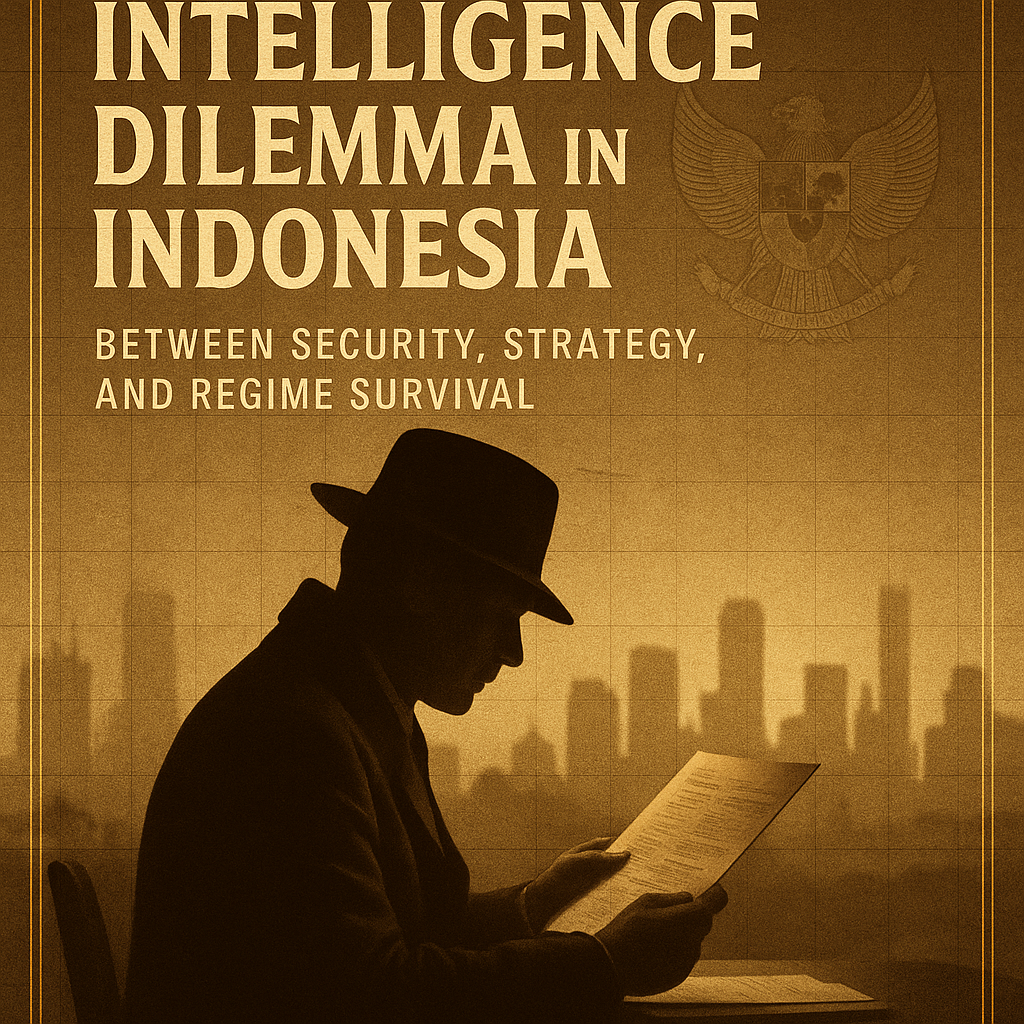
 The Architect and the Figurant: Intelligence, National Interest, and the Grammar of Strategic Power
 Cathie Wood and the Logic of Exponential Capital: The Architecture of Tomorrow
 Sovereign Shadows: The Architecture of Mossad’s Operation Inside Iran, from the Age of SAVAK to the Ruins of Natanz
 Indonesia at the Crossroads 2026: Rupiah Crisis, Prabowo’s Power Architecture, Papua Conflict, and the Future of the Republic
 Indonesia Strategic Intelligence Report (7–12 July 2026): Political Crisis, Papua Conflict, BrahMos Deal, Economy, and National Security
Leave a Reply