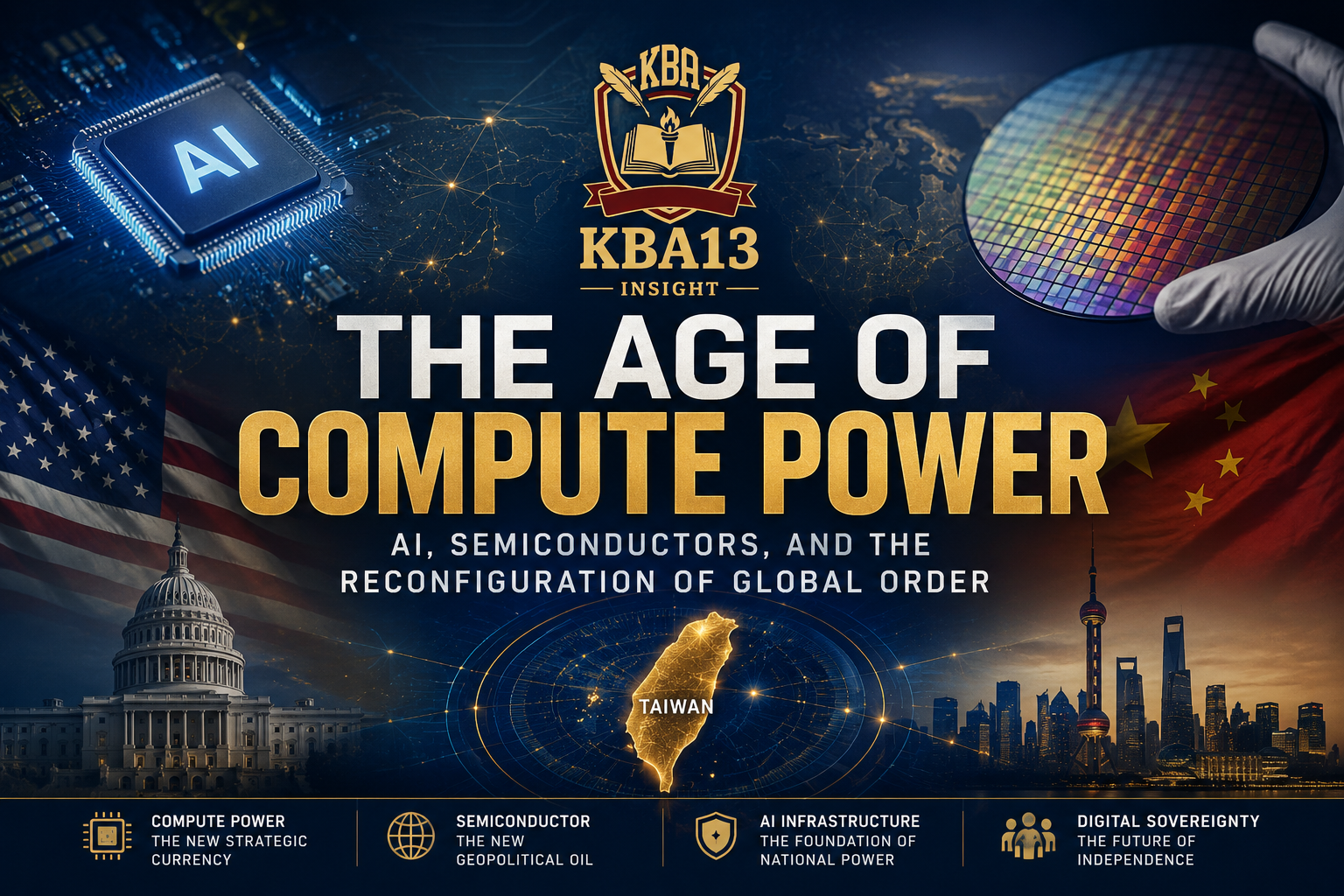
I. The Question That Changes Everything Every age carries a foundational question—the answer to which determines who leads, who follows, and who disappears from the stage of history. In the age of coal and steam, it was: who controls the means of industrial production? In the age of oil and nuclear deterrence, it was: who controls energy and the capacity for strategic annihilation? Today, as we move through the opening decades of the twenty-first century, the foundational question has changed once more — and its answer is restructuring the entire architecture of global power. The question now is: who controls the capacity to compute intelligence at scale? This is not a technical question. It is a political, civilizational, and deeply moral one. In earlier work published on this platform — particularly in my essay “From WEIRD Society to FACE RIP Society: AI, Human Agency, and the Crisis of Civilization” (2026) — I argued that artificial intelligence is not merely a technological revolution but a civilizational force that is transforming how human beings understand freedom, accountability, connection, economics, reality, intelligence, and power. That essay was concerned with the civilizational interior of the AI revolution: what it does to human agency, moral life, and collective meaning. This essay addresses the civilizational exterior: what it does to the distribution of power among nations, to the architecture of global order, and to the strategic position of states that are neither the United States nor China. The argument I advance here is threefold. First, that the world has entered a new phase of geopolitical competition in which compute power — the capacity to manufacture, deploy, and sustain artificial intelligence at scale — has become the primary currency of national strategic strength, surpassing oil, manufacturing mass, and conventional military force as the central determinant of systemic
Artikel ini tersedia untuk pelanggan. Silakan berlangganan untuk membaca selengkapnya.

 Artificial Intelligence and the World Order of 2040: A Strategic Essay on AI, Extraterrestrial Intelligence, and the Future of Humanity
 One World in the Planetary Era: Kishore Mahbubani, Global Convergence, and the Future of Civilization
 The Future of Cooperation between Humans and Aliens
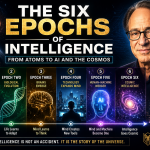 The Six Epochs of Intelligence: Ray Kurzweil, AI, and the Cosmic Future of Mind
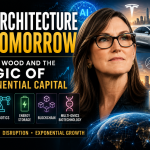 Cathie Wood and the Logic of Exponential Capital: The Architecture of Tomorrow
Leave a Reply