
Tag: Southeast Asia
-
Southeast Asia Strategic Outlook 2026: Hormuz Crisis, ASEAN Security Shift, China-US Rivalry, and the Future of Regional Order
Southeast Asia enters mid-2026 facing one of the most complex strategic environments in recent decades. The region is simultaneously managing the impact of the Strait of Hormuz energy crisis, intensifying US-China strategic competition, unresolved South China Sea tensions, and Myanmar’s prolonged internal conflict. This KBA13 Insight Update examines how ASEAN states are responding through a…
-
Southeast Asia Strategic Outlook 2026: ASEAN, South China Sea Tensions, Prabowo’s Economic Doctrine, and the Future of Regional Order
Southeast Asia enters June 2026 at a critical strategic moment where political instability, maritime competition, economic nationalism, and digital transformation converge. This KBA13 Insight Strategic Weekly Brief examines the evolving regional landscape through an intelligence-driven perspective. The analysis explores ASEAN’s institutional challenges under the Philippine chairmanship, rising tensions in the South China Sea, Indonesia’s economic…
-
Southeast Asia Strategic Outlook 2026: South China Sea, Indonesia’s Economy, Myanmar Crisis, and ASEAN Energy Security
Southeast Asia enters 2026 under layered strategic pressure. The Philippines and Japan are deepening defense cooperation as China’s gray-zone pressure persists in the South China Sea. Indonesia faces a difficult economic crossroads under Prabowo’s fiscal ambitions and the Danantara gamble. Myanmar’s civil war continues to escalate through aerial warfare and institutional collapse, while the Hormuz…
-
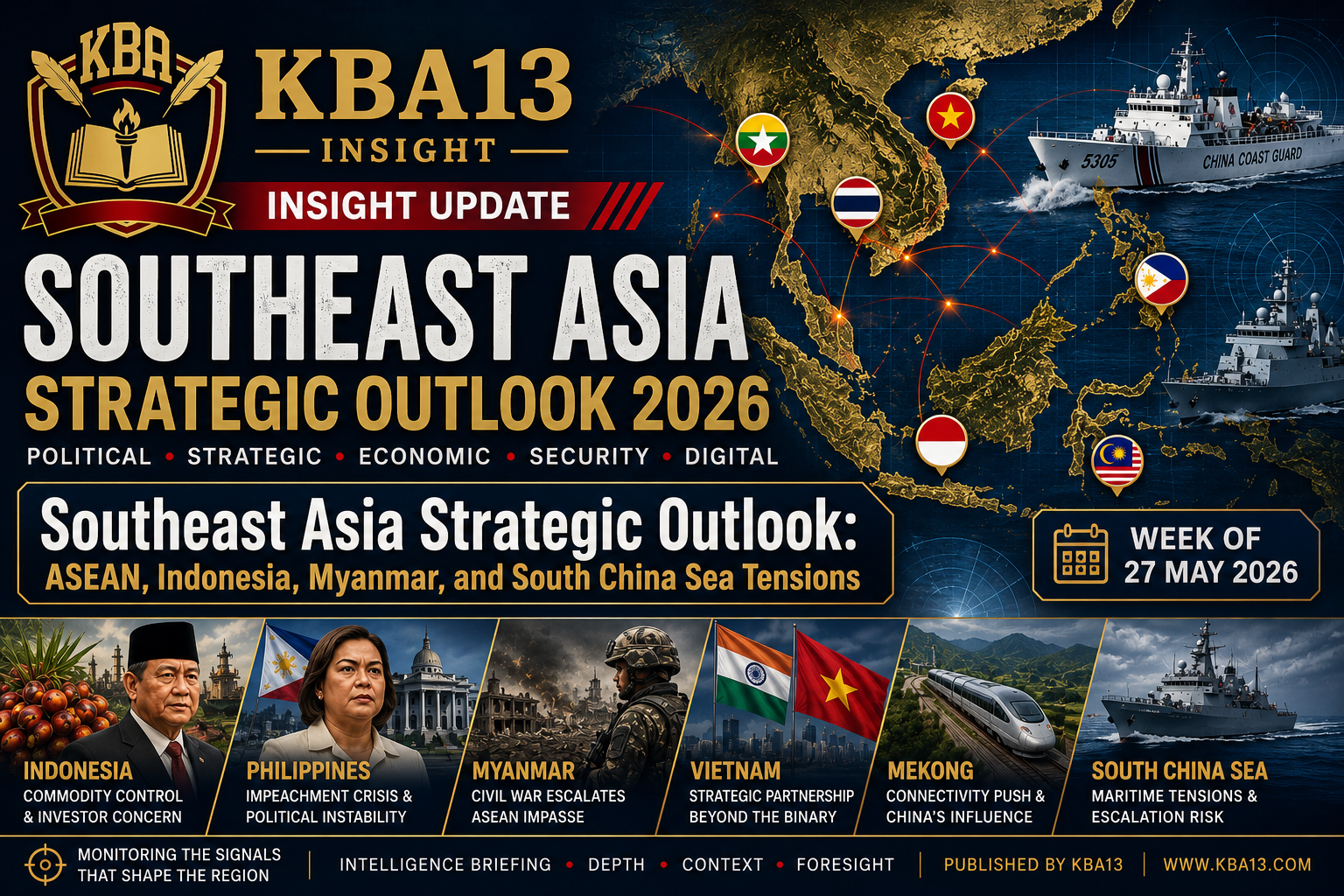
Southeast Asia Strategic Outlook 2026: ASEAN, Indonesia, Myanmar, and South China Sea Tensions
Southeast Asia enters late May 2026 under mounting geopolitical and economic pressure. ASEAN faces simultaneous crises involving energy security, Myanmar’s civil war, South China Sea tensions, and growing uncertainty in global trade architecture. Indonesia’s new state-controlled commodity export policy has shaken investor confidence, while the Philippines struggles with an escalating constitutional crisis involving the Duterte…
-

ASEAN’s Hormuz Dilemma: Why Southeast Asia’s Energy Dependence Has Become a Strategic Crisis
The 2026 Hormuz crisis has exposed one of Southeast Asia’s most dangerous strategic vulnerabilities: deep dependence on Gulf oil, LNG, and LPG without a credible regional energy security architecture. As maritime traffic through the Strait of Hormuz collapsed, ASEAN governments faced rising fuel prices, LNG shocks, fiscal pressure, and public anxiety. Yet ASEAN, as an…
-
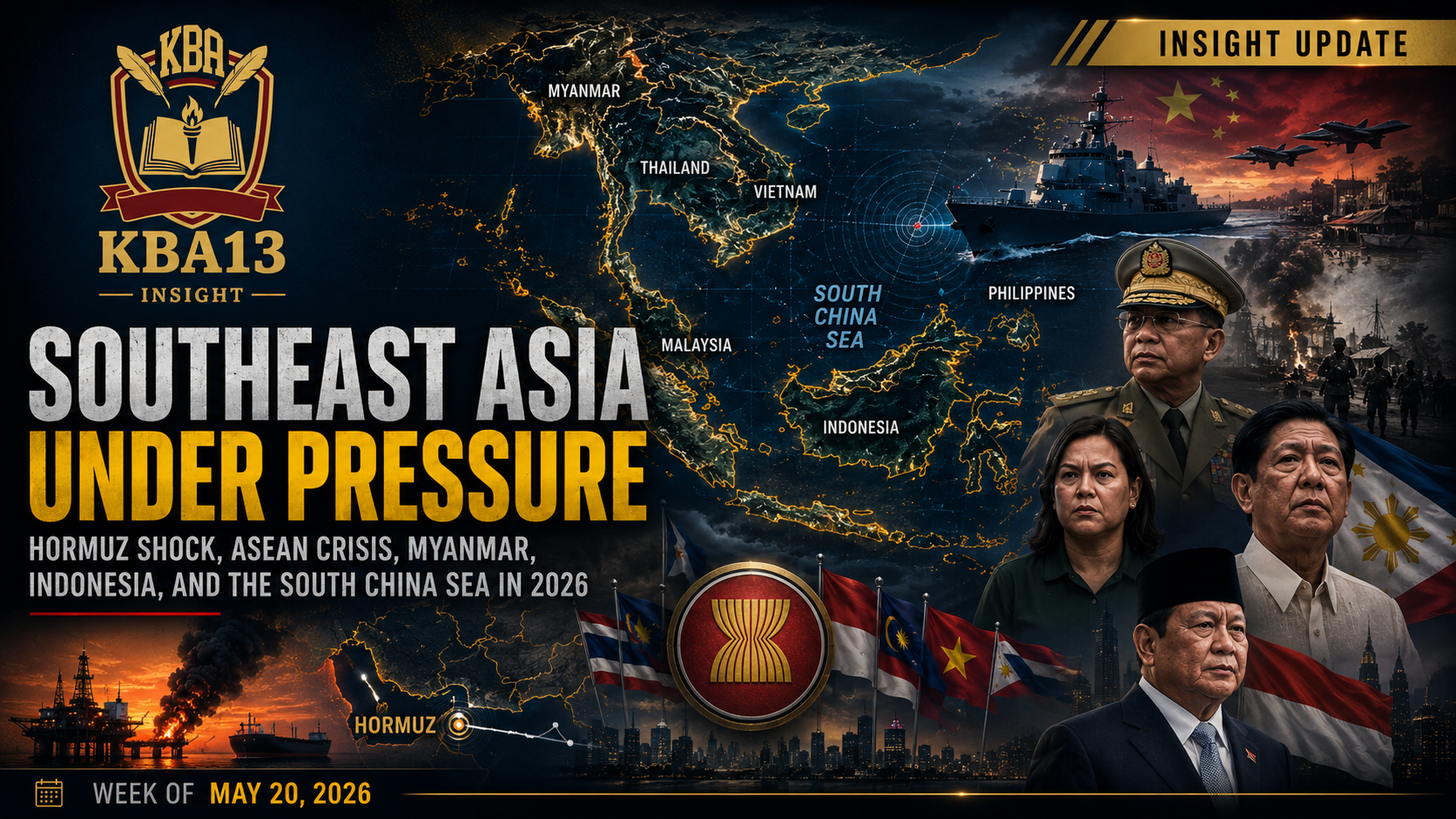
KBA13 Insight Regional Update: Southeast Asia Under Pressure (Hormuz Shock, ASEAN Crisis, Myanmar, Indonesia, and the South China Sea in 2026)
Southeast Asia enters May 2026 under simultaneous strategic pressure: the Hormuz energy shock, ASEAN’s institutional fragility, Myanmar’s deepening crisis, the Philippines’ domestic political rupture, Indonesia’s multi-alignment gamble, and the unresolved confrontation in the South China Sea. This KBA13 Insight Update reads the region not as a collection of separate national crises, but as a single…
-

China’s Economic Statecraft in ASEAN: Trade, BRI, and Strategic Leverage
China’s economic engagement with ASEAN has evolved into a sophisticated system of strategic leverage. Trade dominance, infrastructure expansion through the Belt and Road Initiative, currency maneuvering, and diaspora networks collectively form Beijing’s economic statecraft toolkit. While ASEAN benefits from market access and infrastructure financing, structural asymmetry creates vulnerabilities. This article examines the geopolitical implications of…
-
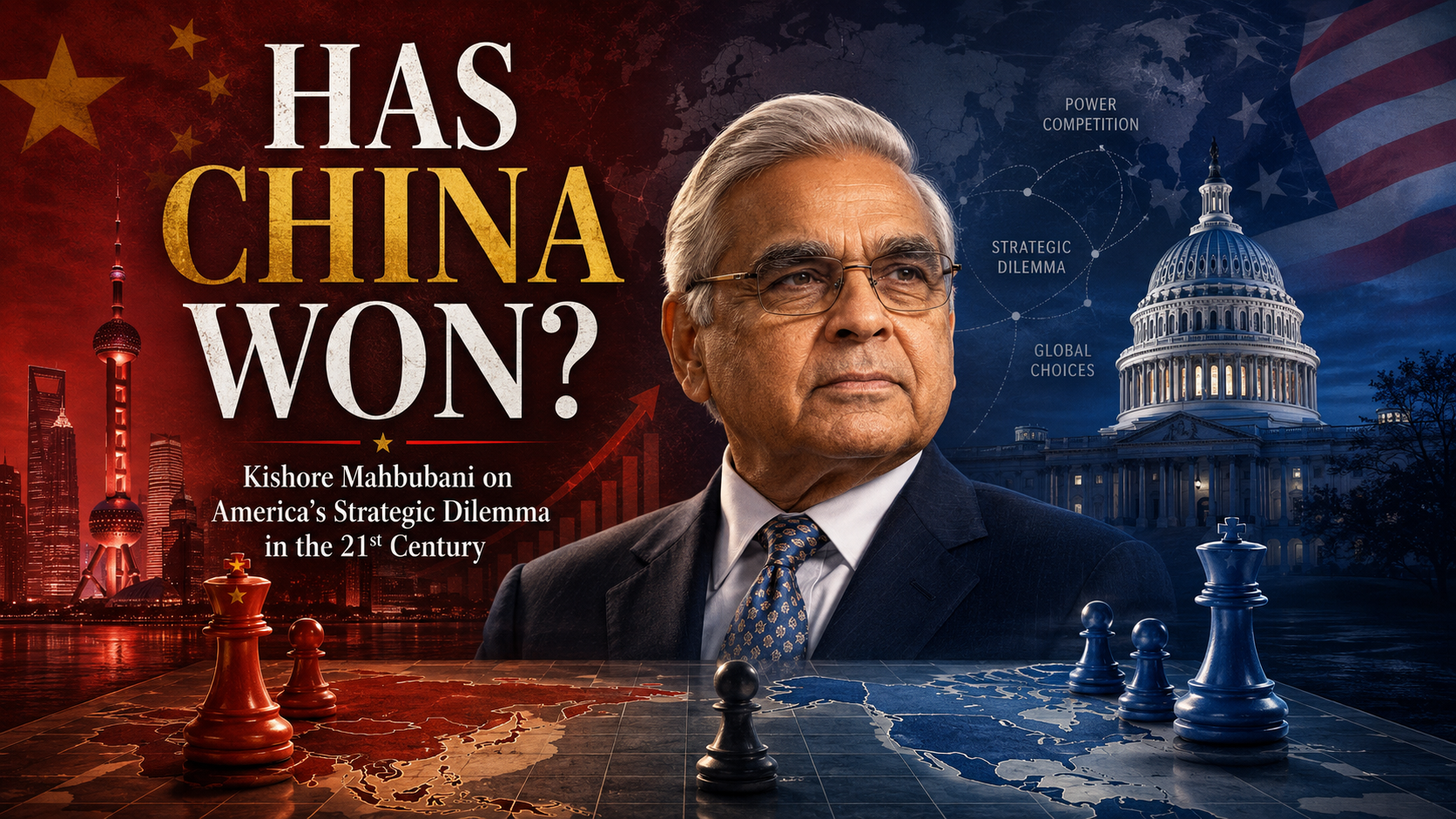
Has China Won? Kishore Mahbubani on America’s Strategic Dilemma in the 21st Century
Kishore Mahbubani’s Has China Won? opens with a bold provocation: can America truly lose to China? Drawing lessons from history, Mahbubani argues that the United States risks misreading China by framing it as merely a communist adversary, rather than a civilization-state playing the long game of wei qi. With American soft power in decline and…
-
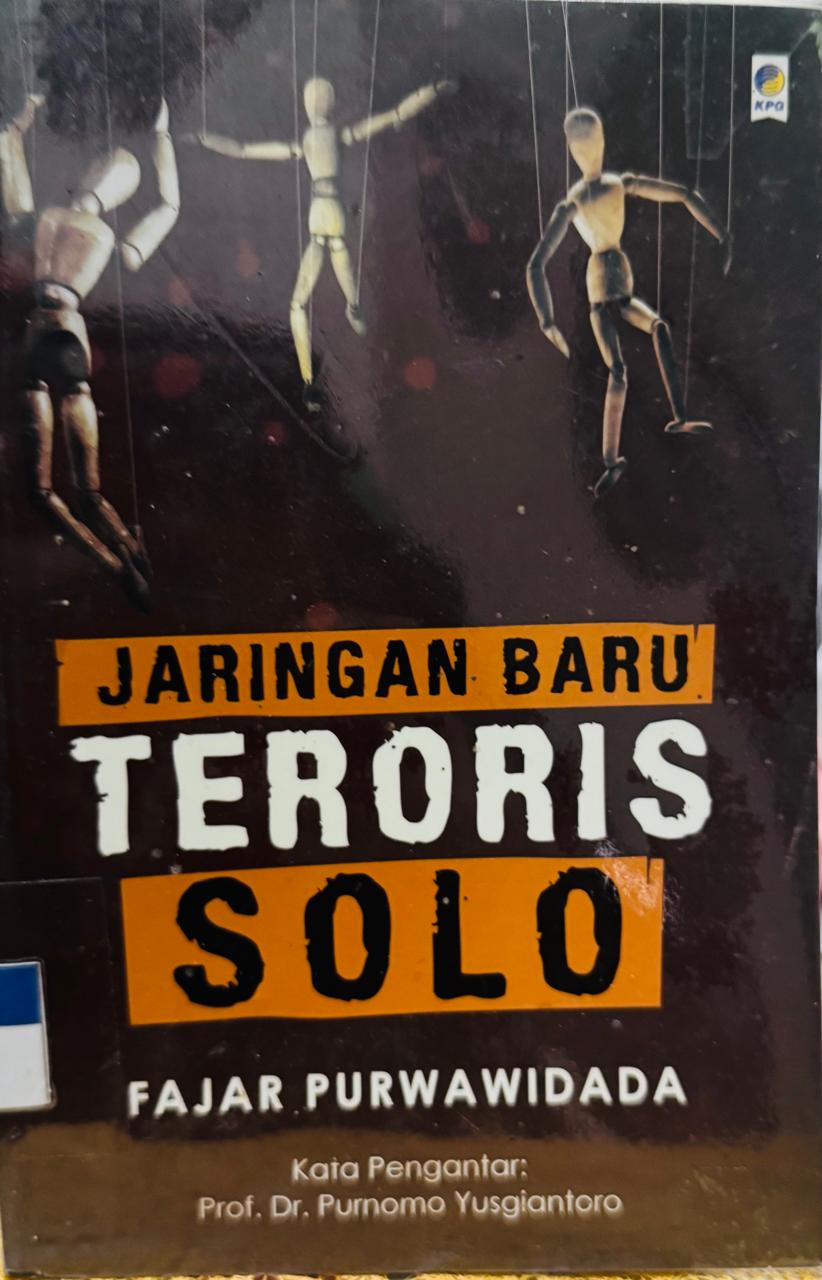
Solo dan Bayang-Bayang Terorisme: Membaca Kelahiran Jaringan Radikal Baru di Indonesia
Ketika berbicara tentang kota Solo, banyak dari kita membayangkan harmoni budaya, ketenangan tradisi, dan reputasi spiritualitas yang mendalam. Kota ini adalah rumah bagi tokoh-tokoh penting nasional dan memiliki peran historis dalam dinamika politik serta kultural Indonesia. Namun siapa sangka, dalam senyap dan kelam, Solo juga menjadi salah satu simpul penting dalam pembentukan jaringan terorisme kontemporer…