
KBA13 Insight · Field Ethnography · Touring Indonesia Harmony
The Stories of Perantau in Nusantara (#03)
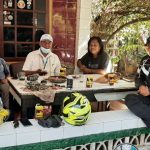
Some of the provinces that we passed were often called “Indonesia Mini” because almost all ethnic groups were in their area. The concept of "Indonesia Mini" can almost be found in several areas. Even when we were in Jakarta, the concept of “ Indonesia Mini”…
Keywords
- analysis
- commentary
- Indonesia
- Indonesian politics
- KBA13 Insight
- Southeast Asia

Some of the provinces that we passed were often called “Indonesia Mini” because almost all ethnic groups were in their
area. The concept of “Indonesia Mini” can almost be found in several
areas. Even when we were in Jakarta, the concept of “ Indonesia Mini” was
explained in the political escalation in Indonesia, which is because the
Javanese are the majority ethnic group in DKI Jakarta. Therefore, every
prospective leader in this province will undoubtedly stay in touch with
residents from various ethnic groups in the archipelago, especially the
Javanese ethnic group.
The state of assimilation of
Indonesian society, as claimed through “Indonesia Mini,” has indeed occurred
since Indonesia before independence. Indonesians have traveled and settled in
various areas throughout Indonesia. Because of that, the kinship that was built
also proved their resilience in front of the natives. The process of mixing
with the natives was not avoided. Some academic sources show that the power of
migration in the archipelago has formed a collective memory concept.
When I was a panelist with Prof. Taufik Abdullah in Banda Aceh,
a professor from LIPI, said that Indonesia is a necessity because it has a
collective memory of each other in the archipelago, long before the invaders
arrived in this country. This memory bond is what makes them interdependent. This
is the service of the nomads who make the bonds of collective memory. The
concept of BBM (Bugis Buton Makassar) emerged in the Riau Archipelago when we
researched the community in Tanjung Pinang. In Merauke the concept of Jamer
(Java Merauke) emerged. As for Sumatra, they are already familiar with the
concept of Pujakesuma (Javanese Born in Sumatra). In Jakarta there is Warung
Tegal. While in some areas there are culinary Sate Madura, Sate Padang, Warung
Minang, Mie Aceh, Soto Betawi, Coto Makassar, Furniture Jepara, Wong Solo, Soto
Lamongan, and so on. These are some of the concepts that insert the collective
memories of the archipelago people.
The identity started from the
perantau can be seen. At least, from the culinary arts that are neatly arranged
on every roadside in the archipelago. All this shows the identity of where they
come from and how they can be accepted in that place. When we passed the island
of Sulawesi, the term Sari Laut replaced the concept of seafood. The naming of
this term conveys the identity carried by the indigenous people. In Merauke,
they use Lalapan for chili sauce, chicken/gurami, and rice. Likewise,
with the view of Nasi Kuning, which we met from entering the island of Borneo
to Merauke. Bubur Ayam Bandung also enlivened the identity that came from the
community’s collective memory.
All of these culinary
terms are certainly nothing unique. However, looking for the history of Warung
Minang that can last decades in the archipelago is looking for the history of
the nomads, who started their business from scratch. The story of the owners of
Warteg in Jakarta will also invite many stories about how the story of a super
simple warung in the heart of the capital city of the Republic of Indonesia is
owned by millionaires who have luxury homes in their hometowns. The story of
Warung Sederhana, which has various outlets in the archipelago, is also
interesting to observe when we conducted research in Tanah Minang about how the
strength of the Minang people in building resilience and mental preparation
before merantau.
The role of the Surau in Tanah Minang is very significant. A
young child who will merantau is first trained to recite the Koran, sew, cook,
and silat by the teacher, a former perantau who returned to his hometown. This
is their provision to fight in another country when far from their hometown. In
the film about Minang youths who go abroad, this situation can be seen, how the
memory of messages from the land of origin as provisions becomes a tool for
encouragement in fighting in the overseas land. This memory is not only to
remember how they survived overseas and the bonds built during their merantau.
When we were in Java,
we met with our friends during college at UIN Sunan Kalijaga. They are
Javanese, and Sundanese who did not leave Java but no longer live in their
hometowns. However, they can still meet because the distance in Java is not so
vast when compared to Sumatra, Kalimantan, Sulawesi, and Papua. They were
initially students at IAIN (State Islamic Institute) Sunan Kalijaga; since
2003, it has changed to UIN (State Islamic University) Sunan Kalijaga. At
first, they were immigrants to study; then, they were promoted to a new
intellectual class in Yogyakarta.
Going abroad without
returning is a tradition carried out by the archipelago people. They do not
forget to go home or do not want to go home, but their departure in merantau
for various reasons. At first, those who left for work felt homesick every day.
A young Indonesian Air Force officer who served in Merauke, originally from
North Aceh, thought about not lingering on duty at the Merauke Air Force Base.
A TNI officer even said that his lives were better in Merauke because he is
united with his spouses and children.
Meanwhile, this young TNI AU boy has just finished his education
and is about to get married. So it is inevitable that he has brought his wife
and has a small family in Merauke. Of course, the longing for Krueng Geukueh
will decrease.
The perantau started to
leave, bringing their family and their culture and identity. This can be seen,
for example, in the way of speaking, culinary, and the style of everyday life.
I am more interested in using it as a cultural caravan. That is, through the
collective memory, culture, and identity continuously carried by humans who
live to move from one place to another in the archipelago. The process of
moving to settle is a fact that cannot be denied. Every nomad, unless they have
substantial capital and relationships, of course, will live on the move
somewhere when they start a new life overseas.
Initially, they lived at the house of relatives who first
arrived at the overseas place, then rented a house, then bought a house, if
there was sustenance. When wandering, buying a house right away is a scarce
thing. Usually, rented houses are used for family or business activities. From
there, they opened social networks and businesses in new places. After that,
think about buying or building a house. The nomadic process in a new place,
usually in an urban area, does have its own story. Because, usually those who
migrate are certainly not in a position of luxury, but in a situation where
life is simple.
Therefore, being a nomad in the city (urban nomad) is commonplace for nomads. This process then causes success not to be measured by how much capital is brought from home but the ability to adapt to a new place. They will certainly start from zero, work hard, accept many failures when they start in business until they finally achieve success. Of course, this process takes years. Nevertheless, some are not strong with their trials during the struggle.
This ethnographic record has briefly described the face of the overseas Indonesian people. Of course, few studies have studied population movement in this republic. However, during Touring Indonesia Harmoni, we may meet various individuals who are not in their hometowns. This encounter shows that the face of Indonesia is a land of immigrants. Anyone will experience the process of overseas if they want to find a better fate if they leave their hometown.
How to Cite
Ahmad, Kamaruzzaman Bustamam. (2022). The Stories of Perantau in Nusantara (#03). Banda Aceh: KBA13 Insight.
https://www.kba13.com/the-stories-of-perantau-in-nusantara-03/
Professor of Anthropology of Religion at UIN Ar-Raniry Banda Aceh. He writes on geopolitics, Southeast Asian security and governance, Islam in the Malay world, and the future of knowledge.
About The Author

- Series · Seri
- KBA13 Insight
- Volume · Number
- Vol. 2, No. 27 (February 2022)
- Cumulative issue · Edisi ke-
- 44
- Reference · Nomor rujukan
KBA13-KI-2022-02-027- Author · Penulis
- Kamaruzzaman Bustamam Ahmad
- Published · Terbit
- 19 February 2022 · updated 29 October 2026
- Section · Rubrik
- Field Ethnography, Premium, Touring Indonesia Harmony
- Keywords · Kata kunci
- analysis, commentary, Indonesia, Indonesian politics, KBA13 Insight, Southeast Asia
- Language · Bahasa
- English
- Length · Panjang
- 1,406 words · ±6 min read
- Publisher · Penerbit
- KBA13 Insight, Banda Aceh, Indonesia
- Permalink
- www.kba13.com/the-stories-of-perantau-in-nusantara-03/
- How to cite · Cara mengutip
- Kamaruzzaman Bustamam Ahmad. (2022, February 19). The Stories of Perantau in Nusantara (#03). KBA13 Insight, 2(27). https://www.kba13.com/the-stories-of-perantau-in-nusantara-03/
- Rights · Hak cipta
- © 2022 KBA13 Insight. Quotation permitted with full attribution and link.




Leave a Reply