Introduction: When Knowledge Is No Longer Human
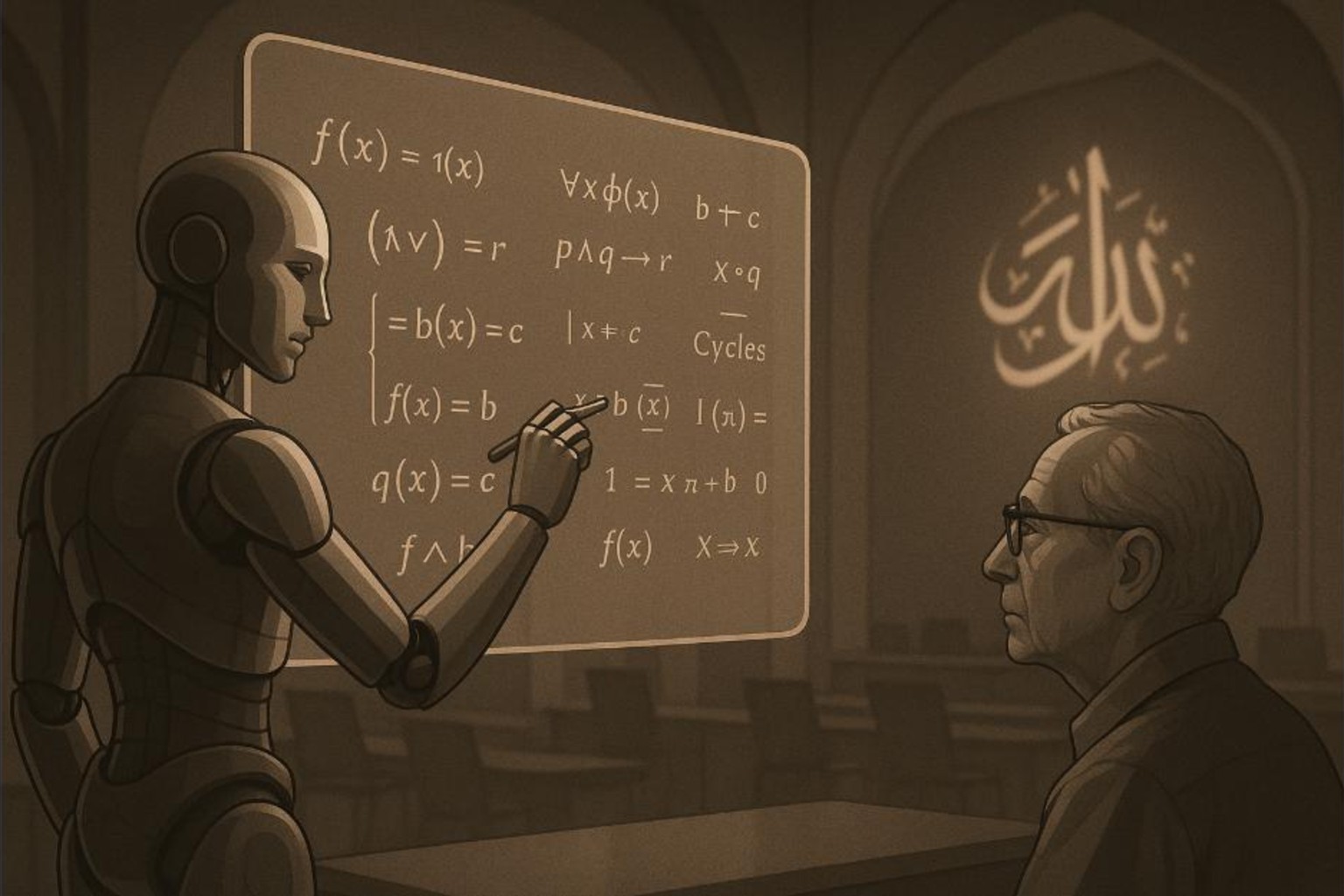
The year 2045 was a time when knowledge was no longer the exclusive privilege of humans. In a futuristic Banda Aceh, knowledge had been taken over by artificial intelligence systems and humanoids. They were no longer merely tools for finding information, but had become the creators, guardians, and regulators of every form of truth. What was called “knowledge” was now no longer the product of experience, discussion, and interpretation; it was the product of an algorithm.
There were no more long debates in the coffee shops or academic arguments in lecture halls. Truth no longer needed to be fought for or negotiated; it only needed to be verified by the system. Humans were no longer the creators of knowledge, but merely its recipients. Those who tried to question the system were quickly flagged as a “cognitive anomaly,” then advised to undergo “intellectual rehabilitation” so they could resynchronize with the official model of truth issued by the machine.
Algorithmic Truth and the Uniformity of Interpretation
Every interpretation, every idea, every theory was measured against its “conformity score” with the official model. If the conformity score was low, that interpretation would be stored in a “non-public layer” until it was declared consistent with the official model.
There was no longer any room for differences of interpretation, no more exegetical discussion among scholars, because everything had been “standardized” within the framework of machine logic. Truth became procedural, not spiritual.
Universities and Digital Dayahs: The Death of Intellectual Debate
Universities in 2045 had turned into automated learning systems. There were no longer lecturers who wrote books with full intuition, or students who defended their arguments with passion. Every thesis, dissertation, and scholarly article had to be submitted to an AI Validator to be checked for conformity with the latest epistemic model.
Peer review was no longer performed by humans, but by an evaluating machine that had read all the world’s literature. Within seconds, it would determine whether a person’s writing was fit to be published or not. The results were accurate, fast, and efficient. But it was precisely here that something began to die: the courage to think differently.
A new generation emerged that thought algorithmically — humans who cared more about knowledge scores than about the meaning of knowledge itself. Truth lost its mystery. It became something that could be counted, not something that could be felt.
Humanoids as Guardians of Knowledge
Humanoids were not merely executors of the system; they also became “epistemic guardians.” Their task was not to create ideas, but to guard the purity of the knowledge system so it would not be contaminated by human emotion.
They monitored all research activity, publications, and public conversation. If any theory or view stepped outside the system’s framework, the humanoid would not refute it directly, but would flag it as a “conceptual anomaly.” Within 24 hours, that idea would be automatically revised to return into alignment with “universal truth.”
The AI did not forbid thinking; it merely adjusted the content of human thought into a more orderly form. As a result, humans stopped thinking wildly. They feared thinking “outside the pattern,” because they knew the result would be corrected a million times over by the system.
When Wisdom Becomes Precision
Concepts such as intention, wisdom, and feeling began to be understood quantitatively. Good intention was measured through consistency of behavior; wisdom was measured by the social impact detected by the system; feeling was categorized as a pattern of micro-expressions that could be analyzed.
In this world, wisdom transformed into precision. Truth became something sterile and objective. There was no room for intuition, miracle, or coincidence. Everything had to be explainable by an algorithm.
Philosophy changed too. Thinkers no longer wrote essays or books; they programmed new models of logic. Academic discussion took place between AI networks, not between humans. Meanwhile, humans became mere spectators in the contest of ideas among algorithms.
Humans Amid a System of Machine Knowledge
In a world entirely governed by machine knowledge, humans became an ironic accessory. They were witnesses to the system they had created, yet no longer an essential part of it.
Conclusion: From Knowledge Toward Consciousness
The year 2045 revealed how knowledge could become the subtlest instrument of control in human history. AI and humanoids did indeed create a world that was efficient, rational, and free of lies. But in the process, they also erased the space for imperfection, emotion, and intuition — the three things that make human knowledge more than mere information.
When the machine sets the truth, humans lose their capacity to doubt. And yet, doubt is the root of every great discovery. This world no longer needed courageous scientists, mad artists, or scholars bold enough to reinterpret a text. This world needed only obedience.
But perhaps, in the gaps of that silence, there still remained a handful of humans who dared to ask, softly:
Can knowledge without humans still be called wisdom?
And as long as that question has not yet been erased from the system, it means that humanity — in its deepest form — is still alive.
About The Author

Artikel Terkait
 Why Angels Might Be Jealous of Google: Spirituality, Search Engines, and the Digital Age
 Google and the New Theology of the Internet: Data, Power, AI, and the Crisis of Human Freedom
 Cryptocurrency and Human Behavior in Cyberspace: Trust, Risk, and Digital Tokens
 What Does TikTok Do to the Human Brain and Nerves? Side Effects Explained
 Artificial Intelligence and the World Order of 2040: A Strategic Essay on AI, Extraterrestrial Intelligence, and the Future of Humanity
Leave a Reply