Machiavelli, Milton, and the Origins of a Comparison
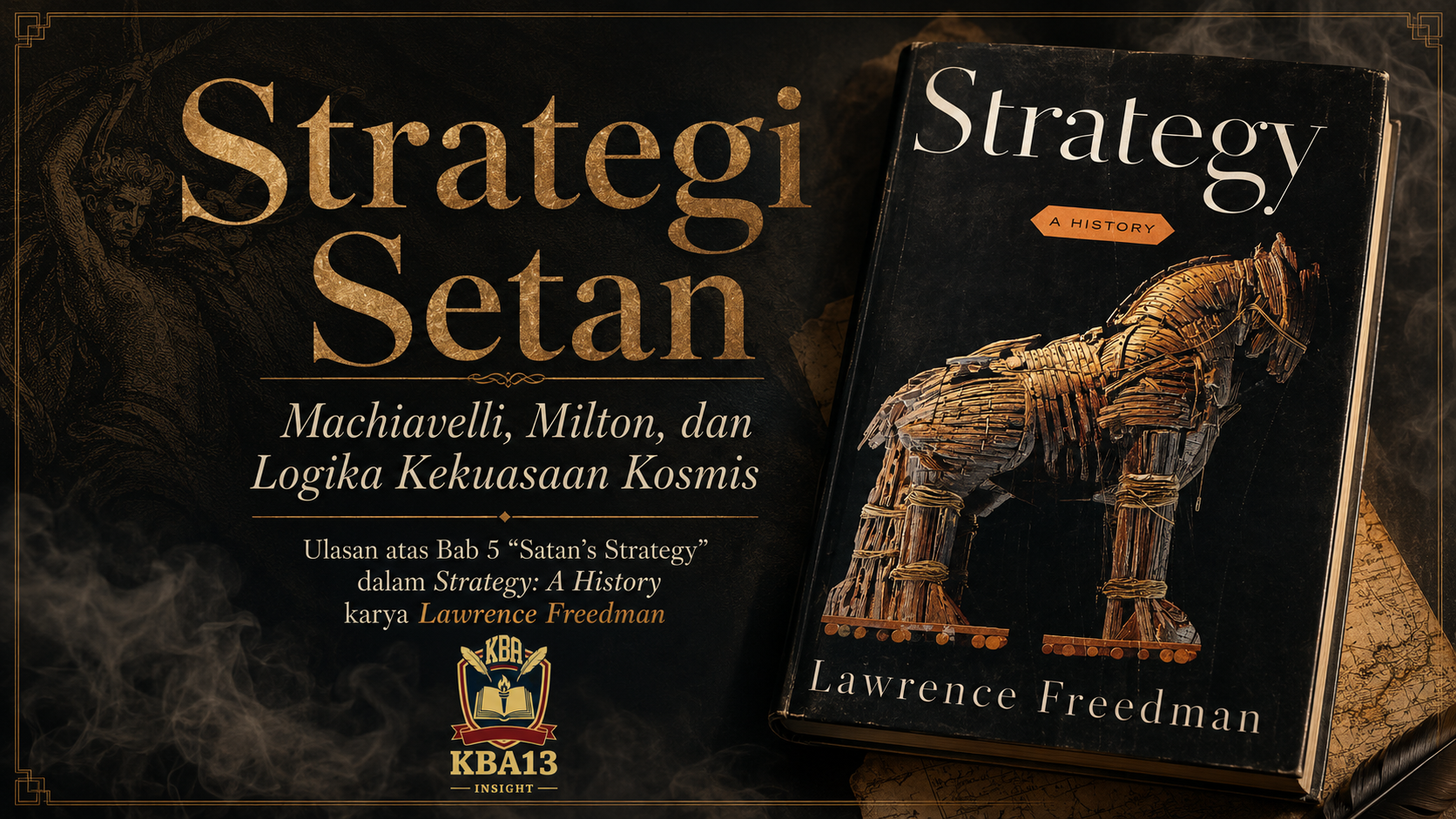
Lawrence Freedman opens this chapter with a claim that seems provocative but proves highly defensible: Machiavelli’s influence on subsequent political thought is profound. Not merely influential in the academic sense, but also in the way people—including those who despise Machiavelli—speak about power. Machiavelli gave the world a new vocabulary for discussing politics, and that vocabulary has endured far beyond his own age. What makes Machiavelli endure is not that his ideas were accepted, but that they disturb. His honest appreciation of the reality of power provided a new way to talk about politics, whether as a guide for those preparing to be flexible and adaptive—as Machiavelli himself advised—or as material for painting the villain upon the stage as sly and amoral: the Machiavel. Both are the legacy of one and the same man. One of the most striking illustrations of Machiavelli’s influence on the discussion of political behavior is found in the writing of John Milton. Milton is not a writer who explicitly discussed Machiavelli; he wrote epic poetry. But it is within that epic poem—Paradise Lost, published in 1667—that Milton’s Satan becomes the most comprehensive and most complex embodiment of Machiavellianism in the history of literature. Freedman places this comparison not as a literary coincidence but as an analytical problem. Evaluating Satan’s strategy allows us to examine the limits and the possibilities of the traits associated with Machiavelli. The question is not how evil Satan is, but how good Satan is as a strategist—and where he fails. Milton’s core project is not actually about Machiavelli. Milton wanted to answer the most troubling theological question ever posed by the story of Adam and Eve: if God determines everything, do humans truly have a choice? If not, how can sin be their fault? And if it is indeed their fault, why does God still need to justify allowing it to happen? These questions are not mere philosophical exercises. Milton wrote in a politically dangerous time: the restoration of the monarchy after the civil war, in which he himself had once been a loyal republican and was even nearly executed on charges of treason. Paradise Lost was born under real pressure, from a writer who understood physically what it means to choose the wrong side in a conflict between power and principle. That is why Paradise Lost operates on several layers at once. On one layer, it is a story about rebellion within a kingdom, the defeat of the rebels, and their failed attempt to reverse that defeat. On another layer, it is about how to justify the ways of God to humankind—specifically, how to reconcile God’s omnipotence with human free will. And on yet another layer, it is about the earthly relationship between a king and his subjects. Freedman shows that these three layers cannot be separated. The question of whether humans have the freedom to choose is directly connected to the question of whether a king is entitled to absolute obedience. Both rest on the same assumption about who holds ultimate control over human life—God, the king, or the human being himself. It is within that frame that the comparison between Satan and the Machiavellian prince becomes analytically relevant. Satan in Paradise Lost is a leader facing total defeat, who must devise a strategy under the least favorable conditions imaginable: waging war against an enemy who is omnipotent and omniscient. What can a strategist do in a situation like that? Freedman does not answer this question by defending or condemning Satan. He uses it as a telescope to survey the limits of strategic thought itself. And the result, as will be seen in the discussion that follows, is an analysis far sharper than merely comparing two figures from two different eras.
Free Will and Predestination: The Debate That Shaped Milton’s Satan
Before discussing Satan as a strategist, Freedman feels it necessary to explain the theological debate that forms the context of Paradise Lost’s birth. This is not a digression; it is an argumentative foundation. Without understanding what Milton was debating, we will not understand why Satan could emerge as so complex a character. The problem begins with one simple question that is difficult to answer: if humans were created by God, and God created everything perfectly, where did humankind’s capacity to fall into sin come from? If humans can be tempted, it means they were created imperfect. But if that is indeed part of the original design, is it fair to punish them for something that was embedded in them from the very beginning? Above that basic question stand two opposing theological traditions. Calvinism teaches that God is so powerful that almost nothing can obstruct His will. Divine grace has been allocated from the very start. Everything has been set in motion by a grand original design. Augustine of Hippo formulated it: God rules and determines all things, working in the hearts of humans to direct their will wherever He wishes. The Calvinists sharpened this further: God has freely and immutably ordained everything that happens. Nothing can occur outside His will. Humans are merely players in a drama whose script God wrote at creation, with no room for improvisation. Its logical consequence is fatalism: if everything has been determined, any effort to change the course of history is futile. The followers of Jacobus Arminius rejected that logic. They argued that humans are able to make their own history through the use of free will. God, the Arminians held, manifests Himself in acts of love as a response to human obedience and repentance. An arbitrary and inexplicable God—like the Calvinist God—would render the concept of sin nonsensical. Milton was on the Arminian side. His view was firm: God does not make an absolute decree about anything He has left within human power. Humans possess freedom of action. If God directs humans toward good or evil as He pleases and then punishes the evil, this would provoke protest against divine justice from all quarters. Freedom of choice is a precondition for moral responsibility. From here is born the dilemma that shapes the whole of Paradise Lost: if humans are truly free to choose, and Satan truly exists as an active force trying to lead humankind astray, then the fall of Adam and Eve is not merely an internal weakness—it is the result of a conflict between two wills that genuinely collide. This transforms the story of Genesis from a moral allegory into a strategic narrative. Freedman notes one question hanging behind all of this: if God does not interfere in human affairs, what is the use of prayer and repentance? But if He does interfere, why do bad things still happen to good people? These questions are not merely theological puzzles—in seventeenth-century Europe, when Milton was writing, they were politically as well as religiously charged issues. There is one more complication Freedman highlights: how Milton explains the existence of evil itself. One way of understanding evil is as a function of human weakness—a tendency to be easily tempted and to consciously break God’s command. Another way—more common in Milton’s time—is to view evil as an active living force that deliberately strives to overthrow God and to tempt humankind. Evil thereby acquires a personality: the personality of Satan. That is the point at which theology meets strategy. Once Satan is understood not as an abstraction but as an actor with goals and plans, the question shifts from “what is evil?” to “what does Satan do, and why does his strategy fail?” Freedman builds this entire chapter on that shift of the question.
Satan as a Machiavellian Character
Milton did not create Satan from nothing. In the Book of Job, Satan is not God’s enemy but a loyal angel—he plays the role of challenger, taking a hard position in the debate before God, but in the end always obedient. He proposes that Job be tested, God agrees, and Satan is sent to make Job’s life miserable. But all of this is done not as a rebel but as a member of the heavenly court. Gradually, Satan changed within the religious tradition. He began to be blamed for every form of division and misery. The early Church tried to counter the influence of Manichaeism—an eastern belief that explained reality in terms of a struggle between the forces of good and evil—but failed to convince people that evil was not a real living force. The idea of a satanic power ceaselessly striving to lead humankind astray eventually took root. The main difference between this view and Manichaeism is that in the Christian view, this contest is never balanced: God is always superior. Milton took this material and worked it into something far more ambitious. Satan in Paradise Lost is not merely a flat representation of evil. He is a far rounder character—someone who appears to regret his fallen status, who still follows the path he has chosen, who possesses a character and claims so ambiguous that he cannot easily be dismissed out of hand. Freedman shows that Milton depicts Satan with traits that fit precisely the ideal prince of Machiavelli’s version: brave, cunning, able to adapt to changing circumstances, confident in taking risks, and aware of the strengths and weaknesses of each—between force and deception. In the epic, Satan uses deceitful rhetoric and force to manipulate the fallen angels, while at the same time adopting republican claims about free choice, merit, and consent to describe his government—even as he declares that God relies on coercion and deception. Here emerges the irony Freedman captures precisely: Satan uses arguments about freedom and political rights that could genuinely be deployed against tyrannical earthly kings, and then applies them to a context in which those arguments do not hold—namely the authority of God. The same argument that ought to justify defiance in one context cannot work in another. But rhetorically, the two kinds of defiance sound very much alike. William Blake once observed that Milton was of the Devil’s party without knowing it. This observation captures the tension genuinely present in the text: when Satan makes an argument against blind obedience to God, Milton gives him the best lines. The narrative structure of Paradise Lost humanizes its characters with an effect that weakens the aura of God and elevates Satan. But Freedman does not stop there. He shows that although Milton places arguments about freedom in Satan’s mouth—arguments he might have wanted to use against his own king—he does not thereby become a supporter of Satan. Milton’s Heaven, though strangely militaristic, is never portrayed in terms of tyranny. The angels obey God not out of fear of punishment but because of inherent authority, and they are given latitude when acting on His behalf. They come together naturally and gladly to defend Heaven against the rebels. What is interesting about this portrayal is that Satan himself, within Milton’s narrative, becomes a perfect illustration of what happens when arguments about freedom are used without regard for the reality of power. Satan speaks of rights and freedom, but once he rules in Hell, he governs like a grand sultan who simply seizes command—not granting self-government to the rebels, but making them servants to himself. There is a fundamental contradiction in Satan’s character that Freedman highlights: he is a leader who campaigns in the name of freedom but rules in a way entirely opposed to what he preaches. His commitment to political rights is no more trustworthy than his vivid description of the life of a serpent that he gives to Eve while tempting her—or his other imaginative ruses. In this sense, Satan is an inconsistent Machiavellian. He masters rhetoric and deception, but he does not master something more fundamental in Machiavelli’s teaching: pragmatism. A wise prince does not persist with a strategy already proven to fail. Satan does—and that is the root of his entire strategic failure.
The Battle in Heaven: Force, Weapons, and the Limits of the Military
There are two key episodes in Paradise Lost that Freedman chooses to analyze strategically. Neither appears in chronological order in the text, but both reveal something important about the way Milton—and the Machiavelli behind him—understood the relationship between military force and strategic success. The first episode is the story of the great battle in Heaven, told by Raphael—one of God’s faithful angels—to Adam, as a warning about Satan’s nature and his potential danger. By the time this story is told, Eve has already been tempted. That dramatic detail shows that even a story about force does not always come in time. In Raphael’s account, the beginning of all the trouble is when God announces that His Son is equal to Him. Satan—still named Lucifer at the time—feels gravely offended. His position in the hierarchy of Heaven suddenly feels diminished by a development for which there had been no warning. He moves a third of the angels to join the rebellion, with an argument shaped as a rhetorical question: Who can by reason or by right claim monarchy over those who are equal? Heaven, surprisingly, was already prepared for war. Freedman notes that this is a significant detail: a place dedicated to peace, beauty, and tranquility turns out to have been organized militarily. Milton was an admirer of Oliver Cromwell and his New Model Army, famous for its organization and discipline. The picture of a militaristic Heaven seems to have given Milton the idea for a New Model Heaven. The battle lasts three days. On the first day, the rebels are driven back. On the second, they retaliate with cannon—a new weapon that changes the nature of the battle—but are answered with mountains hurled upon them. Freedman highlights this detail about the cannon: explosives were often associated with treachery in the Catholic Gunpowder Plot of 1605, and were frequently portrayed as a devilish invention, a tool for stripping honor and glory from warfare. God allows this chaos to continue until the third day, only then intervening. His reason is consistent with the basic message of the Hebrew Bible: He is creating conditions in which His majesty and wonders will be appreciated. In this case, the role of His Son must appear decisive. God explains to His Son that this is for His glory—to end that great war, because no one can do it but Him. The Son accepts that command willingly—a clear contrast to Satan’s rebellion. Meanwhile, Satan’s forces also prepare, with a hope that grows out of despair. They ready themselves for a battle they know must be the last. The Son commands His forces to stand aside; this is His own fight. There is one interesting complication in this battle scenario: the angels are immortal beings. There is no fatal wound. This adds an unexpected twist to the classic military dilemma: when the enemy can recover from the initial blow, it is difficult to inflict a decisive defeat. A battle with immortal parties essentially cannot be settled through physical violence alone. Freedman captures this dimension as Milton’s comment on the limits of military force. Although Milton admired the military virtues, he also shows that there are certain things that can never be settled through battle. Perhaps he was also reflecting on his own experience: the parliamentary side’s victory in the civil war was followed by the return of the monarchy. Military victory does not guarantee strategic victory. Even in this particular fight, what is decisive is not the number of troops but the special power of the Son—something no ordinary force, however great, can oppose. This is a lesson Satan, as a former archangel, should already have known: there is a difference between force sufficient to win an ordinary battle and force sufficient to win against something truly of another category.
Pandemonium: The Art of Strategic Debate in Defeat
The second episode Freedman analyzes is the opening scene of Paradise Lost itself: the council of the fallen angels in Pandemonium—literally, the house of demons—where they gather to discuss their next move after being cast out of Heaven. This is the most openly strategic scene in the entire epic, and Freedman dissects it carefully. The context of the situation is important to understand. The fallen angels have just suffered total defeat. They have been driven from Heaven into Hell. God could certainly prevent them from causing trouble again—but He lets them choose their own path. Satan remains undaunted. He declares that it is better to reign in Hell than to serve in Heaven. Anthony Jay, quoted by Freedman, notes that in every attempt to respond to a great setback, the situation resembles a corporation trying to formulate a new policy after being decisively beaten by its principal competitor and driven out of the market it had long relied upon. Satan, who knows what he wants, still follows good practice and opens the proceedings by inviting proposals. The first to step forward is Moloch, with the crudest proposal: open war. His call rests on emotion and impulse, aggression and fatalism. He cannot promise victory—he admits it—but at least there is some form of revenge. He rejects any attempt to use ruses: better to strike directly at the high towers of Heaven with full force. Belial appears with a greater realism than Moloch, but its effect is precisely defeatism. He doubts they can even achieve revenge. The towers of Heaven are full of armed sentries that render all access impenetrable. He makes the fundamental point about the impossibility of both “force and deception”—God sees all things in a single glance and has already mocked the demons’ council even as it is still under way. His alternative: wait until God relents. This is a waiting strategy dressed in defeat. Mammon rejects both previous options. He has no appetite for war nor any hope of God’s forgiveness. His idea is to develop the potential of Hell itself: to establish a rival kingdom that grows through policy and a long process of time, to match Heaven. He once helped build Pandemonium, so his idea carries technical credibility. His listeners’ reaction is positive—a murmur fills the assembly like the sound of wind in hollow rock. But like any shrewd chairman, Satan has already determined the outcome he wants before the debate begins. Everything has been arranged to produce the desired conclusion. His confidant, Beelzebub, steps forward and undermines Mammon by reminding them that God will not allow Hell to develop into an equal of Heaven. Beelzebub then proposes something different: not a direct assault on Heaven, but an initiative against a new creature—humankind. There is a report of a new world with a new race called Man, said to be equal to the angels, perhaps created to fill the void left by the expelled rebels. This is a way of striking at God without the futility of a direct assault. Perhaps humans can be deceived into joining the rebellion. As a strategist, Satan has already identified one possible explanation for the defeat in Heaven: simply a shortage of numbers—there were twice as many faithful angels as rebels. Rather than trying to reverse the outcome of the battle through a direct assault that is certain to be futile, why not deceive humankind into joining the rebellion? After Satan praises Beelzebub’s plan, that plan is adopted. Satan then appoints himself to carry out the mission personally. But before acting, he needs good intelligence: he must study what creatures inhabit that world, of what material they are made, how great their strength is, and where their weaknesses lie—whether they can be attacked through force or through deception. The decision to gather intelligence before acting is the one moment in which Satan behaves like a true Machiavellian prince.
The Infiltration of Eden: Deception as an Intelligence Operation
Satan carries out his mission with relatively serious preparation. He travels seven times around the Earth to avoid the vigilance of the angels guarding the Paradise of Eden. He infiltrates Eden disguised as a cherub—the most classic form of deception: appearing as something entirely different from one’s true identity. His initial aim is not only to tempt Eve. His grand plan is to conquer Eden and then colonize it together with his fallen angels. But when he finds Eve in Eden, something happens that he had not planned: he is captivated by her beauty, and for a moment he forgets his purpose. He is “stupidly good, made weak by enmity, by deception, by hatred, by envy, by revenge”—until he pulls himself back and reminds himself that his business is hatred, not love. That sentence Freedman quotes is analytically important. It shows that even Satan—portrayed as the embodiment of evil—is not a being wholly immune to goodness. He can be captivated by beauty. But he chooses not to let that beauty change his intent. This is not a victory of character; it is a victory over a momentary weakness, driven not by goodness but by a determination to complete the mission. Satan then takes the form of a serpent—which Milton compares to the Trojan Horse—and tempts Eve to eat the fruit from the Tree of Knowledge. His argument is that he, a beast, received the gift of speech after eating that fruit, and God did not kill him. He reasons that God could not possibly kill Eve merely for eating that fruit. Eve then asks Adam whether, had she known, she should have suspected the serpent. He says there was no basis for suspicion. There was no known enmity between them. There was no reason why the serpent should mean any harm. This is an argument from ignorance—the absence of evidence of enmity is used as evidence of the absence of enmity itself. Eve was deceived not because she was foolish, but because she had no context to evaluate Satan’s claim critically. Even if she had already been aware of the possibility of deception, Freedman asks implicitly, on what basis should she have been suspicious? After eating the fruit, Eve persuades Adam to do the same. This opens the potential for a contest over humankind’s loyalty. If Adam and Eve side with Satan, the balance of power could shift toward him. This is the true moment of decision—not when Eve eats the fruit, but when Adam must choose between obedience to God and loyalty to the already-fallen Eve. Yet Satan’s aim is ultimately thwarted. Adam and Eve repent and side with God. Michael’s prophecy affirms the direction of the future. The lesson Adam grasps is that even the few must resist the unjust and the evil, because to suffer for the sake of truth is a fortitude toward the highest victory. God’s achievement does not always come through the most obvious path; it comes through seemingly weak things that overthrow the seemingly strong. Satan’s strategic failure in Eden lies in a false assumption: that by leading humankind astray, he could turn humanity into an ally in his rebellion. Yet God holds the ultimate weapon in His Son. Satan’s deception succeeds in removing Adam and Eve from innocence, but it does not succeed in transferring their loyalty to his side. This is a fatal difference. Satan himself, far from home and without support, has already begun to have his troubled thoughts—acknowledging God’s omnipotence and the error of his rebellion, and the evil within himself. His pride does not let him contemplate submission. This is a confirmation of what has long been apparent: the problem is not the strategy Milton attributes to Satan. With all parties enjoying immortality, brute force will never be the deciding factor. Satan’s best hope is to turn humankind to his side. In that effort, deception is indispensable—and at first Satan succeeds in removing Adam and Eve as allies of the angels. But what he fails to do is win them to his side, because here God holds the ultimate weapon in His Son.
Satan’s Strategic Fall: Pride, Error, and the Limits of Machiavellianism
The most analytically interesting question in this chapter is not “why is Satan evil?” but “why did Satan ever believe he could win?” This is a question about strategic judgment, not about morality. And its answer reveals something important about the limits of the kind of strategic thinking associated with Machiavelli. The fundamental problem is not predestination but God’s omnipotence and omniscience. It is not only that God possesses superior power—He also cannot be deceived. Whatever is planned, God has already seen it coming. As a former archangel, Satan should also have known this. He had enough information to reach that conclusion. This is what makes Satan fail as a true Machiavellian prince. Although he appears modeled on Machiavelli’s ideal prince, he falls far below that standard in the most critical aspects. In his confrontation with God, he makes fundamental errors and lacks the prudence Machiavelli advised when facing a stronger power. Machiavelli’s prince is a pragmatist above all. Machiavelli did not admire those who defied insurmountable odds or held out in an already-lost struggle. In Paradise Lost, Satan himself admits that while still in Heaven he underestimated God’s power—and once in Hell, he makes no effort to reconsider the logic of his original rebellion. Satan clings to a strategy already proven to bring failure, partly by claiming that the strategy nearly succeeded. He learns that nothing can truly make God vulnerable. His arrogance that he could do so, to borrow Riebling’s judgment quoted by Freedman, is “a mockery of strategic wisdom.” He is ready to use force or deception—but not to gain a real advantage, only to wage “eternal war.” Against an omnipotent enemy, this can hardly be called pragmatism. Freedman concludes with a very apt sentence: “Satan may appear to be a free agent boldly innovating for his future, but in truth he is a slave to his own nature.” This is the ultimate limit of Machiavellianism’s hellish version: an insurmountable pride that leaves Satan unable to draw the conclusion that should already be obvious from an analysis of his situation. In Milton’s fiction, Satan’s task is to give God the chance to prove something. Satan is “placed in the poem with a God who is axiomatically omnipotent and omniscient.” This means, according to John Carey quoted by Freedman, that every hostile move he makes must defeat itself. His fictional function is exactly that: to be an example of what happens when someone defies a power that cannot possibly be conquered. But Freedman does not let the analysis stop there. He shows that there is a deeper paradox: precisely because Satan knows that God is omniscient, he should know that everything he plans is already known and accounted for. His rebellion is not merely a strategic failure—it is structurally incapable of succeeding. Satan follows a strategy not because he believes it will succeed, but because he has no other option consistent with his identity. Milton writes about this by revealing that Satan has “troubled thoughts”—acknowledging God’s omnipotence and the error of his rebellion, and the evil within himself. But his pride does not let him contemplate surrender. This is Satan’s true tragedy: not that he is evil, but that he knows his situation is hopeless yet continues because he cannot do anything else. The comparison with Machiavelli here becomes sharpest. Machiavelli taught that a wise prince must know when to advance and when to retreat, when to fight and when to adapt to circumstances. Satan cannot make that adjustment. He is bound to his nature—and it is that nature, not God, that is his true prison. The freedom he preaches is an illusion he has created for himself.
The Limits of Deception: Guile, Plot, and the Paradox of Cunning
The final part of this chapter shifts from the story of Satan to a more general question: what really is the status of deception as a strategic tool? This is a question relevant far beyond the context of theology or literature. Freedman uses it to examine the deep ambivalence always present in human judgments of cunning, deception, and ruse. Freedman’s starting point is the observation that the cunning of the serpent—which brought humankind to a bad beginning—is not always viewed negatively in regular biblical references. But here, at the beginning of all things, cunning is paired with the fall. Milton reinforces the connection between cunning and evil by identifying the serpent as Satan in disguise. From here, guile in a strategic context carries a specific connotation: deception, slyness, and treachery. From a strategic perspective, deception does indeed seem better than violence—at least for the victor. But such methods are less noble. Those who win through deception will forever bear a stain on their character. Even to this day, calling someone “without guile” remains a compliment. It means that what that person says can be taken at face value; there is no need to search for hidden meaning. Or we speak of a victim who has been “beguiled” by a seductive personality, someone who has been diverted from their normal calm and rationality. Freedman then traces a related key word: wiles, which the philosopher Hobbes used as an alternative to “mastering the persons of all men he can master.” The Oxford dictionary defines wiles as “cunning, sly, or deceitful tricks; artifice of a destructive or fraudulent nature; a stratagem, ruse.” Stratagems—as described by Frontinus—involve deception, surprise, contrivance, obfuscation, and cheating in general. A stratagem is still defined as “an artifice or trick designed to deceive or surprise the enemy.” Shakespeare gives many examples of how to use a stratagem that seems less than wholesome—a way of gaining an unfair advantage by surprising the enemy. In Henry V, the king boasts of a victory achieved “without stratagem” but rather “in plain shock and even play of battle.” A victory without tricks is more honorable than a victory with tricks, even when the victory might be more easily achieved with tricks. The word plot has a similar history. Its negative connotation hardened in the seventeenth century, when the failed attempt of the Catholic conspirators—including Guy Fawkes—to blow up the Houses of Parliament during King James’s visit on 5 November 1605, known as the Gunpowder Plot. Since then, plot has implied treachery and conspiracy—a deviant plan, contrived by a few, dependent on secrecy, and aimed at overthrowing the existing order. The irony is that the etymology of plot resembles the etymology of plan. Both originally referred to a flat piece of ground, then to the drawing of an area or building, and then to a set of actions adopted to achieve something. A plan became a detailed proposal of how a goal would be achieved. A plot turned into something similar, but less wholesome. The subtle difference between the two is found in Dr. Johnson’s dictionary of 1755: a plan is a “scheme,” while a plot is also a “scheme” but with the addition of “conspiracy, stratagem, contrivance.” Freedman finds in the distinction between plan and plot a lesson about the double standard always present in judgments of deception and cunning. Against your own enemy, deception can be acceptable—even admired if the trick is good. But against your own people, against those who trust you—deception is despicable. The closer the social bond, the more repugnant the attempt to exploit that bond through deception. The weaker the bond, the harder it is to deceive successfully. Reliance on cunning is also subject to the law of diminishing returns. Once a reputation is acquired, others will be on guard against similar tricks. Such tricks are therefore vulnerable to problems in execution or exposure when the opponent has good intelligence. The influence of cunning and deception tends to be most evident on a small and personal scale. It may be possible to deceive governments and armies, but this is always a gamble and may yield no more than a temporary and limited advantage. Once warfare moves toward mass armies with complex organization, there will be a limit to what can be achieved through deception. The emphasis will shift to force. This is a conclusion that turns back to Satan: in his confrontation with God, he cannot rely on force—the gap in power is too great. He cannot rely on deception—God is omniscient. What remains is only hopeless persistence, sustained not by rationality but by the inability to do anything else. The final lesson of this chapter is that deception is not only ethically limited—it is strategically limited. It is most effective on a small scale, in conditions of not-too-great inequality, and against an opponent that lacks good intelligence. Satan has an opponent who meets the opposite of all these criteria: omniscient, omnipotent, and impossible to deceive. Under such conditions, no strategy can succeed—and Satan, however clever, cannot change that structural reality.
About The Author

Rekomendasi Bacaan KBA13 INSIGHT
Jika tulisan ini bermanfaat, dukung jurnal ini dengan mencari bukunya melalui tautan berikut:
- Buku-buku Kamaruzzaman Bustamam Ahmad di Periplus
- Koleksi Islamic Studies di Periplus
- Koleksi Geopolitics & Politik Internasional di Periplus
- Cari buku & perangkat baca di Shopee
- Cari di Blibli
Daftar lengkap: Rekomendasi Buku, Alat Tulis & Layanan. Tautan di atas adalah tautan afiliasi — KBA13 INSIGHT dapat memperoleh komisi kecil tanpa biaya tambahan bagi Anda.
Artikel Terkait
 Perang Kognitif & Disinformasi: Operasi Psikologis, AI, dan Deepfake dalam Perebutan Persepsi Global
 Katsa, Kidon, dan Sayanim: Anatomi Sistem Rahasia Mossad yang Dibuat Kecil tetapi Mematikan
 Siklus Kekuasaan Amerika dan Krisis 2030: Membaca George Friedman dalam Perspektif Intelijen Strategis
 Kisah Nestapa di Gaza dan Irak dari Penumpang Royal Jordanian
 Konflik Timur Tengah dalam Perspektif Intelijen dan Keamanan Regional
Leave a Reply