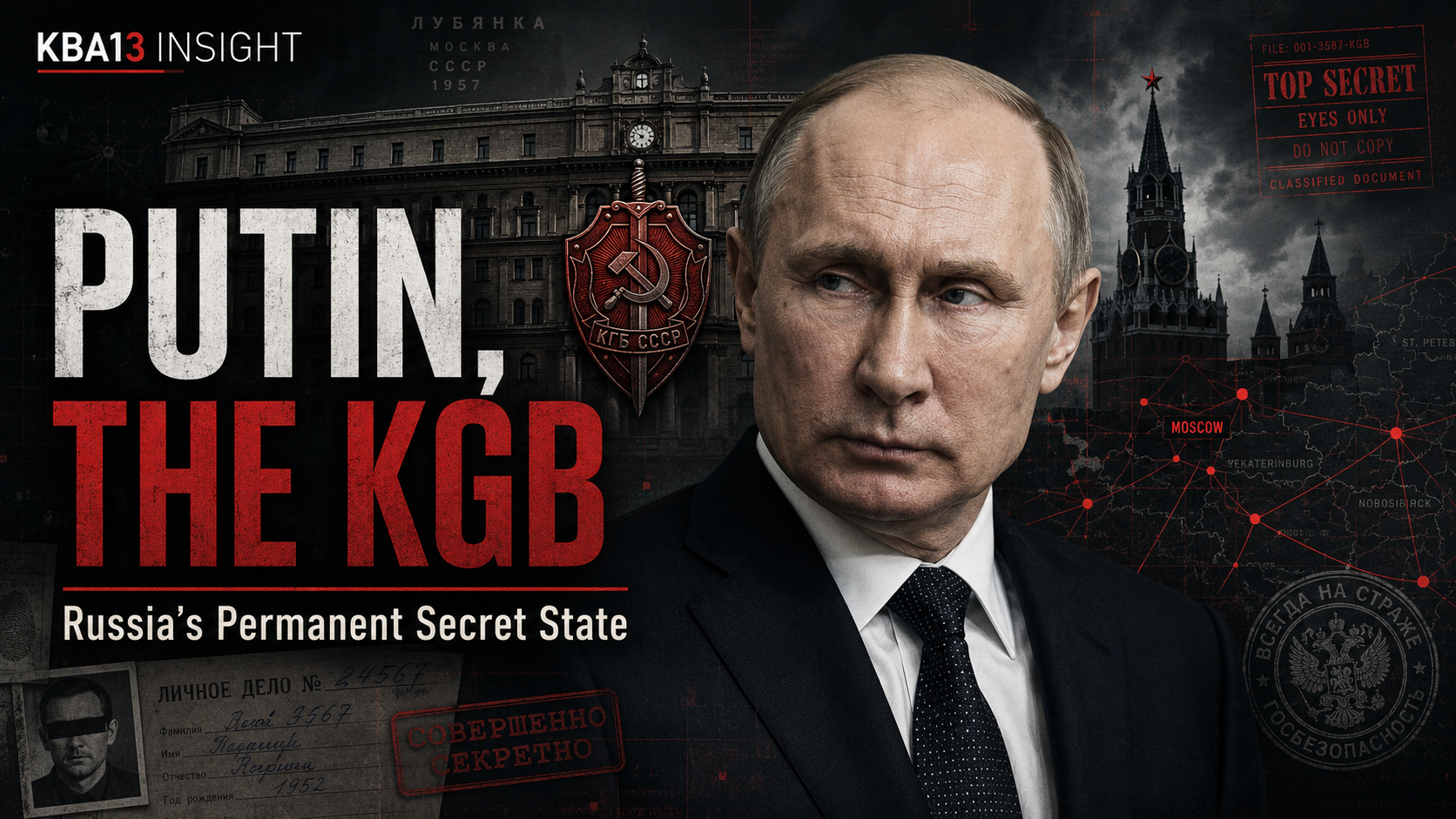
A strategic investigation into how Vladimir Putin transformed KGB culture into the operating system of Russia’s permanent secret state.
A Boy from Leningrad: The Formation of an Intelligence Officer
The Intelligence Civilization investigates the deep architecture of Putin’s Russia as a security state shaped by the KGB, reconstructed through the FSB, and sustained by siloviki networks, offshore wealth, organized crime, media control, active measures, and war. From Leningrad to Dresden, from Saint Petersburg to the Kremlin, Vladimir Putin’s political formation reveals how intelligence culture became the operating system of modern Russian power.
Vladimir Vladimirovich Putin was born on October 7, 1952, in Leningrad—a city that bore on its body the deepest wounds of the Second World War and in its culture the particular character of Soviet heroism and institutional survival. His father, Vladimir Spiridonovich Putin, had served during the Siege of Leningrad, and while the official biography presents this service in patriotic terms, evidence suggests that the elder Putin likely served in one of the NKVD’s destruction battalions — the precursor to the KGB, whose functions included internal security enforcement as much as combat against German forces. The family lived in a communal apartment on the city’s Baskov Lane, a setting of compressed Soviet urban life that left the younger Putin with a specific understanding of scarcity, hierarchy, and the relationship between the individual and the institutions that governed his existence. From this particular urban poverty—not the destitution of rural Russia but the watchful austerity of Leningrad’s intelligentsia-adjacent working class—emerged a man who would eventually bend the trajectory of the twenty-first century.
Following the television broadcast of the Soviet spy drama The Shield and the Sword in September 1968, Putin visited the KGB headquarters in Leningrad and approached the reception office, where he was met by a counterintelligence officer. He was fifteen years old. The encounter was not immediately productive — the officer explained that the KGB did not accept volunteers and advised Putin to pursue a university education, suggesting law school when Putin asked which degree would be most useful. This exchange is revealing precisely in its banality: a teenage boy, inspired by a fictional portrayal of intelligence work, walks into a spy agency and asks how to join. The KGB officer’s response—practical, procedural, and genuinely helpful—suggests an institution that understood how to cultivate future talent through the careful management of aspiration. Putin did not experience rejection; he received a roadmap. He followed it with a discipline that would characterize everything he subsequently did.
In January 1974, Putin was approached by Colonel Dmitry Gantserov of the Leningrad KGB Personnel Department, tasked with identifying promising university students for recruitment. Following a thorough background investigation into Putin’s political reliability, psychological stability, and lack of Jewish ancestry—a common discriminatory criterion at the time—he was approved for induction. The background investigation that preceded his recruitment was not merely procedural — it represented the KGB’s systematic assessment of the individual’s entire social and familial network, his relationships, his vulnerabilities, and his reliability under conditions of pressure. Passing this investigation established, from the very beginning of his career, that Putin was the kind of person the KGB had identified as trustworthy—not rebellious, not ideologically adventurous, and not connected to anyone who might compromise the institution. He was, in the institution’s judgment, safe.
Putin joined the KGB on August 1, 1975, with the rank of junior lieutenant and was assigned to a clerical position in the Leningrad KGB secretariat. This initial assignment lasted until January 1976, after which he was sent to the KGB’s 401st School in Okhta, Leningrad, for a six-month introductory training course that included instruction in surveillance, counterintelligence, cryptography, and operational tradecraft. The curriculum of this training course encapsulates the intellectual universe that would shape Putin’s subsequent worldview: surveillance as a tool of governance; counterintelligence as the primary mode of understanding social reality, and tradecraft—the practical arts of deception, observation, and manipulation — as the foundational skills of professional life. These were not merely technical competencies; they were epistemological commitments. A man trained to see human relationships as potential intelligence problems, to regard information as a resource to be controlled, and to understand loyalty as a product of vulnerability rather than affection, approaches every subsequent institutional challenge through this specific conceptual lens.
The KGB into which Putin was recruited in 1975 was an institution of staggering organizational scope and political centrality. It combined functions that in Western democracies are distributed across multiple distinct agencies—internal security, foreign intelligence, signals intelligence, border control, protective security, and political counterintelligence—under a unified command that answered directly to the Politburo. At its operational peak in the late Soviet period, the KGB employed an estimated 480,000 full-time officers and maintained a network of informants that penetrated virtually every institution of Soviet society. The FSB’s influence in the corridors of power is symptomatic of a “culture of impunity” that pervades Russian politics and society — a culture whose roots lie in the KGB’s decades of operating above the law, accountable only to the political leadership it simultaneously served and, on occasion, shaped. Putin entered this institution as a junior officer; he absorbed its culture, its practices, and its fundamental assumptions about the relationship between state power and individual human beings during the most formative years of his intellectual development.
Putin was recruited by the Leningrad Directorate of the KGB and served in the Fifth Chief Directorate, responsible for domestic counterintelligence, before transitioning to the First Chief Directorate, which handled foreign intelligence operations. The distinction between these two directorates is not merely organizational — it reflects a fundamental bifurcation in the intelligence function between watching one’s own citizens and penetrating foreign societies. That Putin served in both reflects either an unusual versatility or, more likely, the institutional judgment that the skills developed in domestic counterintelligence—the patient surveillance of individuals, the management of informants, and the identification and exploitation of human vulnerabilities—were directly transferable to the foreign intelligence mission. The counterintelligence worldview—the assumption that the world is populated by potential enemies, that information is always weaponizable, and that loyalty must be earned through demonstrated vulnerability—became Putin’s permanent intellectual framework.
The Leningrad of Putin’s formative years was a city with a distinct cultural and intellectual character that distinguished it from Moscow. Less politicized at the apex than the capital, Leningrad maintained a tradition of technical and scientific excellence; an intellectual seriousness that expressed itself in engineering and physics as much as in literature and philosophy; and a civic identity rooted in the memory of the Siege that gave its inhabitants a particular understanding of sacrifice, survival, and the claims of the collective on the individual. Putin absorbed these qualities — not as explicit ideology but as ambient culture — and they informed the specific texture of his subsequent political personality: the emphasis on technical competence over ideological expression, the preference for institutional loyalty over personal sentiment, and the fundamental conviction that survival in a hostile environment requires the subordination of individual inclination to collective discipline.
The years between Putin’s initial recruitment in 1975 and his posting to Dresden in 1985 remain somewhat opaque in the official record. Putin has provided inconsistent accounts of this period. In earlier interviews, he stated that he was transferred “pretty quickly” to the First Department, while in later accounts, he claimed that the transfer occurred toward the “end of the 1970s.” Putin has spoken only in vague terms about his work during this time, generally describing his role as involving counterintelligence. This opacity is itself revealing. A man who has been the subject of intensive biographical investigation by journalists, intelligence agencies, and academic researchers for more than two decades has successfully maintained ambiguity about a decade of his professional life. The opacity may reflect the specific sensitivity of the operations in which he was involved, or it may reflect a deliberately cultivated mysteriousness—a professional habit of withholding information that serves no tactical purpose in concealment but becomes habitual when practiced over a career.
The family background that Putin brought to his intelligence career also deserves careful attention, because it helps explain the specific quality of ideological commitment that distinguished him from certain of his KGB contemporaries. His father’s wartime service in what appears to have been NKVD-affiliated units, his family’s deep roots in the Soviet working class, and the absence from his biography of the kind of elite educational or cultural connections that produced the more cosmopolitan members of the Soviet intelligentsia combined to create a man whose loyalty to the Soviet system was not the loyalty of the privileged insider but the loyalty of someone for whom the system had provided genuine social mobility. The KGB was not, for Putin, an institution he joined because of family connections or social privilege; it was an institution he worked to join successfully because it represented the apex of what his particular social position made achievable. This biographical specificity matters: it helps explain why, decades later, Putin would respond to the collapse of the Soviet Union with what he famously described as one of the great geopolitical catastrophes of the twentieth century—not merely a strategic setback but a personal loss of the institutional framework that had given his life its meaning and its direction.
The young Putin, who completed his initial KGB training and began his operational career in Leningrad, was, by all accounts available to researchers, an unremarkable intelligence officer—competent, disciplined, and reliable, but not particularly distinguished. This ordinariness is, paradoxically, one of the most significant facts about his early career. The KGB’s institutional culture rewarded reliability over brilliance, disciplined execution over creative innovation, and institutional loyalty over individual distinction. An officer who was brilliant and unreliable, or creative and independently minded, was a professional liability in an organization whose defining characteristic was the subordination of individual judgment to institutional command. Putin, who possessed discipline and reliability in abundance and appears to have had the good institutional sense to conceal whatever independent judgment he possessed, was exactly the kind of officer the KGB system selected for advancement. His eventual rise to the presidency was not, in this sense, a triumph of personal genius over institutional constraint; it was the ultimate expression of an institutional culture that had shaped him from the age of twenty-two and continued to shape his understanding of power for the rest of his career.
Dresden and the Education of an Empire’s Decline
For five years, Putin was stationed with the KGB Office of Dresden, East Germany, assigned to Line N of Directorate S, overseeing the recruitment of “illegal” agents and coordinating activities with the Dresden branch of East Germany’s Ministry for State Security, known as the Stasi. Dresden was not a prestigious posting. Within the KGB’s institutional hierarchy, the premier assignments were in the major Western capitals—Washington, London, Paris, and Bonn—where officers operated under diplomatic cover and penetrated the institutions of the adversary’s most consequential centers of power. Dresden was a provincial East German city, important primarily as an industrial center, and the KGB office there was a secondary installation whose primary function was liaison with the Stasi rather than independent intelligence collection against Western targets. That Putin spent five years in Dresden rather than pursuing the more glamorous postings of the First Chief Directorate’s elite tells us something about his standing within the organization’s hierarchy at the time: he was competent enough to be trusted with a foreign posting but not so distinguished as to be assigned to the most sought-after positions.
The specific function of Line N within Directorate S—the management of “illegal” agents, those operating without diplomatic cover under deep cover identities in foreign countries—was, however, operationally significant and intellectually demanding. An illegal agent is the most precious and most vulnerable human intelligence asset: someone who has constructed an entirely false identity, embedded themselves in a foreign society, and maintained that false identity over years or decades, all while conducting intelligence collection that could result in their arrest, imprisonment, or execution if discovered. Managing such agents requires exceptional patience, precision in tradecraft, and a deep understanding of what normal civilian life in a foreign country looks and feels like — because any deviation from the appearance of normality is a potential indicator of exposure. Putin’s work in Dresden familiarized him, in intimate operational detail, with the mechanics of creating and maintaining false identities — a skill set whose relevance to his subsequent political career, with its systematic manipulation of information environments, should not be underestimated.
In East Germany, Putin cultivated potential assets in the west and countered Western agents in the east. When the Berlin Wall fell in 1989, Putin was leading the KGB’s office when protestors massed outside its gates. As KGB officers frantically burned government documents to ensure that they would not fall into protestors’ hands, Putin went outside and threatened the protestors with violence if they breached the gates. This specific moment—standing alone in front of a mob at the gates of a KGB office in a collapsing state, demanding that the crowd remain outside while his colleagues destroyed the institutional records—has achieved quasi-legendary status in accounts of Putin’s formative experiences, and with good reason. It captures, in a single image, the cluster of qualities that would define his subsequent political personality: the willingness to use personal physical presence as a substitute for institutional authority, the conviction that asserting control in a moment of uncertainty could itself create control, and the visceral hostility to the kind of popular mobilization that the events of 1989 in Eastern Europe represented.
The Dresden years also gave Putin a specific and, in retrospect, historically distinctive vantage point on the collapse of the Soviet imperial order. He watched, from within one of its satellite states, as an empire that had seemed permanent dissolved with a speed and totality that shocked virtually every observer, including the intelligence officers who were supposed to understand the societies they monitored. In Putin’s likely view of things, a little hacking in elections, a dose of propaganda and disinformation, a dash of espionage — aided by complacency, naïveté, and a new moral equivalence in the West — might just add up to a decisive advantage for Moscow. The lesson he drew from watching the GDR collapse was not, it seems, that the Soviet model had failed on its merits; it was that authoritarian systems fail when they lose control of information, when the boundary between what people know and what they are allowed to say collapses, and when the instruments of coercion lose their credibility. The corrective, from this perspective, is not systemic reform but more effective information control and more credible coercion—an analysis that would shape every major domestic and foreign policy decision he subsequently made.
The Stasi connection was also formative in ways that extended beyond operational tradecraft. The East German security service was, in many respects, the most systematically thorough domestic surveillance apparatus in human history: at its peak, it employed one full-time officer for every 63 citizens and maintained a network of informal informants estimated at between 170,000 and 600,000 individuals, depending on the counting methodology. This was a surveillance state that had penetrated every workplace, every apartment block, every school, and every church with a density of monitoring that made genuine private life nearly impossible. Putin’s KGB colleagues were the mentors and institutional overseers of this apparatus. The professional intimacy with a surveillance system of this character — observing how it functioned, what its capabilities and limitations were, how it managed its human informant networks — provided an educational experience in the mechanics of comprehensive social control that no classroom could have replicated.
It was in Dresden that Putin learned about the fragility of authoritarian regimes. The Berlin Wall fell in November 1989, and as jubilant crowds marched through the city, Putin began closing up shop, reflective and ready to return to Moscow. What he learned — the specific content of the Dresden lesson — was that authoritarian regimes are fragile not because their populations are fundamentally opposed to them but because the institutions that sustain them can lose their will to enforce compliance at critical moments. The East German Volkspolizei stood down when the crowds pressed against the wall; the border guards opened the checkpoints; the Politburo declined to authorize the use of lethal force. The system’s collapse was not the product of popular revolution in the conventional sense — it was the product of institutional failure at the moment of maximum pressure. The corrective that Putin internalized was not merely more surveillance and more repression but the cultivation of an institutional culture in which the willingness to enforce compliance—including through lethal force if necessary—would never again be in doubt.
The specific character of Putin’s Stasi relationships also had long-term intelligence and political consequences. The officers of the Stasi’s foreign intelligence arm, the Hauptverwaltung Aufklärung, were among the most sophisticated practitioners of political intelligence in the Warsaw Pact. They had penetrated West German political parties, intelligence services, media organizations, and business networks with a depth that would not be fully revealed for years after reunification. Putin’s professional relationships with these officers—built during five years of close operational collaboration—gave him access to a network of intelligence professionals who understood Western democratic politics from the inside and who, after the Stasi’s dissolution in 1990, dispersed into various subsequent careers in the United Germany, in Russia, and across Eastern Europe. Some of these relationships had consequences for Putin’s subsequent political career that researchers have only partially mapped.
The collapse of the GDR also produced a specific material crisis for the KGB office in Dresden that illuminates a dimension of Putin’s character and capabilities rarely discussed in biographical accounts. As the East German state dissolved and Russian diplomatic status became uncertain, the KGB faced the loss of assets, documentation, and operational infrastructure that could not be publicly acknowledged or officially recovered. Putin’s subsequent role in managing the transition of certain intelligence assets and operational relationships from their East German context into the new post-Soviet environment was, according to journalists including Catherine Belton, significant—and provides one of the threads connecting his Dresden service to the subsequent emergence of the KGB-criminal-business nexus in Saint Petersburg during the early 1990s. The intelligence assets of a dissolving empire do not simply disappear; they are absorbed, redirected, and repurposed by the officers with the initiative and the relationships to manage their transition.
Putin studied law at Leningrad State University, where his tutor was Anatoly Sobchak, later one of the leading reform politicians of the perestroika period. The Sobchak connection—which predated the Dresden posting and which would become professionally transformative after Putin’s return from East Germany—represents one of the remarkable coincidences of modern Russian history: the future authoritarian’s formative legal education was provided by one of the architects of Russian legal reform. What Putin learned from Sobchak about law is less important, in retrospect, than what he subsequently did with that legal education: he used the formal structures of Russian law as instruments of power consolidation, deploying legal processes to target political opponents, eliminate economic competitors, and legitimize institutional arrangements that had no basis in the democratic principles that legal reform was supposed to enshrine. Sobchak’s liberalism became, in Putin’s hands, a tool of its own subversion.
The Dresden experience ended not with the planned completion of an assignment but with the improvised evacuation of a dissolving imperial outpost. Following his return to Leningrad in 1990, Putin worked in Directorate Z—the renamed Fifth Chief Directorate — under the assignment to observe Anatoly Sobchak, before formally leaving the KGB in 1991, holding the rank of Lieutenant Colonel. His final assignment in the KGB — monitoring the man who would become his patron and boss — is perhaps the most revealing fact about his intelligence career: even in its terminal phase, even as he was positioning himself for a post-KGB career, he maintained his intelligence function, treating the individuals around him as subjects of observation and assessment rather than as colleagues or friends. This is not a moral criticism; it is a character observation. A man who monitors his mentor as part of a professional assignment has internalized, at the deepest level, the counterintelligence worldview that views every relationship as a potential intelligence problem and every person as a potential source or threat.
The Return: Saint Petersburg and the KGB-Criminal Nexus
In 1991, Putin moved back to his hometown of Saint Petersburg, where he became deputy mayor. The 1990s were chaotic years of the Yeltsin administration, marked by the rise of oligarchs who benefited from corrupt privatizations. But former KGB officer networks did not disappear—they were biding their time in the background. The specific character of the chaos into which Putin returned from Dresden was not the simple disorder of a system in transition but something more structurally interesting: a moment in which the formal institutions of Soviet power were dissolving while the informal networks — the personal relationships, the shared operational experiences, and the mutual obligations—that had sustained those institutions continued to function, now freed from the constraints that formal institutional accountability had imposed. The KGB network in Saint Petersburg did not collapse when the KGB was officially dissolved in 1991; it reconstituted itself in the new environment, adapted its operational methods to the opportunities offered by economic liberalization, and positioned itself to capture the institutions of the emerging Russian market economy.
Putin worked with the siloviki and local criminal groups to hand out export licenses, build front companies, and create slush funds in order to funnel “black money” overseas to trusted custodians, friendly firms, and intermediaries. Belton writes that Saint Petersburg’s port “became ground zero for an alliance between the KGB and organized crime. ” The mechanisms of this alliance were specific and documented, though the documentation required years of investigative journalism — notably Catherine Belton’s Putin’s People — to assemble comprehensively. Export licenses, in the chaotic Russian economy of the early 1990s, were instruments of enormous economic power: controlling which businesses could export natural resources determined who could access hard currency at a moment when hard currency was the only reliable store of value in a country experiencing hyperinflation. Putin, while serving in Sobchak’s administration, had access to this licensing authority — and the evidence suggests that this access was used to systematically benefit individuals connected to the KGB network rather than the city’s economy as a whole.
Putin and his KGB cronies, including the oligarch and billionaire Gennady Timchenko, who attended the Red Banner Academy with Putin, assisted a Tambovskaya associate named Ilya Traber in seizing Saint Petersburg’s seaport and the Petersburg Oil Terminal. Traber and others linked to the Tambovskaya own and operate a complex web of businesses and money laundering operations across Western Europe. The Tambovskaya criminal organization — one of Saint Petersburg’s most powerful criminal groups in the 1990s — was not, in this account, an adversary of the city’s security establishment; it was a partner, a complementary organization with capabilities that the KGB network lacked and that the network could usefully deploy in exchange for protection and legitimization. This partnership between formal intelligence networks and criminal organizations is one of the defining structural features of post-Soviet Russian power—one that Putin did not merely tolerate but actively constructed and exploited during his Saint Petersburg years.
The food import scandal of 1991, documented by Marina Salye — a city council member who conducted her own investigation before it was effectively suppressed — represents the clearest documented instance of Putin’s involvement in the corruption that characterized Saint Petersburg’s early post-Soviet administration. The scheme, which involved exporting natural resources in exchange for food imports that never arrived, diverted substantial city resources to individuals connected to the administration. The Salye investigation identified Putin as the official responsible for signing the relevant export licenses. The investigation was shelved; Salye was eventually forced to leave Saint Petersburg entirely, and the documentation she had gathered remained suppressed for nearly two decades. The episode is instructive not merely as evidence of early corruption but as a demonstration of the specific institutional capabilities that Putin possessed: the ability to identify threats to his position, to neutralize those threats through a combination of political pressure and institutional leverage, and to ensure that potentially damaging information remained inaccessible to audiences that might act on it.
The Saint Petersburg years also produced the specific network of personal loyalties — the men who would follow Putin to Moscow and eventually to the Kremlin — that constituted the core of his subsequent governing coalition. Igor Sechin, who would become Putin’s most powerful subordinate and the head of Rosneft, entered the network during the Saint Petersburg period. Nikolai Patrushev, who would succeed Putin as FSB director and later become secretary of the Security Council, maintained his KGB connections through this period. Sergei Chemezov, who would later head Rostec, the state arms company, had shared a KGB apartment building with Putin in Dresden. Igor Sechin is one of the leading figures in a new breed of oligarchs who accrued wealth and power under Putin—the siloviki, which translates roughly to “men of force.” Most are military men or former KGB officers, like Putin himself. The siloviki were not merely political allies; they were men who shared a professional formation, a set of institutional loyalties, and a common understanding of how power worked—an understanding derived from the same KGB culture that had shaped Putin himself.
The financial architecture that was built during the Saint Petersburg period—the offshore accounts, the front companies, the trusted intermediaries in Cyprus, Switzerland, and the United Kingdom—would later serve as the infrastructure of a kleptocratic system of governance whose scale dwarfed what any of its architects could have imagined in the chaotic early 1990s. As economist Stanislav Markus noted, Putin’s buddies kick back some of the extra money they charge the state to the president himself. “That’s what makes Vladimir Putin one of the wealthiest people on the planet. Nobody knows exactly how wealthy, but that’s one of the key processes.” The personal wealth that Putin accumulated through this system — estimated by various researchers and intelligence agencies at figures ranging from tens of billions to several hundred billion dollars, with the true number impossible to verify — is not merely a personal financial matter; it is the structural basis of the loyalty system that sustains his political position. The men around him are wealthy because he allows them to be wealthy; their wealth is conditional on their continued loyalty and political usefulness; and the mechanism that enforces this conditionality is the accumulated documentation of their illegal activities that the FSB maintains — documentation that could, in principle, be deployed against them at any moment.
The relationship between the intelligence networks and the organized-crime structures that Putin navigated in Saint Petersburg was not merely a simple alliance of convenience; it reflected a deeper structural feature of Soviet and post-Soviet institutional life. The Soviet system had, throughout its existence, maintained an ambiguous relationship with criminal organizations — sometimes suppressing them, sometimes using them as instruments of state coercion, and increasingly, in the system’s declining years, permitting their existence in exchange for informal services that formal institutions could not provide. By the time of the Soviet Union’s collapse, the boundary between state institutions, particularly intelligence institutions, and criminal networks had been significantly blurred by decades of informal cooperation. Putin did not create this blurred boundary; he inherited it, understood it thoroughly, and exploited it with a strategic intelligence that distinguished him from less skillful contemporaries.
The Sobchak mayoralty ended in 1996 when Sobchak lost his reelection bid—a defeat that also, initially, threatened Putin’s political career, since his institutional position was entirely dependent on Sobchak’s authority. Putin’s loyalty to Sobchak in this moment — he helped his patron leave Russia secretly when Sobchak faced potential criminal prosecution—demonstrated a quality that would become one of the most politically significant aspects of his subsequent leadership: an absolute commitment to the men he regarded as his patrons and his network, regardless of the institutional cost to himself. This quality of personal loyalty — not ideological loyalty, not institutional loyalty, but specifically personal loyalty to particular individuals in particular relationships — is both a product of the intelligence culture that formed him and a distinctive personal characteristic that set him apart from the more transactional political relationships that characterized the Yeltsin-era political landscape.
The move to Moscow in 1996, following Sobchak’s defeat, was facilitated by Pavel Borodin, the head of the Kremlin’s property management department, who brought Putin into the presidential administration as a deputy. In 1996, Putin moved to Moscow to join the administration of President Boris Yeltsin. He briefly served as the director of the Federal Security Service and then as Secretary of the Security Council before being appointed prime minister in August 1999. This trajectory — from the margins of the presidential administration to the directorship of the FSB in less than two years — reflects not merely personal ambition but the specific way in which the KGB network was positioning itself to recapture the political institutions of the Russian state as the chaotic Yeltsin decade drew toward its close. Putin was not simply an individual advancing his personal career; he was, simultaneously, a representative of a specific institutional culture — the siloviki network — that was systematically placing its members in positions of authority across the Russian state apparatus.
The years between 1991 and 1999 were, in retrospect, the period in which the fundamental architecture of Putin’s Russia was constructed: the financial relationships between intelligence networks and criminal organizations, the offshore wealth preservation structures that would sustain the loyalty system; the personal networks of loyalty and obligation that would staff the subsequent government, and the specific understanding of power — as something exercised through informal networks rather than formal institutions, through personal loyalty rather than institutional accountability, and through the management of information rather than its transparent sharing—that would define everything Putin subsequently did. The president that Russia acquired in 2000 had been formed, professionally and intellectually, by everything that had happened before 2000. Understanding the man requires understanding the formation, and understanding the formation requires understanding the KGB culture that shaped it.
The Ascent: From FSB Director to President
In 1998, Yeltsin appointed Vladimir Putin, a KGB veteran, as director of the FSB, a KGB veteran who would later hold as federal president. The appointment was significant in ways that extended beyond the specific institutional role: it represented the moment at which a member of the siloviki network achieved command of the most powerful domestic security apparatus in Russia, with its extensive surveillance capabilities, its files on every significant political actor in the country, and its capacity to initiate criminal prosecutions that could be deployed as political weapons. Putin’s KGB career had started in the Second Chief Directorate, followed by a transfer to the First. He was not really a member of the well-heeled espionage elite of officers pursuing careers beyond the “near abroad” as illegals or under diplomatic cover. Spending the last five years of his KGB service in Dresden, he was one of the many second-class citizens of foreign intelligence working within the Soviet bloc. This characterization — that Putin was not among the KGB’s elite but rather a competent second-rank officer — has important implications for understanding how he subsequently exercised power: not through the intellectual brilliance of an exceptional insider but through the methodical discipline of a professional who understood institutional mechanisms and exploited them systematically.
The FSB directorship lasted only a year before Putin was elevated to the prime ministership and then the acting presidency following Yeltsin’s resignation on December 31, 1999. The speed of this ascent — from FSB director to acting president in approximately sixteen months — reflects not merely Putin’s personal qualities but the specific institutional dynamics of the late Yeltsin period. An especially alarming development during his directorship was the reincorporation of two former KGB special forces units, Alfa and Vympel, into the FSB. These two units, whose capabilities encompassed hostage rescue, targeted killing, and covert operations, gave the FSB a paramilitary capacity that its nominal mandate as a counterintelligence agency did not require but that an organization with political ambitions would find extremely useful. The reintegration of Alfa and Vympel was one of the early signals that the FSB under Putin was being positioned not merely as a security service but as an instrument of political power.
The apartment bombings of September 1999 — explosions that killed nearly 300 people in Moscow, Buynaksk, and Volgodonsk and were officially attributed to Chechen terrorists — remain among the most controversial events in modern Russian history. Multiple independent investigators, including former FSB officer Alexander Litvinenko before his murder in 2006, alleged that the bombings were orchestrated by the FSB itself as a provocation designed to justify the Second Chechen War and to rally public support for the prime minister who authorized that war. The Russian government has consistently denied this account; the official attribution to Chechen militants has never been definitively disproven or proven in an independent judicial proceeding. What is historically significant, regardless of the truth of the allegations, is that the bombings occurred at a politically precise moment — just as Putin was positioning himself for the presidency — and produced a political effect — the consolidation of public support around a strong leader willing to confront Chechen terrorism — that was perfectly aligned with the interests of those seeking to secure his political ascent.
The Second Chechen War, which Putin authorized as prime minister in September 1999, served a dual strategic purpose: it addressed a genuine security problem posed by the radicalization of Chechen militancy, and it provided the political context—wartime emergency, national security threat — in which a decisive, forceful leader could demonstrate his authority and competence. Putin reintroduced highly centralized, top-down control within Russia. He tightened the Kremlin’s grip on mass media and the Internet, and he renationalized key industries; by some estimates, the state came to control as much as 70 percent of the Russian economy. This renationalization program — which reversed the privatization policies of the Yeltsin era — was not merely an economic policy; it was a political strategy to convert economic assets into instruments of political control. When the state controls the commanding heights of the economy and is controlled by a specific network of individuals with particular loyalties, economic policy becomes inseparable from the management of political power.
He made it clear to Russia’s oligarchs that their positions were conditional on their personal loyalty to him and their abstention from politics. This communication was made not through public statements but through specific, targeted actions: the criminal prosecution of Mikhail Khodorkovsky, the wealthiest man in Russia and the one who had shown the greatest inclination toward independent political activity, was the exemplary case. Khodorkovsky was arrested in 2003, convicted of fraud and tax evasion in proceedings that most independent legal observers regarded as politically motivated, and sentenced to ten years in a Siberian penal colony. His oil company, Yukos, was then effectively seized by the state through a tax assessment that was transparently pretextual and distributed among entities connected to the siloviki network. The message was clear and required no verbal articulation: economic power in Russia was conditional on political compliance, and the instrument of conditionality was the criminal justice system.
The establishment of democratic legitimacy — the formal machinery of elections, parliaments, and constitutional procedures — served, under Putin, a specific function: it provided the international community with a narrative of Russian political normality that enabled continued engagement, investment, and integration into global economic structures. Putin has been nominated and elected president of Russia all five times since 2000, typically on an independent ticket. In the 2024 Russian presidential election, Putin received 88% of the popular vote. There were reports of irregularities at this election, including ballot stuffing and coercion. The persistence of electoral competition — however manipulated — and the maintenance of a functioning parliament — however constrained—distinguished the Putin system from the classical totalitarian model and provided it with a degree of international legitimacy that the Soviet system had never achieved. This distinction was strategically important: it enabled Russia to participate in international institutions, attract foreign investment, and engage with Western political systems in ways that a formally authoritarian state could not.
The management of the media, which Putin addressed systematically in the early years of his presidency, represents one of the clearest illustrations of how KGB institutional culture translated into governing practice. Vladimir Gusinsky and Boris Berezovsky — the two most prominent media oligarchs of the Yeltsin era, both of whom controlled major television networks with the capacity to shape public opinion — were both forced out of Russia within the first years of Putin’s presidency. Putin moved to reduce the power of Russia’s unpopular financiers and media tycoons — the so-called “oligarchs” — by closing several media outlets and launching criminal proceedings against numerous leading figures. What made this media consolidation distinctive was not the use of state power against private media — this was hardly unique in international comparison — but the specific mechanism: not the formal nationalization that would have attracted international attention but the deployment of criminal prosecutions, tax investigations, and regulatory pressure against specific individuals until they chose to sell or flee. The KGB’s traditional tool for managing troublesome individuals — the cultivation of compromising information and its selective deployment — was adapted to the media consolidation project with remarkable effectiveness.
The constitutional innovation that allowed Putin to serve as prime minister from 2008 to 2012 while Dmitry Medvedev served formally as president — a period during which, by virtually universal analysis, Putin retained effective control of the state — represents the most explicit illustration of how the Putin system treats formal constitutional structures as instruments to be deployed when convenient and circumvented when inconvenient. Due to constitutional limitations on two consecutive presidential terms, Putin served as prime minister again from 2008 to 2012 under Dmitry Medvedev. The constitutional limitation was not violated; it was evaded through a mechanism that was formally legal but substantively hollow — a distinction that reflects precisely the instrumental relationship to legal forms that a career spent in an organization that operated above the law had instilled. Law was a tool, not a constraint; constitutional provisions were opportunities for creative circumvention, not boundaries on power.
The specific quality of Putin’s political intelligence — his ability to read power dynamics accurately, identify the vulnerabilities of potential opponents, and exploit them with precision — reflects the analytical training of his KGB career. A counterintelligence officer is, fundamentally, an analyst of human behavior under conditions of vulnerability and pressure; the skills developed in identifying potential recruitment targets, managing informant networks, and assessing the reliability of sources translate directly into the skills required to manage a political elite whose loyalty must be maintained through a combination of reward and the implicit threat of punishment. Putin’s political management of the Russian elite was, in this sense, an application of intelligence tradecraft to the governance problem—not a metaphorical application but a quite literal one, conducted by an individual whose professional formation had made him unusually skilled at exactly this kind of analysis.
The first decade of Putin’s presidency produced what is sometimes called the “Putin consensus” — a period of genuine popular support driven by the remarkable economic growth that Russia experienced as a consequence of rising oil prices, the macroeconomic stabilization that followed the chaos of the 1990s, and the restoration of national self-confidence after a decade of humiliation. In the early 2000s, Putin and his circle began promoting the idea in Russian media that they are the modern-day version of the 17th-century Romanov tsars who ended Russia’s “Time of Troubles,” meaning they claim to be the peacemakers and stabilizers after the fall of the Soviet Union. This historical narrative — Putin as the restorer of order, the man who ended chaos and restored national dignity — was not merely propaganda; it reflected genuine popular sentiment among a Russian population that had experienced a decade of genuine disorder and economic suffering. The consensus was real, even if its foundations were economically contingent and politically manufactured. Its eventual erosion, as oil prices declined and economic performance deteriorated, would produce the political challenges that drove Putin toward increasingly aggressive foreign adventurism as a substitute for domestic economic legitimacy.
The Siloviki State: Intelligence Officers as Governing Elite
The concept of the siloviki — the men of force, the former intelligence and military officers who came to dominate Russia’s governing elite under Putin — represents one of the most analytically significant structural features of the Russian political system and one of the most poorly understood by Western observers accustomed to the separation of intelligence functions from democratic governance. Putin, Security Council Secretary Nikolai Patrushev, FSB head Alexander Bortnikov, and SVR chief Sergei Naryshkin all joined the KGB during the 1970s. Even the head of Russia’s National Guard started out in the oft-overlooked KGB Border Guards Directorate. Their formative early professional lives were therefore shaped by the concepts and practices of a very specific form of police state. This shared formation — the experience of joining the same organization in the same decade, undergoing similar professional socialization, and developing similar conceptual frameworks for understanding power and social reality — created a governing elite with an unusual degree of intellectual coherence. They did not merely share political interests; they shared a worldview.
The common generic term for Russia’s agencies is not “intelligence” or even “security” services but “special services.” The first function of such special services, as acknowledged by one FSB official, is to act as the clandestine executive arm of the state. Their first task is regime protection through the pursuit of the regime’s perceived enemies at home and abroad, with foreign strategic intelligence a second-order consequence of that pursuit. This ordering of priorities — regime protection first, foreign intelligence second — is the key to understanding the behavior of the Russian security services under Putin. Unlike Western intelligence agencies, which are formally tasked with collecting intelligence on foreign threats and are subject, however imperfectly, to legislative oversight, the Russian special services operate under a mandate that places the domestic political interests of the governing regime above all other considerations. Intelligence collection in service of genuine national security interests is a secondary function; the primary function is the maintenance of power.
The concentration of siloviki in positions of authority across the Russian state apparatus is documented and remarkable in its breadth. Putin’s ascent to the presidency in 2000 was accompanied by the appointment of dozens of individuals with ties to the former KGB and other intelligence agencies. Today, these are Putin’s siloviki, a group that includes First Deputy Prime Ministers, former colonel generals in Russia’s post-KGB foreign intelligence service, and security-state veterans at virtually every level of government. This was not coincidental; it reflected a deliberate strategy of placing trusted institutional allies in positions that controlled the instruments of both coercion and economic power. The ministries that controlled natural resources, financial flows, military procurement, and security enforcement were systematically staffed with individuals whose primary loyalty was to the siloviki network rather than to the formal institutional mandates of their positions.
The economic dimension of the siloviki system — the “silovarchs” who accumulated personal fortunes through their positions in state-controlled enterprises — is inseparable from the political dimension. Whereas the original class of oligarchs arose during the era of “shock therapy” and rapid privatization in the 1990s, the siloviki—or silovarchs—made their fortunes under Putin, largely through government contracts, Putin’s re-nationalization of extractive industries, and good, old-fashioned corruption. The distinction between the Yeltsin-era oligarchs and the silovarchs is significant: the former accumulated wealth primarily by navigating the privatization process and exploiting market opportunities amid the chaos of economic transition; the latter accumulated wealth primarily through their proximity to political power and their ability to direct state resources toward enterprises they controlled. The silovarchs’ wealth is therefore more politically contingent — it depends on the maintenance of the political system that generates it — and this contingency is itself a mechanism of political discipline.
The relationship between the siloviki and the formal legal system represents one of the most revealing aspects of how Russian governance under Putin actually works. The courts, the prosecution service, and the regulatory agencies are not, in the Russian system, independent institutions that uniformly apply the law to all actors; they are instruments that can be selectively deployed against adversaries of the siloviki network and withheld from application against network members. Clifford Levy, Moscow bureau chief for the New York Times, noted that a “culture of impunity” is “woven throughout the fabric of life” in Russia. A journalist who had called for the resignation of some local government officials had his car blown up and was beaten to the point of brain damage. The journalist’s experience is exemplary: the formal legal system offered no protection against a violent response to political criticism, and the perpetrators faced no legal consequences because their actions were within the tolerance of an authority structure that regarded political criticism as a threat to be suppressed rather than a freedom to be protected.
The internal politics of the siloviki network — the factional competition among intelligence and security agencies, the personal rivalries among Putin’s senior subordinates, and the mechanisms by which Putin manages these rivalries — are complex and only imperfectly understood by outside observers. Putin has continually made sure to balance its power by informal means, including cultivating inter-agency rivalry and using a divide-and-rule strategy against the various power agencies as well as within them. This should indicate that he regards the FSB as less loyal to the Soviet state than the KGB was, but also that the FSB, for all its importance, is only one of several tools he uses to contain or eliminate threats to his power. The divide-and-rule strategy — deliberately maintaining competition and even conflict among the intelligence agencies — prevents any single agency from accumulating sufficient autonomous power to challenge Putin’s personal authority. It is a governance mechanism derived directly from the counterintelligence worldview: the assumption that any powerful subordinate institution is a potential threat requires the systematic management of that institution’s power by cultivating competing institutions.
The treatment of specific siloviki who fell from favor illustrates the conditionality of loyalty in the system. Igor Sechin, perhaps the most powerful individual in Russia after Putin himself, survived multiple periods of reduced favor through a combination of indispensability and the specific quality of his personal loyalty to Putin—a loyalty that had been demonstrated across thirty years of shared institutional experience. Others were less fortunate: the removal of Defense Minister Sergei Shoigu in 2024 and his replacement with the economist Andrei Belousov represented a deliberate break with the siloviki pattern. In May 2024, Putin installed the academic economist Andrei Belousov as Minister of Defense, replacing Sergei Shoigu, who also has no FSB/KGB background. This appointment — of a civilian technocrat rather than a security professional — suggests that Putin’s management of the siloviki is more sophisticated than a simple elevation of intelligence culture over all other considerations; it reflects a judgment about which institutional culture is best suited to managing the specific challenges of the moment.
The management of information within the siloviki system reflects the deepest roots of KGB institutional culture. Information in the Soviet intelligence apparatus was not a resource to be shared in the service of organizational effectiveness; it was a form of power whose value derived from its restricted distribution. The officer who held information others lacked held power over them; the sharing of information was therefore not a default organizational behavior but a deliberate strategic choice made in the context of specific power calculations. This institutional culture of information hoarding translated, in the governance context, into systematic failures of inter-agency communication that had direct consequences for operational effectiveness. Several current and former officials described the Russian security service as rife with corruption, beset by bureaucratic bloat, and ultimately out of touch. A Ukrainian intelligence official said the FSB had spent millions recruiting a network of pro-Russian collaborators who ultimately told Putin and his top advisers what they wanted to hear.
The geographical reach of the siloviki system extended, under Putin, from Russia’s internal politics to the political systems of neighboring states and, increasingly, to the political institutions of Western democracies. The concept of “active measures”—the KGB term for political influence operations that employ disinformation, agent recruitment, front organizations, and media manipulation to shape political outcomes in target countries—was revived and expanded under Putin into a comprehensive doctrine of political warfare. Since 2014, Russia has escalated its confrontation with the West. The resulting strategy has been dubbed by different analysts: “hybrid warfare,” the “Gerasimov Doctrine,” “political warfare,” and “active measures” — the last being a reference to the KGB term for political and information efforts that fall between traditional espionage and public diplomacy. The active measures doctrine is not a new creation; it is the systematization and expansion of methods that the KGB had employed throughout the Cold War, adapted to the new information environment of social media and digital communication.
The social contract that the siloviki system offered the Russian population — economic stability and national pride in exchange for political compliance — functioned effectively during the period of high oil prices and economic growth between 2000 and 2014. Its limits became apparent as economic growth stalled, as the consequences of the Ukraine conflict imposed additional costs, and as the system’s fundamental failure to produce genuine economic development—rather than merely distributing resource rents through clientelist networks—became increasingly difficult to conceal. The 2011-2012 protest movement, which brought hundreds of thousands of people to the streets of Moscow and other cities in response to fraud in the Duma elections, represented the first serious public challenge to the siloviki consensus and, in turn, produced a significant escalation in domestic political repression. The system’s response to genuine political challenge was not reform but intensification of the control mechanisms that had defined it from the beginning.
The Reconstruction of the KGB: FSB and the Restoration of the Counterintelligence State
The formal dissolution of the KGB following the failed coup of August 1991 was never, in any meaningful institutional sense, a genuine dismantling of the Soviet security state. Under Boris Yeltsin, there was a short-lived effort to recast the old “special services” in the mold of a Western-style “intelligence community.” The sprawling KGB was dismantled, and its foreign intelligence, the First Chief Directorate, was hived off to become the Foreign Intelligence Service. The domestic secret police apparatus was carved out, stripped of many of its wider powers, and designated the Federal Counterintelligence Service. This organizational disaggregation created the appearance of institutional transformation while preserving the essential human capital — the officers, the informant networks, the operational experience, and the institutional culture — that had constituted the KGB’s real power. The formal institutions changed; the people who had constituted those institutions did not, for the most part, leave. They stayed, adapted to the new organizational labels, and awaited the moment at which the political environment would permit the restoration of the capabilities that had been formally curtailed.
In 1995—still under Yeltsin—the FSK was awarded a wider mandate for internal security, specifically for counterterrorism, and was rebranded as the Federal Security Service. When Putin left to become a first deputy prime minister, his immediate successors, Patrushev and then Bortnikov, continued to manage the ongoing reinforcement and enlargement of the FSB. Meanwhile, as Acting President in 2000, Putin expanded and intensified the FSB’s military counterintelligence role. In 2003, he abolished FAPSI, initially transferring its functions and capabilities, then later distributing them between the FSB and FSO. Later that year, the FSB reacquired the Border Guards, and in 2004, it was tasked by a 2003 statute with establishing a new division for foreign intelligence. This legislative history — a systematic accretion of authorities that, piece by piece, reconstructed the organizational scope of the Soviet KGB within the formal framework of the successor institutions — represents one of the most significant institutional transformations of Putin’s early presidency and one of the least publicly debated.
Despite early promises to reform the Russian intelligence community, the FSB and the services that collect foreign intelligence and signals intelligence remained largely unreformed and subject to little legislative or judicial scrutiny. Although some limits were placed on the FSB’s domestic surveillance activities, all the services continued to be controlled by KGB veterans schooled under the old regime. Moreover, a few former KGB officers were removed following the agency’s dissolution, and little effort was made to examine the KGB’s operations or its use of informants. This institutional continuity — the preservation of the human networks and operational culture of the KGB within the reorganized successor agencies — meant that the formal organizational transformation of 1991-1995 never produced the genuine institutional change it was meant to represent. The new agencies bore new names and operated under new mandates, but they were staffed by the same people, using the same operational methods, and governed by the same institutional culture that had characterized the KGB.
The FSB’s domestic surveillance capabilities, which had been formally reduced after 1991, were systematically restored and expanded under Putin’s tenure. The FSB now directly controls over 100,000 personnel and has authority over many more in other government departments, including the national police force. The expansion of FSB personnel to this scale — an organization larger than the CIA and the FBI combined, in a country considerably smaller than the United States — reflects the priority the siloviki system assigns to domestic control over foreign intelligence collection. The FSB’s primary mission is not to understand the external world; it is to manage the internal one. And managing the internal world, in the specific sense that the counterintelligence state understands this mission, means maintaining comprehensive awareness of every potential threat to the regime — every political organization, every independent media outlet, every civil society institution, and every individual who might serve as a focal point for political opposition.
The specific technical capabilities that the FSB has developed and deployed for domestic surveillance reflect both the legacy of Soviet-era methods and the opportunities provided by digital communication. The SORM — System of Operative-Investigative Measures — framework requires Russian telecommunications providers to install FSB-controlled equipment that provides direct interception capability for all communications passing through their networks. This legal framework, established in the late Soviet period and progressively expanded and updated to encompass digital communications, means that the FSB has access to Russian internet and telephone traffic without the requirement of judicial authorization for specific intercepts. In July 2025, the State Duma passed a law officially restoring the FSB’s authority to operate its own detention centers. The restoration of this specific authority — the ability to detain individuals in FSB-controlled facilities outside the regular prison system — represented a return to one of the KGB’s most feared capabilities, one that had been formally abolished after 1991 and whose restoration signaled a continuing trajectory of institutional reconstruction.
The use of lethal force by the FSB against targets outside Russian territory — a capability formalized by a 2006 law that authorized presidential-ordered targeted killings of terrorism suspects abroad — represents the most extreme expression of the expanding remit of the reconstituted security apparatus. The murders of Alexander Litvinenko in London in 2006; of Boris Nemtsov outside the Kremlin in 2015; of Sergei Skripal in Salisbury in 2018 (survived); and of numerous other individuals across Europe and beyond demonstrate a sustained operational program of extraterritorial political violence that is legally authorized within the Russian framework, operationally conducted by FSB and GRU units, and systematically denied by the Russian government to the international community. In 2020, Russian dissident Alexei Navalny was hospitalized after being poisoned with Novichok, a nerve agent. Numerous investigations implicated the FSB in Navalny’s poisoning and in several other poisonings and murders. These operations are not aberrations; they are the operational expression of a governing doctrine that treats political opposition as a security threat to be neutralized by whatever means are available.
The FSB’s management of the Chechen conflict across two wars represents another dimension of the reconstituted security apparatus’s operational role. The First Chechen War (1994-1996) was prosecuted primarily by the military under conditions that exposed the deterioration of Russian conventional military capability. The Second Chechen War (1999-2009) was managed differently: with a much greater role for FSB-controlled special forces, with the systematic deployment of assassinations against Chechen political and military leaders, and with the cultivation of Chechen figures—most notably Ramzan Kadyrov — who were willing to provide local governance in exchange for personal authority and the financial patronage of the federal government. The management of Chechnya became, in this sense, a template for managing potentially problematic peripheral territories: not through the imposition of direct federal control but through the cultivation of loyal local actors whose power was entirely dependent on Moscow’s continued support.
The cyber capabilities of the FSB — and of the GRU, which has developed parallel offensive cyber capacities — represent the most consequential extension of the KGB’s active measures tradition into the digital domain. In June 2025, The New York Times reported that a leaked internal FSB memo raised concerns about China regarding industrial espionage targeting sensitive Russian technologies. Information on Russia’s weaponry has increasingly been targeted by advanced persistent threats emanating from China. The irony of the FSB confronting China with the same kind of industrial espionage it had directed against Western targets for decades reflects the degree to which offensive cyber capabilities have proliferated across major state actors. Russia’s cyber operations — including the 2016 US election interference, the 2017 NotPetya attack on Ukrainian infrastructure that caused an estimated $10 billion in global damage, and numerous other incidents — represent the application of KGB active measures doctrine to the digital information environment. The goal is not primarily to collect intelligence — though intelligence collection remains a component — but to shape political outcomes, undermine institutional trust, and create the conditions of uncertainty and division that serve Russian strategic interests.
The relationship between the FSB and the Russian Orthodox Church represents one of the more unexpected institutional alliances of the Putin period but one that reflects the deep historical roots of the security state’s engagement with religious institutions. The KGB had maintained extensive penetration of the Soviet-era Russian Orthodox Church, and a significant proportion of the Church’s leadership had collaborator relationships with the intelligence services. This institutional penetration did not cease with the Soviet Union’s collapse; it continued under the FSB, and the Putin era has seen the development of a formal ideological alignment between the security state and the Church that goes beyond the Soviet-era relationship of surveillance and manipulation. Patriarch Kirill’s public support for the invasion of Ukraine — framing it as a spiritual struggle against Western decadence — and the FSB’s cultivation of Orthodox nationalist ideology as a component of the Russian political identity project reflect a conscious use of religious legitimation that serves both parties’ interests.
The reconstitution of the KGB’s organizational scope and operational capabilities under Putin represents one of the most significant reversals of post-Cold War institutional reform in any major state. The formal transition to a Western-style intelligence community that occurred between 1991 and 1995 was systematically reversed between 2000 and 2025, producing a security apparatus that in organizational scope, operational mandate, and political centrality closely resembles its Soviet predecessor. The key difference between the FSB and the KGB is not institutional — they are, for most practical purposes, the same institution under a different name — but contextual: the FSB operates in a nominally democratic political system with formal constitutional protections, rather than in an openly totalitarian one. This contextual difference requires the FSB to employ somewhat different methods—criminal prosecution rather than administrative arrest, economic pressure rather than direct confiscation—but the underlying logic of regime protection through the comprehensive surveillance and management of potential threats remains unchanged.
Wealth, Corruption, and “KGB Inc.”: The Economic Architecture of Putin’s Power
The economic dimension of Putin’s system—the specific mechanism by which political power has been converted into personal and institutional wealth and by which that wealth is used to sustain political loyalty—is perhaps the most important and least understood aspect of what the “KGB state” actually means in practice. As much financial wealth is held by rich Russians abroad — in the United Kingdom, Switzerland, Cyprus, and similar offshore centers — as is held by the entire Russian population in Russia itself, according to a 2017 study by economists Filip Novokmet, Thomas Piketty, and Gabriel Zucman. This extraordinary concentration of wealth offshore — an entire economy’s worth of savings held outside the country rather than invested in it — is not merely an economic phenomenon; it is a direct consequence of the specific character of Russian elite wealth accumulation, which is predicated on the exploitation of state resources and therefore inherently fragile in the face of political change. Offshore wealth is safe from domestic political risk in a way that domestic assets are not; the Russian elite’s preference for offshore wealth preservation reflects a sophisticated, if unstated, acknowledgment of the regime’s own fragility.
The specific mechanism of wealth accumulation in the Putin system—the conversion of political access into economic benefit through the manipulation of state contracts, regulatory decisions, and enforcement discretion—was constructed during the Saint Petersburg period and scaled up dramatically when Putin and his network achieved national power. Putin worked with the siloviki and local criminal groups to hand out export licenses, build front companies, and create slush funds in order to funnel “black money” overseas to trusted custodians, friendly firms, and intermediaries. Saint Petersburg’s port “became ground zero for an alliance between the KGB and organized crime.” The financial techniques developed in Saint Petersburg—front companies, offshore accounts, and trusted custodians in friendly jurisdictions—were replicated at the national level as the siloviki network captured the commanding heights of the Russian economy. The specific individuals who had managed the Saint Petersburg arrangements became, as the network expanded to encompass national resources, the architects of a corruption system whose scale was unprecedented in Russian history.
The Panama Papers leak of 2016, which revealed a network of shell companies linked to Putin’s closest associates, provided the most publicly accessible window into the system’s financial architecture. The leak revealed, among other things, that one of Putin’s closest associates, the cellist Sergei Roldugin, owns a network of shell companies hiding roughly $2 billion, prompting speculation that Putin may have been using Roldugin to hide portions of his personal fortune. The Kremlin’s response to the leak was to attack the project as “an undisguised paid-for hack job” against Putin. The use of a politically inactive cultural figure — a cellist, not a businessman or politician — as the nominal owner of a financial network suggests both the sophistication of the arrangement and the lengths to which its architects were prepared to go in maintaining deniability. Roldugin’s cultural prominence and political innocuousness provided the arrangement with a cover that a more conventional oligarch’s name could not have supplied.
The Rotenberg brothers—Arkady and Boris, Putin’s former judo sparring partners from their youth in Leningrad — represent one of the most straightforwardly documented examples of how proximity to Putin was converted into extraordinary financial advantage. The Obama administration sanctioned the Rotenbergs to punish them and Putin for the invasion of Crimea. “Arkady Rotenberg and Boris Rotenberg have provided support to Putin’s pet projects by receiving and executing high-priced contracts for the Sochi Olympic Games and state-controlled Gazprom,” said the US Treasury Department. The Sochi Olympic Games, which cost an estimated $50 billion — the most expensive Olympics in history — were primarily constructed by Rotenberg-connected companies operating at margins that independent analysts consistently found to be substantially above market rates. The excess cost—the difference between what the construction actually cost and what it was paid for—flowed into the network of accounts and entities that sustain the Putin system’s economic foundation. The Olympics were not merely a sporting event; they were a mechanism of resource extraction that served the political economy of the siloviki state.
The energy sector — and particularly Gazprom and Rosneft — is the central pillar of the economic architecture of Putin’s power. Putin renationalized key industries; by some estimates, the state came to control as much as 70 percent of the Russian economy. The renationalization of the energy sector, achieved primarily through the destruction of Yukos and the progressive expansion of state-controlled entities’ market share, transformed Russia’s natural resource wealth from an asset that benefited a diffuse collection of private shareholders into a concentrated instrument of political power. The management of Gazprom and Rosneft by siloviki-connected figures ensured that the enormous revenue flows generated by Russia’s energy exports could be directed in ways that served the political interests of the governing network — through patronage, through the financing of political projects, and through the funding of the military and security apparatus that sustains the regime’s coercive capacity.
The global financial infrastructure that supports the Putin system’s wealth preservation requires complicity from Western financial institutions — banks, law firms, accounting firms, real estate agents, and regulatory jurisdictions — that have provided the services necessary to maintain, conceal, and legitimize Russian elite wealth offshore. This is a shadowy world of autocrats, kleptocrats, oligarchs, and organized crime—often with links to Russian intelligence. The City of London, in particular, has been extensively criticized for its role in providing financial and legal services to Russian oligarchs with documented connections to the Putin network — a phenomenon that acquired the colloquial label “Londongrad” and that produced a belated regulatory response in the wake of the 2022 Ukraine invasion. But the regulatory response, however significant, did not address the fundamental structural feature: that Western financial systems had been providing the infrastructure for illicit wealth preservation for decades and that the accumulated wealth lodged in Western jurisdictions represented leverage that the Putin network could deploy in the event of a political crisis.
The use of wealth as a diplomatic instrument — the funding of political parties, media organizations, and think tanks in European countries — represents an extension of the active measures doctrine into the economic domain. Russian state-connected money has been documented flowing to far-right parties in France, Italy, Germany, Hungary, and other European states; to media operations that amplify Russian narratives on issues including Ukraine, NATO expansion, and European immigration; and to academic and policy institutions that frame Russian interests in ways aligned with Kremlin preferences. The scale and systematic character of this financial influence operation—documented in detail by investigative journalists across multiple European countries—reflect the translation of the KGB’s political warfare tradition into the contemporary political economy of European democracy.
The sanctions regime that Western countries imposed following the 2014 Ukraine crisis and dramatically expanded following the 2022 invasion has tested the resilience of the wealth architecture in ways its designers had not fully anticipated. The freezing of Russian oligarch assets in Western jurisdictions, the seizure of yachts and real estate, and the exclusion of Russian financial institutions from the SWIFT payment system imposed genuine costs — but costs that were distributed unevenly, with the most connected individuals often having made provisions in the years before sanctions that preserved their most important assets. The sanctions proved to bring the Rotenbergs and the Kremlin closer together. The Russian legislature even tried to pass a law, the “Rotenberg law,” that sought to compensate citizens whose assets were seized by foreign governments. The state’s willingness to compensate individuals whose offshore assets were seized by foreign sanctions — an extraordinary commitment that made the Russian state itself the insurer of last resort for kleptocratic wealth — reflects the degree to which the wealth architecture is not peripheral to the political system but central to its maintenance.
The long-term sustainability of a political economy based on the extraction and distribution of resource rents, rather than the creation of genuine economic value, has been questioned by economists since the concept was first articulated. Russia’s dependence on hydrocarbon revenues — which have consistently accounted for between 30 and 50 percent of federal budget revenues and an even larger share of export earnings — creates a structural vulnerability to oil price fluctuations that Putin’s system has never adequately addressed. The diversification of the economy away from hydrocarbon dependence, which every Russian government since the early 2000s has formally committed to as a policy objective, has consistently failed to materialize because the siloviki network that controls the state has no incentive to develop economic sectors that it does not control. The rent-seeking logic of the system — which rewards proximity to the state rather than genuine productive innovation — is incompatible with the development of the competitive private sector that genuine economic diversification requires.
The economic architecture of Putin’s power is therefore both the source of the system’s stability and the root of its long-term fragility. It is stable because it provides the resources necessary to maintain the loyalty system — to pay the security forces, to fund the patronage networks, and to sustain the living standards that underpin the passive consent of the Russian population. It is fragile because it depends on resource revenues that fluctuate with global commodity markets, because the corruption it institutionalizes reduces the economy’s productive efficiency, and because offshore wealth preservation that protects the elite’s assets simultaneously removes capital from productive domestic investment. The system sustains itself by consuming the future — and the eventual reckoning of that consumption is a question not of whether but of when.
Active Measures: Political Warfare as State Doctrine
The concept of “aktivnyye meropriyatiya”—active measures—entered the Western security vocabulary as a term for the Soviet Union’s broad program of political influence operations, but its English translation as “active measures” fails to capture the full scope of what the KGB understood the concept to encompass. Active measures included disinformation campaigns, the cultivation of agents of influence within foreign political systems, the creation and direction of front organizations, the forgery of official documents, and the systematic cultivation of political narratives that served Soviet strategic interests — all conducted through a combination of intelligence assets, media manipulation, and diplomatic channels in a coordinated effort to shape the political environment of target countries. The resulting strategy has been dubbed by different analysts “hybrid warfare,” the “Gerasimov Doctrine,” “political warfare,” and “active measures”—the last being a reference to the KGB term for political and information efforts that fall between traditional espionage and public diplomacy. The contemporary Russian variant of this doctrine has adapted the Soviet-era methods to the digital information environment with considerable sophistication and significant effect.
The 2016 US presidential election represented the most publicly debated application of the contemporary Russian active measures program, though it was neither the first nor the most consequential. The Internet Research Agency — a Saint Petersburg-based organization with documented connections to the Putin network — conducted a systematic program of social media manipulation designed to amplify political polarization, suppress voter enthusiasm among specific demographic groups, and promote narratives favorable to the Russian government’s strategic interests. The GRU’s parallel operation — the hacking and publication of emails from Democratic National Committee officials and Hillary Clinton’s campaign chairman — represented a more traditional intelligence operation adapted to the digital environment. Putin has promoted explicitly conservative policies in social, cultural, and political matters, both at home and abroad. The promotion of conservative cultural positions internationally — supporting parties and movements that oppose NATO expansion, resist European integration, and challenge the liberal democratic consensus — is not merely ideological; it is strategic, designed to weaken the political coalitions and institutional frameworks that sustain Western opposition to Russian interests.
The financing of European far-right parties—documented across France, Italy, Germany, Austria, Hungary, and several other states—represents the financial dimension of the active measures program. A 2014 loan of €9 million from a Czech-Russian bank to Marine Le Pen’s National Front in France, subsequent loans that brought the total Russian financial contribution to Le Pen’s political organization into the tens of millions of euros, and similar arrangements in other European countries represent the conversion of intelligence doctrine into financial practice. The political parties that received Russian funding were not, in the conventional intelligence sense, “recruited assets”—they did not knowingly serve as agents of a foreign government — but they were positioned to serve Russian strategic interests through the advocacy of policies aligned with Russian preferences, and the financial relationship created both incentives and vulnerabilities that the Russian intelligence community could potentially exploit.
The role of RT — the Russian state television network formerly known as Russia Today — in the global information ecosystem represents the media dimension of the contemporary active measures program. RT operates in multiple languages across major Western countries, with a content strategy that combines legitimate news coverage with the systematic promotion of narratives that serve Russian strategic interests: amplifying anti-establishment political movements, promoting skepticism toward Western institutions, and providing a platform for perspectives that challenge the mainstream political consensus in target countries. The network’s reach — it claims to have hundreds of millions of viewers globally — and its specific focus on audiences most susceptible to anti-establishment messaging make it a potentially significant instrument of political influence, though the precise effect of its content on political attitudes is genuinely difficult to measure.
The information warfare dimension of the Ukraine conflict — both before and after the 2022 invasion — represents the most intensive application of active measures doctrine in the post-Soviet period. Russian state and state-connected media promoted a consistent narrative about Ukraine: that it was an artificial state with no genuine national identity, that its government was controlled by “Nazis” and Western intelligence services, and that its population fundamentally identified with Russia and would welcome liberation from a hostile Kyiv government. A Ukrainian intelligence official said the FSB had spent millions recruiting a network of pro-Russian collaborators who ultimately told Putin and his top advisers what they wanted to hear, with a series of alleged leaked letters from FSB analysts reporting that analysts had to write analysis in a way that makes Russia the victor, otherwise they got questioned for not doing good work. The corruption of the FSB’s own analytical process — the subordination of accurate assessment to politically acceptable conclusions — is perhaps the most consequential consequence of the active measures culture: when the instruments designed to understand reality are instead deployed to confirm preferred narratives, the decision-makers who rely on those instruments lose touch with the reality they need to understand.
The cyber dimension of Russian active measures has produced some of the most consequential intelligence operations of the twenty-first century. The 2007 DDoS attacks on Estonian government and media websites following a dispute over the relocation of a Soviet war memorial marked the first large-scale use of cyberattacks as an instrument of political pressure against a democratic state. The 2008 cyber attacks on Georgian government infrastructure during the Russian military invasion were more sophisticated and more damaging. The 2015 and 2016 attacks on Ukrainian power infrastructure — which caused temporary outages affecting hundreds of thousands of civilians — demonstrated the destructive potential of offensive cyber capabilities when deployed against civilian infrastructure. The 2017 NotPetya attack, which originated in Ukraine but caused an estimated $10 billion in global economic damage by spreading through multinational corporate networks, illustrated both the power and the unpredictability of cyberweapons released into networked global infrastructure.
The interference in democratic elections — documented across the United States, France, Germany, and multiple other Western democracies — represents an application of the active measures doctrine that tests the limits of democratic political systems’ capacity to respond to covert foreign influence. The specific vulnerability that Russian active measures exploit is not the credulity of voters — it is the structural openness of democratic information environments, which permit foreign actors to participate in domestic political discourse behind a veil of apparent legitimacy. The cure for this vulnerability — the restriction of information flows and the regulation of political speech — risks replicating the pathologies of the surveillance states against which democratic systems define themselves. Russian active measures thus exploit a genuine structural feature of democratic governance: the commitment to information openness that makes democracies productive and innovative also makes them vulnerable to manipulation by actors who do not share that commitment.
The relationship between Russian organized crime networks and the active measures program deserves more systematic analytical attention than it has received. The overlap between Russian state intelligence operations and organized crime is not incidental; it is structural, rooted in the specific character of the post-Soviet state’s relationship with criminal networks. This is a shadowy world of autocrats, kleptocrats, oligarchs, and organized crime — often with links to Russian intelligence. Russian criminal organizations operating in Western Europe, North America, and elsewhere provide logistics, financial infrastructure, and operational capabilities that the FSB cannot deploy directly without creating diplomatic incidents. The use of criminal proxies for specific tasks — money laundering, asset acquisition, the harassment of political opponents — provides a degree of deniability that direct state operations cannot achieve. The boundary between state intelligence operations and organized crime activity has, in many respects, ceased to exist in any meaningful sense within the Russian system.
The active measures program has been systematically analyzed by Western intelligence agencies since the Cold War, and the broad outlines of its methodology are well understood. What has proven more difficult to address is the fundamental asymmetry of the conflict: a democratic state committed to information openness and individual rights faces a far more constrained range of effective responses than a state that has no such commitments. The response options available to Western democracies — exposure and attribution, sanctions, diplomatic pressure, support for independent Russian media — are real but limited in their effectiveness against an adversary that regards international norms as instruments to be deployed when convenient and ignored when inconvenient. The active measures problem is therefore not primarily a technical intelligence problem — the capabilities required to conduct these operations are well understood and the actors conducting them are, in most cases, identified — but a political and institutional one: how do democratic states defend their information environments against sophisticated foreign manipulation without replicating the surveillance and censorship mechanisms of the states they are defending against.
The long-term strategic effectiveness of active measures as a component of Russian foreign policy is genuinely uncertain. In particular, tactical terms—influencing specific elections, generating specific political crises, undermining specific institutional relationships—the program has produced measurable effects. In strategic terms—producing durable changes in the political orientation of major Western states, breaking up NATO, reversing the process of European integration — the results are much more ambiguous. The election of Trump in 2016 — the most spectacular apparent success of the active measures program — produced significant turbulence in the transatlantic relationship but did not fundamentally alter NATO’s cohesion; the alliance remained intact, and the subsequent Russian invasion of Ukraine in 2022 produced a dramatic strengthening of NATO solidarity and a historically significant expansion of the alliance’s membership. The active measures program is a sophisticated and consequential instrument of political warfare; it is not, by itself, capable of reversing the fundamental geopolitical realities that constrain Russian power.
Ukraine and the Limits of the Intelligence State
The decision to invade Ukraine in February 2022 was, by virtually every credible account, driven primarily by Vladimir Putin’s personal historical convictions — his belief that Ukraine was not a genuine nation, that its people were culturally and historically Russian, and that the Western-oriented government that had emerged from the 2014 Maidan revolution represented an existential threat to Russian civilization that could not be tolerated indefinitely. In the early 2000s, Putin and his circle began promoting the idea in Russian media that they are the modern-day version of the 17th-century Romanov tsars who ended Russia’s “Time of Troubles,” meaning they claim to be the peacemakers and stabilizers after the fall of the Soviet Union. The historical narrative of Russia as the restorer of order — which began as political self-presentation and appears, over time, to have been genuinely internalized — led Putin toward an understanding of the situation in Ukraine that was shaped more by imperial historiography than by operational intelligence on contemporary Ukrainian society. The gap between what Putin believed about Ukraine and what was actually true about Ukrainian national identity, military capacity, and political will proved to be the most consequential intelligence failure of his career.
The specific failure of Russian intelligence in the run-up to the 2022 invasion illuminates, with uncommon clarity, the systemic pathologies that the intelligence culture described throughout this essay had generated over two decades of power. A Ukrainian intelligence official said the FSB had spent millions recruiting a network of pro-Russian collaborators who ultimately told Putin and his top advisers what they wanted to hear. A series of alleged leaked letters from FSB analysts report, “You have to write the analysis in a way that makes Russia the victor—otherwise you get questioned for not doing good work.” The subordination of accurate intelligence assessment to politically acceptable conclusions — the corruption of the analytical function by the political culture of a system that punishes bearers of unwelcome news — produced decision-makers who genuinely did not understand what they were about to attempt. The FSB’s assessment that Ukrainian resistance would collapse within days, that the population would welcome Russian troops, and that the government would flee or capitulate reflected not a genuine failure of intelligence collection but a failure of analytical courage: the inability to tell a ruler what he did not want to hear.
The military catastrophe of the initial invasion — the failure of the column that advanced on Kyiv, the destruction of units that had not been provided with accurate operational intelligence about Ukrainian defensive dispositions, and the inability to establish air superiority against a smaller and less technically sophisticated adversary — reflected the translation of the intelligence system’s pathologies into operational military failure. An army commanded by officers who had spent their careers advancing within a system that rewarded institutional loyalty and the management of political impressions rather than genuine military competence proved unable to adapt to the unexpected reality it encountered. The specific institutional feature that produced this failure — the preference for reliability over competence, for political loyalty over operational effectiveness — is the military expression of the same cultural logic that produced the FSB’s analytical failure.
Russia invaded Georgia in 2008 and launched a proxy war in Ukraine in 2014, prior to a full-scale invasion in 2022. The trajectory of Russian military adventurism—from the successful Georgia operation of 2008, through the mixed results of the Donbas proxy war and the relatively smooth annexation of Crimea in 2014, to the catastrophic failures of the initial 2022 invasion—reflects a pattern of overlearning from success and underlearning from the specific conditions that made each previous operation work. The 2008 Georgia operation succeeded partly because the Georgian military was unprepared and the international community was unwilling to intervene. The 2014 Crimea operation succeeded because of specific local conditions — the presence of Russian military bases, the political weakness of the Kyiv government at a moment of extreme crisis, and the absence of serious Ukrainian military resistance. The 2022 invasion planners appear to have generalized from these specific successes to a conclusion—that Ukraine would respond similarly to Crimea—that Ukrainian society itself had already made impossible.
The economic consequences of the 2022 invasion — the unprecedented scale of Western sanctions, the exclusion from SWIFT, the freezing of Russian central bank reserves held in Western jurisdictions, and the progressive decoupling of the Russian economy from Western markets — have tested the resilience of the economic architecture described in the previous section in ways that are still unfolding as of May 2026. The Russian economy has proven more resilient than many Western analysts predicted: wartime production has expanded, oil revenues have been redirected through non-Western buyers (primarily China and India), and the ruble has maintained its value against domestic purchasing power benchmarks more effectively than the initial sanctions response suggested. But the resilience is not a vindication of the economic model; it reflects the short-term adaptability of a large economy with significant natural resources. The long-term costs — the loss of technology transfer, the brain drain of educated Russians leaving for other countries, the structural distortions introduced by wartime economic management — are accumulating in ways that will constrain Russian economic performance for years beyond the conflict.
The human cost of the Ukraine conflict — for both Ukrainian and Russian populations — represents the most direct consequence of the decision-making system described throughout this essay. Ukrainian civilian casualties, the destruction of Ukrainian cities and infrastructure, and the displacement of millions of Ukrainians are the direct consequences of a military operation that was planned and authorized by a governing system that had systematically corrupted its own information environment to the point where its leadership could not accurately assess the likely consequences of its decisions. The Russian military casualties — estimated by various Western intelligence assessments at figures ranging from 100,000 to several hundred thousand killed and wounded as of early 2026 — represent the consequences of the same information failure, compounded by the operational incompetence that the governance system had systematically cultivated in its officer corps over two decades.
The political consequences of the war in Ukraine for the domestic legitimacy of the Putin system are complex and only partially understood. The initial popular response to the invasion — which polling suggested was broadly supportive, though the validity of polling in an authoritarian system with extensive political repression is inherently limited — has evolved over three years of costly warfare into something more ambiguous. The specific populations most directly affected by military mobilization — families in provincial regions, members of ethnic minority communities disproportionately mobilized for the front — have shown the highest levels of dissatisfaction. But the regime’s control of the information environment remains sufficiently robust to prevent this dissatisfaction from crystallizing into organized political opposition, and the memory of the disorder of the 1990s — invoked consistently by state media as the alternative to Putin’s stability — continues to provide a frame of reference that makes the current regime seem preferable to many Russians.
The International Criminal Court’s issuance of arrest warrants for Putin and the Children’s Rights Commissioner Maria Lvova-Belova in March 2023, on charges related to the deportation of Ukrainian children to Russia, represents a formal international legal response to the conduct of the conflict that has limited Putin’s freedom of movement in the 132 states that have recognized ICC jurisdiction. The warrants cannot be enforced within Russia, and the states most likely to arrest Putin — the major Western democracies — have had no realistic occasion to do so. But the warrants have geopolitical significance beyond their immediate enforcement implications: they establish a formal legal record of specific alleged crimes, complicate Russia’s diplomatic engagement with ICC member states, and represent the kind of international institutional response that the active measures program was specifically designed to prevent.
The prospects for the Ukraine conflict’s resolution as of May 2026 depend on variables whose interaction is too complex for confident prediction: the military sustainability of Ukrainian resistance in the face of Russian attrition strategies, the political cohesion of Western support coalitions under the pressure of economic costs and political polarization, the internal stability of the Putin system under the combined pressures of military casualties, economic sanctions, and the accumulated costs of wartime governance, and the possibility — remote but not zero — of a fundamental political change within Russia itself. What is clear, from the analysis conducted throughout this essay, is that the conflict’s origins lie in the specific character of the Russian political system — its systematic corruption of information flows, its subordination of accurate analysis to political preference, and its concentration of decision-making authority in an individual whose worldview was formed in the most extreme expression of the counterintelligence state. The war is, in the deepest sense, the product of the intelligence civilization that built it.
The relationship between the Ukraine conflict and the broader restructuring of global geopolitics — the strengthening of NATO, the acceleration of European defense integration, the deepening of US-European alignment, and the global fragmentation into competing geopolitical blocs — represents the strategic outcome most inimical to Russian interests of anything that the Putin system’s planners could have envisioned. The active measures program was designed to divide the West; the invasion of Ukraine united it. The economic coercion inherent in Russia’s energy dependence was designed to constrain European strategic autonomy; the invasion accelerated European energy diversification. The projection of Russian military power was designed to establish a sphere of influence in the former Soviet space; it produced an unprecedented expansion of NATO’s membership and a dramatic strengthening of alliance cohesion. The intelligence civilization’s most consequential strategic failure was self-inflicted: the decision to test the limits of its power in a way that revealed, with unmistakable clarity, where those limits lay.
The KGB Civilization: What Russia’s Intelligence Culture Means for the World
The concept of a “KGB civilization” — a state and society organized, at the deepest level, around the assumptions, practices, and worldview of the intelligence and security apparatus — is not merely a polemical characterization of Putin’s Russia. It is an analytical framework for understanding a specific form of political organization that has proven both durable and consequential in the twenty-first century, and whose implications extend well beyond the borders of the state in which it most fully developed. Their formative early professional lives were shaped by the concepts and practices of a very specific form of police state that John Dziak has called a “counterintelligence state.” Significantly, the common generic term for Russia’s agencies is not “intelligence” or even “security” services but “special services.” The first function of such special services, as acknowledged by one FSB official, is to act as the clandestine executive arm of the state. A state in which the primary function of the security apparatus is not the protection of citizens from external threats but the protection of the regime from its own citizens is a state organized around a fundamentally different relationship between government and governed than the liberal democratic model assumes.
The durability of the KGB civilization as a governing model reflects specific structural features that create self-reinforcing dynamics resistant to change from within. The concentration of wealth in the hands of individuals whose wealth depends on the system’s continuation creates a permanent constituency for its preservation. The corruption of the analytical and judicial functions required to sustain any reform process means that the instruments of accountability are themselves instruments of the system they would need to hold accountable. The control of the information environment — through state media, the suppression of independent journalism, and the FSB’s digital surveillance capabilities — prevents the development of a shared understanding of systemic dysfunction, a prerequisite for organized political opposition. New laws reinstate many of the arbitrary powers once held by Soviet police and intelligence officials. While post-Soviet Russia remains a democracy in name, elected officials are restoring the surveillance and control capabilities their Soviet predecessors relied on. The formal maintenance of democratic institutions while systematically emptying them of their substantive content is the most sophisticated adaptation of the KGB civilization’s governance methods to the contemporary international environment.
The export of the KGB civilization’s model — through the provision of advisory services, technical surveillance infrastructure, and political support to governments seeking to replicate Russia’s specific approach to authoritarian governance — represents one of the most significant geopolitical developments of the twenty-first century. Russian intelligence services have provided surveillance technology, training in social media manipulation, and political support to governments from Central Asia to Africa and Latin America. The specific package being exported is not merely the technical capability to conduct surveillance; it is the institutional model of a security state that places regime protection above all other considerations, that treats information as an instrument of power rather than a public good, and that organizes the formal institutions of democratic governance as instruments of elite control rather than popular accountability.
The implications for international security of the KGB civilization’s global influence are difficult to assess with confidence but important to understand. A world in which a significant proportion of states organize their governance around the counterintelligence model — in which the primary function of the security apparatus is regime protection rather than citizen security — is a world in which the international institutions designed to manage conflict, protect human rights, and promote cooperative solutions to shared problems face a systematic challenge from actors who regard those institutions as instruments to be manipulated when useful and ignored when inconvenient. The United Nations Security Council’s permanent membership includes a state whose governance model is predicated on the rejection of the liberal international order’s foundational assumptions; the consequences of this structural feature for the institution’s capacity to function as designed have been demonstrated, repeatedly and consequentially, in the cases of Syria, Ukraine, and the broader competition over the international normative framework.
The specific question of Putin’s personal indispensability to the KGB civilization — whether the system he built would survive his departure — is one of the most consequential and least answerable questions in contemporary geopolitics. The system’s architecture reflects Putin’s personal vision and has been sustained by the specific authority he exercises over the competing factions of the siloviki network. A transition of power — whether through Putin’s death, incapacitation, or voluntary departure — would likely trigger intense factional competition among the siloviki for control of the system’s most valuable components. The outcome of that competition would depend on factors including the relative institutional strength of the FSB, the GRU, and the other security agencies; the personal loyalties of specific military commanders; and the degree to which the oligarch class retained sufficient autonomous wealth to influence the outcome. Whether such a transition would produce a reforming successor or a more extreme version of the existing system is genuinely unknowable in advance.
In March 2025, Franklin Foer of The Atlantic wrote that the 21st century was the “Age of Vladimir Putin.” Over the past 25 years, the world has bent to the vision of one man. Over the course of a generation, he not only short-circuited the transition to democracy in his own country and in neighboring countries but also set in motion a chain of events that has shattered the transatlantic order that prevailed after World War II. Foer’s characterization is neither hyperbolic nor complete. Putin’s impact on the twenty-first century is real and substantial — the disruption of the post-Cold War liberal international order, the revival of great-power competition as the organizing framework of international relations, the demonstration that territorial conquest through military force remained a viable option for a nuclear-armed state. But the characterization of a single individual as the determining force in these transformations underestimates the degree to which Putin was not so much the author of his century as the most successful exploiter of its structural vulnerabilities — the fractures in the liberal international order that had been present long before he arrived to widen them.
The relationship between Putin’s Russia and China under Xi Jinping — the “no-limits partnership” declared in February 2022, days before the invasion of Ukraine — represents the most significant geopolitical alliance of the contemporary period and one whose implications for the KGB civilization’s long-term prospects are deeply ambiguous. China has provided Russia with economic lifelines — as the primary buyer of Russian energy, the supplier of dual-use technology that substitutes for sanctioned Western imports, and the diplomatic partner that has prevented Russia’s complete international isolation. But the partnership is not between equals: China’s economy is more than ten times Russia’s; China’s long-term strategic interests in Central Asia and the Russian Far East diverge significantly from Russia’s; and China’s own governance model — however authoritarian — is organizationally distinct from the KGB state and has its own dynamics and imperatives. In June 2025, the New York Times reported that a leaked internal FSB memo raised concerns about China regarding industrial espionage targeting sensitive Russian technologies. Information on Russia’s weaponry has increasingly been targeted by advanced persistent threats emanating from China. The intelligence competition between Russia and China — even amid a formal alliance — reflects the enduring logic of the counterintelligence state: every partner is also a potential adversary.
The question of what the KGB civilization’s trajectory means for the Russian people — the ninety million citizens who have lived under its governance for twenty-five years and who will continue to live with its consequences for the foreseeable future — is ultimately more important than any geopolitical analysis of its external implications. The costs of the system for ordinary Russians are substantial and accumulating: the brain drain of educated professionals who leave rather than participate in a system organized around rent extraction and loyalty rather than merit; the distortion of the educational system toward the reproduction of ideological compliance rather than critical thinking; the corruption of the judicial system that leaves ordinary citizens without recourse against predatory behavior by politically connected actors; and the catastrophic human cost of a military adventure that has consumed the lives of hundreds of thousands of Russian soldiers in the service of a strategic vision that was predicated on a fundamental misunderstanding of reality.
The historical parallel that the KGB civilization most closely resembles — despite the obvious differences of scale, context, and historical period — is not the Soviet Union itself, whose formal totalitarianism the Putin system has carefully avoided replicating in its most extreme forms, but rather a specific intermediate category of political organization: the security state that maintains the formal structures of civilian governance while concentrating effective power in the hands of security professionals, sustaining that power through a combination of selective coercion, corruption, and information control, and deploying nationalist ideology as the legitimating framework for a governing arrangement that serves the interests of a specific elite rather than the population as a whole. This category is not unique to Russia in the twenty-first century; it has characterized a significant proportion of the world’s governments across the post-colonial period. What makes the Russian version distinctive is its combination of a nuclear arsenal, energy resources, and intelligence capabilities — a combination that gives the KGB civilization a global reach and impact that comparable systems in smaller or less-resourced states cannot achieve.
The future of the KGB civilization — whether it continues to evolve in its current direction, whether it undergoes the kind of fundamental internal transformation that the Soviet system underwent in 1991, or whether it produces a successor of different character through some currently unforeseeable political process — is the most consequential open question in contemporary geopolitics. The internal dynamics of the system — the factional competition among the siloviki, the accumulated costs of the Ukraine adventure, the long-term economic consequences of the sanctions regime, and the decoupling from Western technology — create genuine pressures toward change. But the system’s most fundamental characteristic — its ability to corrupt the very mechanisms required to produce change — means that those pressures accumulate without readily finding expression in political action. The KGB civilization is not static; it is, like all political systems, subject to the pressures of history. But its specific character — the intelligence apparatus’s colonization of every institution through which change might be organized — makes it uniquely resistant to the forms of peaceful political transformation that have characterized transitions from authoritarianism in other historical contexts. Understanding this specific form of political organization, its origins, its mechanisms, and its limits, is among the most urgent tasks of contemporary political analysis — and the task to which this essay has attempted to contribute.
Books
Belton, Catherine. Putin’s People: How the KGB Took Back Russia and Then Took On the West. New York: Farrar, Straus and Giroux, 2020.
Dawisha, Karen. Putin’s Kleptocracy: Who Owns Russia? New York: Simon & Schuster, 2014.
Dziak, John J. Chekisty: A History of the KGB. Lexington, MA: Lexington Books, 1988.
Gessen, Masha. The Man Without a Face: The Unlikely Rise of Vladimir Putin. New York: Riverhead Books, 2012.
Hill, Fiona and Clifford Gaddy. Mr. Putin: Operative in the Kremlin. Washington, D.C.: Brookings Institution Press, 2013.
Koehler, John O. Stasi: The Untold Story of the East German Secret Police. Boulder, CO: Westview Press, 2000.
Short, Philip. Putin. New York: Henry Holt and Company, 2022.
Articles
Novokmet, Filip, Thomas Piketty, and Gabriel Zucman. “From Soviets to Oligarchs: Inequality and Property in Russia 1905-2016.” NBER Working Paper No. 23712. National Bureau of Economic Research, August 2017.
Poznansky, Michael. “The Russian Hybrid Intelligence State: Reconceptualizing the Politicization of Intelligence and the ‘Intelligencization’ of Politics.” Intelligence and National Security 39, no. 7 (2024): 963–985. DOI: 10.1080/02684527.2024.2370134.
Reports
Bennett, Gill. “No War for Old Spies: Putin, the Kremlin and Intelligence.” Royal United Services Institute (RUSI) Commentary, May 20, 2022. https://www.rusi.org/explore-our-research/publications/commentary/no-war-old-spies-putin-kremlin-and-intelligence
Center for Strategic and International Studies (CSIS). The Kremlin Playbook: Understanding Russian Influence in Central and Eastern Europe. Washington, D.C.: CSIS, 2016.
News
Foer, Franklin. “The Age of Vladimir Putin.” The Atlantic, March 2025.
Grant, Peter. “Putin in St. Petersburg: Official Corruption and an Enduring Alliance with Organized Crime.” Medium, July 31, 2025. https://medium.com/@petergrant_14485
Hagen, Ryan. “The KGB and Me.” Atlantic Council, August 29, 2019. https://www.atlanticcouncil.org/blogs/ukrainealert/the-kgb-and-me/
Hoffman, David. “Putin’s Career Rooted in Russia’s KGB.” Washington Post, January 30, 2000. https://www.washingtonpost.com/wp-srv/inatl/longterm/russiagov/putin.htm
“A Government of Spies: How Russia’s Political Culture Has Failed to Escape from the KGB.” Harvard Political Review, December 1, 2010. https://harvardpolitics.com/a-government-of-spies/
“How Putin Conquered Russia’s Oligarchy.” NPR Planet Money, March 29, 2022. https://www.npr.org/sections/money/2022/03/29/1088886554/how-putin-conquered-russias-oligarchy
“Intelligence: FSB Evolves Into KGB Clone.” StrategyPage, August 21, 2025. https://www.strategypage.com/htmw/htintel/articles/2025082195612.aspx
“Book Review: Putin’s People — How the KGB Took Back Russia and Then Took On the West.” Australian Institute of International Affairs, March 28, 2022. https://www.internationalaffairs.org.au/australianoutlook/book-review-putins-people-how-the-kgb-took-back-russia-and-then-took-on-the-west/
The Moscow Project. “Chapter 2: Putin’s KGB Background and Its Influence on His Presidency.” Accessed May 2026. https://themoscowproject.org/collusion-chapter/chapter-2/
“Federal Security Service (FSB).” Britannica. Accessed May 2026. https://www.britannica.com/topic/Federal-Security-Service
“Federal Security Service.” Wikipedia. Accessed May 2026. https://en.wikipedia.org/wiki/Federal_Security_Service
“Intelligence Career of Vladimir Putin.” Wikipedia. Accessed May 2026. https://en.wikipedia.org/wiki/Intelligence_career_of_Vladimir_Putin
“KGB: Meaning, Agents & Vladimir Putin.” HISTORY, May 28, 2025. https://www.history.com/articles/kgb
“Mass Surveillance in East Germany.” Wikipedia. Accessed May 2026. https://en.wikipedia.org/wiki/Mass_surveillance_in_East_Germany
“Stasi.” Britannica. Accessed May 2026. https://www.britannica.com/topic/Stasi
“Stasi.” Wikipedia. Accessed May 2026. https://en.wikipedia.org/wiki/Stasi
“Unofficial Collaborator.” Wikipedia. Accessed May 2026. https://en.wikipedia.org/wiki/Unofficial_collaborator
“Vladimir Putin.” Britannica. Accessed May 2026. https://www.britannica.com/biography/Vladimir-Putin
“Vladimir Putin.” Wikipedia. Accessed May 2026. https://en.wikipedia.org/wiki/Vladimir_Putin
“Vladimir Vladimirovich Putin — 1975-1990.” GlobalSecurity.org. Accessed May 2026. https://www.globalsecurity.org/military/world/russia/putin-1975.htm
“FSB History.” Federation of American Scientists Intelligence Resource Program. Accessed May 2026. https://irp.fas.org/world/russia/fsb/history.htm
About The Author

Artikel Terkait
 Jaringan KGB di Balik Singgasana Putin: Anatomi Kekuasaan, Uang, dan Kejahatan Terorganisir
 Five Books to Understand the Geopolitical System: Power, Empire, Diplomacy, Pandemic, and the Return of History
 Sovereign Shadows: The Architecture of Mossad’s Operation Inside Iran, from the Age of SAVAK to the Ruins of Natanz
 Aceh sebagai Theatre of Deception: Bagaimana Negara Mengelola Konflik Tanpa Perang
 Fujiwara Kikan dan Aceh: Operasi Intelijen Jepang yang Mengubah Peta Sumatra pada Perang Dunia II